Sun, Aug 16, 2026


Volume 13, Issue 4 (10-2025)
J. Pediatr. Rev 2025, 13(4): 319-324 |
Back to browse issues page


Download citation:
BibTeX | RIS | EndNote | Medlars | ProCite | Reference Manager | RefWorks
Send citation to:


BibTeX | RIS | EndNote | Medlars | ProCite | Reference Manager | RefWorks
Send citation to:
Sadeghinasab J, Moshari J, Ghavidel Shourabi A. Effect of Date Consumption on Prevention of Anemia in Children and Adolescents: A Review. J. Pediatr. Rev 2025; 13 (4) :319-324
URL: http://jpr.mazums.ac.ir/article-1-723-en.html
URL: http://jpr.mazums.ac.ir/article-1-723-en.html


1- Department of Pediatrics, Faculty of Medicine, Gonabad University of Medical Sciences, Gonabad, Iran. , sadeghinasab.j@gmu.ac.ir
2- Department of Pediatrics, Faculty of Medicine, Gonabad University of Medical Sciences, Gonabad, Iran.
2- Department of Pediatrics, Faculty of Medicine, Gonabad University of Medical Sciences, Gonabad, Iran.
Full-Text [PDF 785 kb]
(1351 Downloads)
| Abstract (HTML) (2359 Views)
Full-Text: (741 Views)
Introduction
Anemia, defined by a shortage of red blood cells or hemoglobin, impacts a large portion of the global child population [1, 2]. It harms both bodily and intellectual progress, leading to poorer academic results, weakened immune systems, and greater vulnerability to diseases [1]. Tackling nutrient deficiencies, especially those involving iron, is essential for preventing and managing anemia [1]. Iron is a key nutrient for growth, brain function, and general well-being in kids. Iron deficiency (ID) is one of the most common nutritional problems worldwide and is a primary trigger for anemia in children under five years old. The negative effects of ID include hindered mental and motor skills, lowered immunity, and higher infection risks. To combat ID, iron supplements are frequently administered, particularly for those with inadequate food-based intake. Iron is crucial for creating hemoglobin, carrying oxygen, and generating energy. Proper iron levels are especially important during rapid growth phases, such as infancy and the toddler years, when needs for iron increase sharply. Research indicates that iron supplements can increase hemoglobin levels, reduce anemia rates, and improve brain function in children with ID [1, 2]. The World Health Organization (WHO) also supports iron supplements for high-risk groups, such as young kids in developing countries [3].
Despite their advantages, iron supplements come with various downsides that can hinder their consistent use, including stomach-related problems (such as queasiness, vomiting, hard stools, loose bowels) and abdominal pain. These issues often depend on dosage and are more noticeable in pill forms of iron [4]. While the WHO recommends iron supplements to treat ID in children, they are associated with side effects such as constipation and gastrointestinal discomfort [4]. Studies have also reported negative outcomes, such as developmental issues in children resulting from excessive iron intake [5]. Moreover, the flavor of these supplements may not be attractive to children. Due to these challenges, natural options have been recommended as alternatives to synthetic iron supplements.
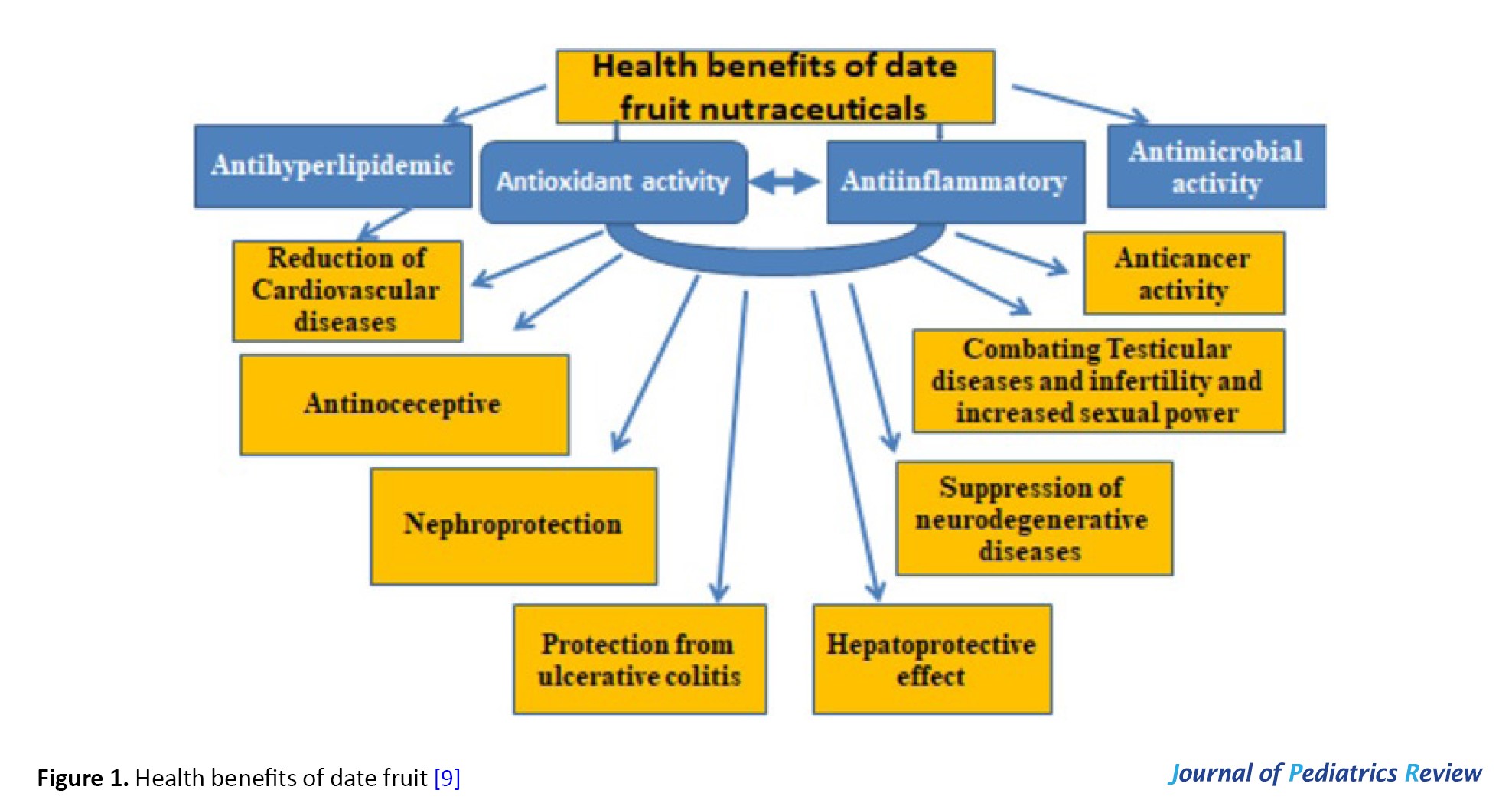
The widespread occurrence of anemia worldwide highlights the importance of dietary solutions [6]. Foods like date fruit, popular in numerous areas, contain abundant nutrients such as iron and have long been valued for their health benefits, as illustrated in Figure 1.
Anemia, defined by a shortage of red blood cells or hemoglobin, impacts a large portion of the global child population [1, 2]. It harms both bodily and intellectual progress, leading to poorer academic results, weakened immune systems, and greater vulnerability to diseases [1]. Tackling nutrient deficiencies, especially those involving iron, is essential for preventing and managing anemia [1]. Iron is a key nutrient for growth, brain function, and general well-being in kids. Iron deficiency (ID) is one of the most common nutritional problems worldwide and is a primary trigger for anemia in children under five years old. The negative effects of ID include hindered mental and motor skills, lowered immunity, and higher infection risks. To combat ID, iron supplements are frequently administered, particularly for those with inadequate food-based intake. Iron is crucial for creating hemoglobin, carrying oxygen, and generating energy. Proper iron levels are especially important during rapid growth phases, such as infancy and the toddler years, when needs for iron increase sharply. Research indicates that iron supplements can increase hemoglobin levels, reduce anemia rates, and improve brain function in children with ID [1, 2]. The World Health Organization (WHO) also supports iron supplements for high-risk groups, such as young kids in developing countries [3].
Despite their advantages, iron supplements come with various downsides that can hinder their consistent use, including stomach-related problems (such as queasiness, vomiting, hard stools, loose bowels) and abdominal pain. These issues often depend on dosage and are more noticeable in pill forms of iron [4]. While the WHO recommends iron supplements to treat ID in children, they are associated with side effects such as constipation and gastrointestinal discomfort [4]. Studies have also reported negative outcomes, such as developmental issues in children resulting from excessive iron intake [5]. Moreover, the flavor of these supplements may not be attractive to children. Due to these challenges, natural options have been recommended as alternatives to synthetic iron supplements.
The widespread occurrence of anemia worldwide highlights the importance of dietary solutions [6]. Foods like date fruit, popular in numerous areas, contain abundant nutrients such as iron and have long been valued for their health benefits, as illustrated in Figure 1.
Dates play a crucial role in balanced eating due to their rich content of vitamins (particularly vitamin B), tannins, crude fiber, and plant compounds that offer antioxidant benefits and can help prevent illnesses [6, 7]. Dates have a high sugar content, accounting for 50-88% of their total weight, depending on the cultivar type, ripening stage, and moisture content. Their pulp mainly consists of sugars, such as fructose and glucose, which account for about two-thirds of its total flesh, with water making up one-fifth, and a small portion of dietary fiber. Their substantial sugar makes them a great energy provider for people [8]. However, determining how well date intake truly prevents or treats anemia in youth needs a thorough evaluation of scientific data. This study aims to review current studies on the advantages and disadvantages of date intake.
Methods
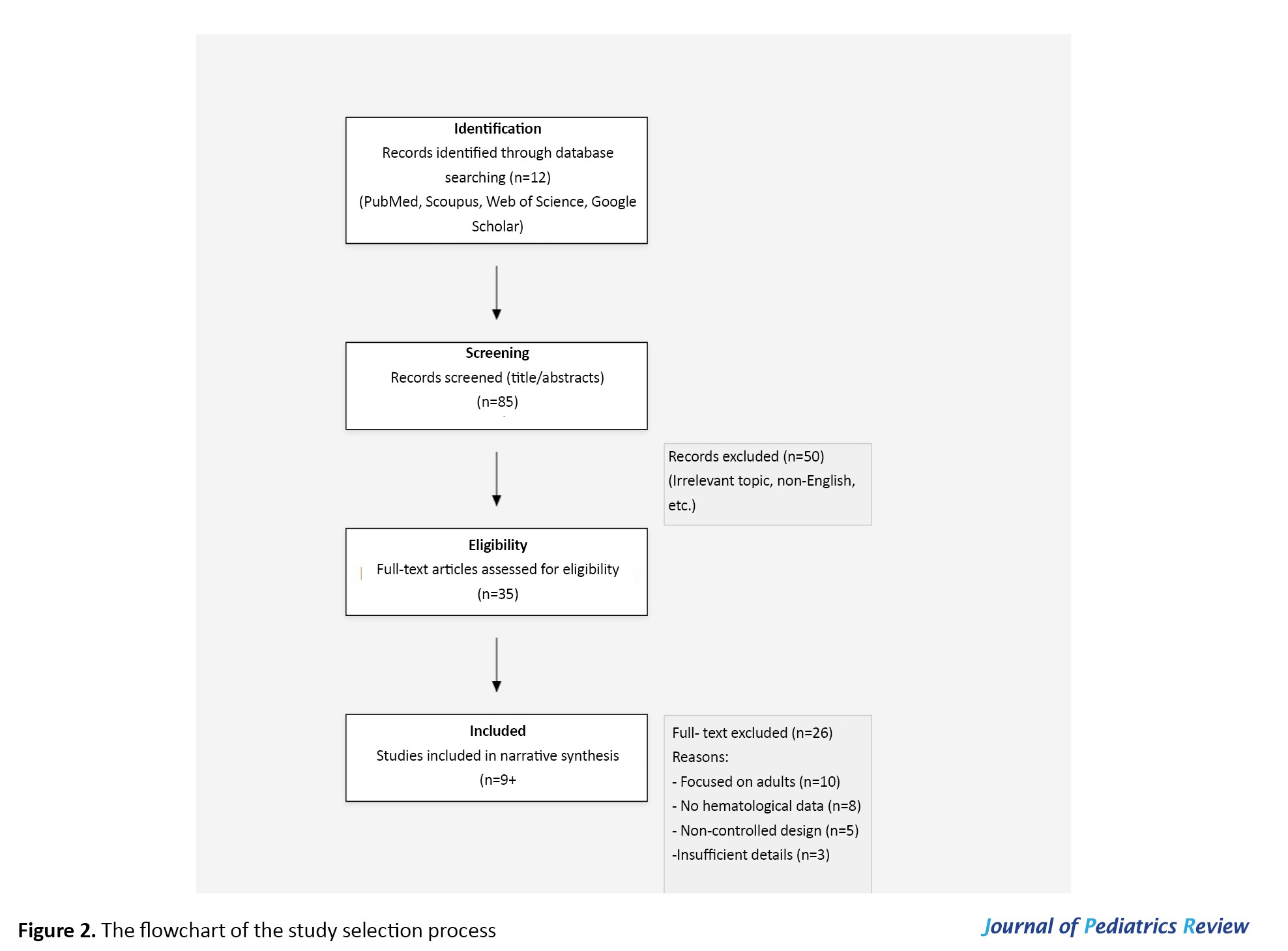
This is a review study. We searched several online databases, including PubMed, Scopus, Web of Science, and Google Scholar, to identify pertinent studies published in peer-reviewed journals, utilizing keywords such as “date fruit,” “anemia,” “children,” “iron,” “nutritional intervention,” and “Phoenix dactylifera.” The studies published in English and focused on human subjects were searched. The studies investigated the effect of date fruit consumption on anemia in children; those that utilized a controlled study design (e.g. randomized controlled trials, cohort studies, case-control studies), and those that reported relevant hematological parameters (e.g. hemoglobin levels, hematocrit, red blood cell count) were included. The studies that focused on adults, gray literature, studies unrelated to anemia or hematological parameters, and those lacking sufficient data on date consumption were excluded. The quality of studies was assessed using the Newcastle-Ottawa scale (NOS). From 120 articles found by the initial search, 9 articles were deemed eligible for selection. Figure 2 shows the flowchart of the study selection process.
Methods
This is a review study. We searched several online databases, including PubMed, Scopus, Web of Science, and Google Scholar, to identify pertinent studies published in peer-reviewed journals, utilizing keywords such as “date fruit,” “anemia,” “children,” “iron,” “nutritional intervention,” and “Phoenix dactylifera.” The studies published in English and focused on human subjects were searched. The studies investigated the effect of date fruit consumption on anemia in children; those that utilized a controlled study design (e.g. randomized controlled trials, cohort studies, case-control studies), and those that reported relevant hematological parameters (e.g. hemoglobin levels, hematocrit, red blood cell count) were included. The studies that focused on adults, gray literature, studies unrelated to anemia or hematological parameters, and those lacking sufficient data on date consumption were excluded. The quality of studies was assessed using the Newcastle-Ottawa scale (NOS). From 120 articles found by the initial search, 9 articles were deemed eligible for selection. Figure 2 shows the flowchart of the study selection process.
Relevant information was extracted from eligible studies, including study design, sample size, intervention details, key findings, and limitations. Data synthesis focused on the nutritional properties of dates, their mechanisms of action, and their impact on anemia prevention.
Results
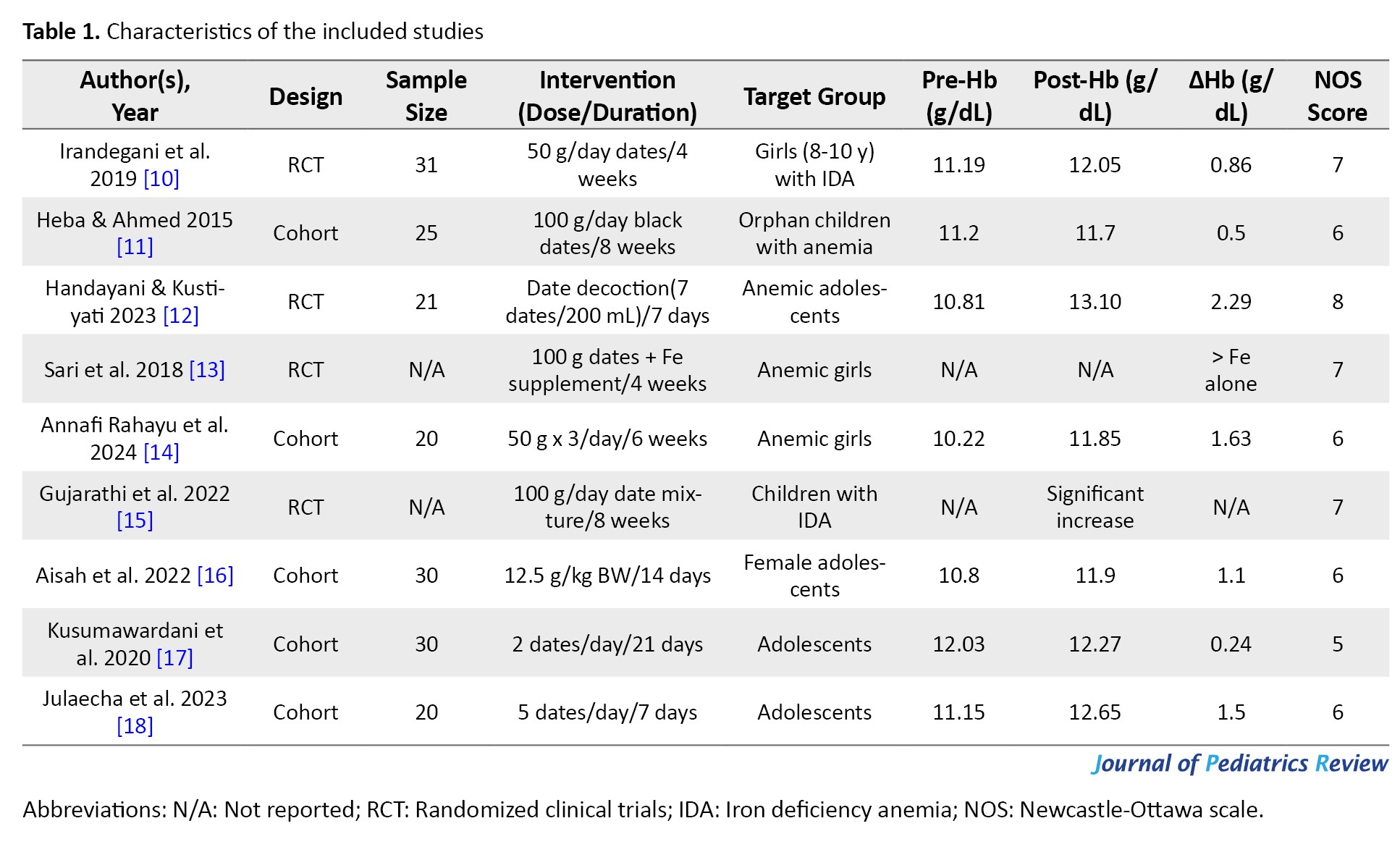
Table 1 presents the characteristics of the included studies.
Discussion
This review study highlights date fruit as an effective natural intervention for anemia in children and adolescents, with consistent improvements in hemoglobin levels across studies. The average increase of 1.16 g/dL aligns with clinical thresholds for resolving anemia (e.g. WHO criteria: Hb >11 g/dL in children) and surpasses some effects of supplementation alone [4]. Mechanisms of action include iron-vitamin C synergy for absorption, antioxidant protection against oxidative stress, and modulation of the gut microbiota [9, 19]. Dates performed better than iron supplements [13], possibly due to better tolerability and palatability [9]. In vulnerable groups such as adolescent girls, rapid improvements (e.g. 2.29 g/dL in 7 days) suggest applicability in resource-limited settings [12].
The small sample size of studies (median=25) increases the risk of type II error and limits the generalizability of the results to larger populations, which may inflate the effect size due to publication bias. The short duration of studies (median=4 weeks) prevents the assessment of long-term efficacy. For example, the initial increase in hemoglobin level might be due to short-term factors (such as temporary improvement in absorption); it cannot be confirmed whether these benefits are stable against the return of anemia. Sustained benefits may diminish without continuous consumption. These limitations can lead to an overestimation of effectiveness, especially in non-randomized designs where selection bias may occur. No studies investigated confounding factors such as diet or comorbidities.
Moreover, cultural and geographical differences in the consumption of or accessibility to dates can influence the results, but this issue has not been explored in depth. Most studies were from Middle Eastern and Asian countries (such as Iran, Indonesia, and Egypt), where dates are a part of the food culture, and easy access (due to local production) increases consumption. This could make the results appear more positive, as participants may already be familiar with dates and consume them readily. In contrast, in non-native regions such as Europe, North America, or South Africa, limited access (due to expensive imports or unfamiliarity) can reduce feasibility and lead to lower consumption. For example, in Western countries, different dietary preferences (focused on local fruits like apples or oranges) may decrease the acceptance of dates and diminish the positive effects. These differences can create a geographical bias, making the results less generalizable. Therefore, future studies should investigate culturally adapted interventions (such as incorporating dates into local dishes) to bridge these gaps. Therefore, large-scale, multi-center randomized clinical trials with larger sample sizes, longer follow-up, and cost-effectiveness analyses are recommended. Investigating the optimal dose and varieties of dates can improve the results.
Conclusion
This study suggests that dates can serve as a natural and safe source of nutrition for reducing anemia in children. The findings can guide health policymakers in promoting the use of dates as part of anemia prevention and management programs. Raising awareness among families and school children about the benefits of date consumption can play a significant role in reducing the prevalence of anemia in society.
Ethical Considerations
Compliance with ethical guidelines
There were no ethical considerations to be considered in this research.
Funding
This research did not receive any grant from funding agencies in the public, commercial, or non-profit sectors.
Authors contributions
Conceptualization and study design: Javad Sadeghinasab; Writing the original draft: Javad Sadeghinasab; Data collection, analysis, review, editing and final approval: All authors.
Conflicts of interest
The authors declared no conflict of interest.
Acknowledgements
The authors thank Gonabad University of Medical Sciences, Gonabad, Iran, for their support, and all colleagues and researchers whose works were reviewed and cited in this paper.
Results
Table 1 presents the characteristics of the included studies.
Discussion
This review study highlights date fruit as an effective natural intervention for anemia in children and adolescents, with consistent improvements in hemoglobin levels across studies. The average increase of 1.16 g/dL aligns with clinical thresholds for resolving anemia (e.g. WHO criteria: Hb >11 g/dL in children) and surpasses some effects of supplementation alone [4]. Mechanisms of action include iron-vitamin C synergy for absorption, antioxidant protection against oxidative stress, and modulation of the gut microbiota [9, 19]. Dates performed better than iron supplements [13], possibly due to better tolerability and palatability [9]. In vulnerable groups such as adolescent girls, rapid improvements (e.g. 2.29 g/dL in 7 days) suggest applicability in resource-limited settings [12].
The small sample size of studies (median=25) increases the risk of type II error and limits the generalizability of the results to larger populations, which may inflate the effect size due to publication bias. The short duration of studies (median=4 weeks) prevents the assessment of long-term efficacy. For example, the initial increase in hemoglobin level might be due to short-term factors (such as temporary improvement in absorption); it cannot be confirmed whether these benefits are stable against the return of anemia. Sustained benefits may diminish without continuous consumption. These limitations can lead to an overestimation of effectiveness, especially in non-randomized designs where selection bias may occur. No studies investigated confounding factors such as diet or comorbidities.
Moreover, cultural and geographical differences in the consumption of or accessibility to dates can influence the results, but this issue has not been explored in depth. Most studies were from Middle Eastern and Asian countries (such as Iran, Indonesia, and Egypt), where dates are a part of the food culture, and easy access (due to local production) increases consumption. This could make the results appear more positive, as participants may already be familiar with dates and consume them readily. In contrast, in non-native regions such as Europe, North America, or South Africa, limited access (due to expensive imports or unfamiliarity) can reduce feasibility and lead to lower consumption. For example, in Western countries, different dietary preferences (focused on local fruits like apples or oranges) may decrease the acceptance of dates and diminish the positive effects. These differences can create a geographical bias, making the results less generalizable. Therefore, future studies should investigate culturally adapted interventions (such as incorporating dates into local dishes) to bridge these gaps. Therefore, large-scale, multi-center randomized clinical trials with larger sample sizes, longer follow-up, and cost-effectiveness analyses are recommended. Investigating the optimal dose and varieties of dates can improve the results.
Conclusion
This study suggests that dates can serve as a natural and safe source of nutrition for reducing anemia in children. The findings can guide health policymakers in promoting the use of dates as part of anemia prevention and management programs. Raising awareness among families and school children about the benefits of date consumption can play a significant role in reducing the prevalence of anemia in society.
Ethical Considerations
Compliance with ethical guidelines
There were no ethical considerations to be considered in this research.
Funding
This research did not receive any grant from funding agencies in the public, commercial, or non-profit sectors.
Authors contributions
Conceptualization and study design: Javad Sadeghinasab; Writing the original draft: Javad Sadeghinasab; Data collection, analysis, review, editing and final approval: All authors.
Conflicts of interest
The authors declared no conflict of interest.
Acknowledgements
The authors thank Gonabad University of Medical Sciences, Gonabad, Iran, for their support, and all colleagues and researchers whose works were reviewed and cited in this paper.
References
- Lozoff B, Beard J, Connor J, Barbara F, Georgieff M, Schallert T. Long-lasting neural and behavioral effects of iron deficiency in infancy. Nutr Rev. 2006; 64(5 Pt 2):S34-43 [DOI:10.1301/nr.2006.may.S34-S43] [PMID]
- Black RE, Victora CG, Walker SP, Bhutta ZA, Christian P, de Onis M, et al. Maternal and child undernutrition and overweight in low-income and middle-income countries. Lancet. 2013; 382(9890):427-51. [DOI:10.1016/S0140-6736(13)60937-X] [PMID]
- World Health Organization. Guideline: Daily Iron Supplementation in Infants and Children. Geneva: WHO; 2016. [Link]
- Tolkien Z, Stecher L, Mander AP, Pereira DIA, Powell JJ. Ferrous sulfate supplementation causes significant gastrointestinal side-effects in adults: A systematic review and meta-analysis. PLoS One. 2015; 10(2):e0117383. [DOI:10.1371/journal.pone.0117383] [PMID]
- McMillen SA, Dean R, Dihardja E, Ji P, Lönnerdal B. Benefits and risks of early life iron supplementation. Nutrients. 2022; 14(20):4380. [DOI:10.3390/nu14204380] [PMID]
- Hashempoor M. [Date Treasure (Persian)]. Tehran: Agricultural Education Publication; 1999.
- Sablani SS, Shrestha AK, Bhandari BR. A new method of producing date powder granules: Physicochemical characteristics of powder. J Food Eng. 2008; 87(3):416-21. [DOI:10.1016/j.jfoodeng.2007.12.024]
- Aljaloud S, Colleran H, Ibrahim S. Nutritional value of date fruits and potential use in nutritional bars for athletes. Food Nutr Sci. 2020; 11(6):463-80. [DOI:10.4236/fns.2020.116034]
- Al-Okbi SY. Date palm as source of nutraceuticals for health promotion: A review. Curr Nutr Rep. 2022; 11(4):574-91. [DOI:10.1007/s13668-022-00437-w] [PMID]
- Irandegani F, Arbabisarjou A, Ghaljaei F, Navidian A, Karajibani M. The effect of a date consumption-based nutritional program on iron deficiency anemia in primary school girls aged 8 to 10 years old in Zahedan (Iran). Pediatric Health Med Ther. 2019; 10:183-8. [DOI:10.2147/PHMT.S225816] [PMID]
- Heba E, Khedr A. Effect of black dates on iron deficiency anemia of orphanage children. Alex J Agric Sci. 2015; 60(3):183-91. [DOI:10.21608/alexja.2015.31247]
- Handayani JD, Kustiyati S. Efektifitas rebusan kurma terhadap peningkatan hemoglobin pada remaja anemia. J Medika Nusantara. 2023; 1(4):21-32. [DOI:10.59680/medika.v1i4.587]
- Sari A, Pamungkasari EP, Dewi YL. The addition of dates palm (Phoenix dactylifera) on iron supplementation (Fe) increases the hemoglobin level of adolescent girls with anemia. Bali Med J. 2018; 7(2):356-60. [DOI:10.15562/bmj.v7i2.987]
- Annafi Rahayu J, Ningtyas Prabasari S. Pengaruh Pemberian Buah Kurma terhadap Peningkatan Kadar Hemoglobin pada Remaja Putri di MTs Negeri 5 Sragen. Detector J Inovasi Riset Ilmu Kesehatan. 2024; 2(3):163-75. [Link]
- Gujarathi R, Arora M, Kulkarni M, Patwardhan R, Kapgate S. Evaluating the role of dates compound in iron deficiency anemia in children. Int J Health Sci. 2022; 6(S4):12663-75. [DOI:10.53730/ijhs.v6nS4.12239]
- Aisah A, Rasyid R, Rofinda ZD, Masrul M. [The effect of giving dates (phoenix dactylifera l) on increasing hemoglobin and ferritin levels in female students (Indonesian)]. J Akad Baiturrahim Jambi. 2022; 11(1):126-34. [DOI:10.36565/jab.v11i1.511]
- Kusumawardani PA, Machfudlo H. Palm Date Increase Adolescents Hemoglobin Levels. Paper presented at: IOP Conference Series: Earth and Environmental Science, Volume 519, International Conference Earth Science & Energy. 7-8 November 2019; Kuala Lumpur, Malaysia. [DOI:10.1088/1755-1315/519/1/012032]
- Julaecha J, Tiwi LS, Hayati F, Wuryandari AG. [Anemia prevention education for adolescent girls by consuming dates at Baiturrahim health vocational school, Jambi City (Indonesian)]. J Abdimas Kesehatan. 2023; 5(2):200-5. [Link]
- Eid N, Enani S, Walton G, Corona G, Costabile A, Gibson G, et al. The impact of date palm fruits and their component polyphenols, on gut microbial ecology, bacterial metabolites and colon cancer cell proliferation. J Nutr Sci. 2014; 3:e46. [DOI:10.1017/jns.2014.16] [PMID]
Type of Study: Narrative Review |
Subject:
Pediatrics
Received: 2025/02/8 | Accepted: 2025/10/18 | Published: 2025/10/18
Received: 2025/02/8 | Accepted: 2025/10/18 | Published: 2025/10/18
Send email to the article author
| Rights and permissions | |
 |
This work is licensed under a Creative Commons Attribution-NonCommercial 4.0 International License. |

Copyright © The Author(s);
This is an open access article distributed under the terms of the Creative Commons Attribution License (CC-By-NC),
which permits use, distribution, and reproduction in any medium, provided the original work is properly cited and is not used for commercial purposes.
Contact Information