Wed, Oct 21, 2026


Volume 14, Issue 3 (9-2026)
J. Pediatr. Rev 2026, 14(3): 231-242 |
Back to browse issues page



Download citation:
BibTeX | RIS | EndNote | Medlars | ProCite | Reference Manager | RefWorks
Send citation to:


BibTeX | RIS | EndNote | Medlars | ProCite | Reference Manager | RefWorks
Send citation to:
Fakhri M, Farhadi R, Azadbakht M, Yousefi S S. Associations Between Neonatal Jaundice and Autism Spectrum Disorder: A Systematic Review and Meta-analysis of Observational Studies. J. Pediatr. Rev 2026; 14 (3) :231-242
URL: http://jpr.mazums.ac.ir/article-1-748-en.html
URL: http://jpr.mazums.ac.ir/article-1-748-en.html


1- Traditional and Complementary Medicine Research Center, Addiction Institute, Mazandaran University of Medical Sciences, Sari, Iran. , mmfir@yahoo.com
2- Pediatric Infectious Diseases Research Center, Mazandaran University of Medical Sciences, Sari, Iran.
3- Traditional and Complementary Medicine Research Center, Addiction Institute, Mazandaran University of Medical Sciences, Sari, Iran. & Department of Pharmacognosy, Faculty of Pharmacy, Mazandaran University of Medical Sciences, Sari, Iran.
4- Department of Pharmacognosy, Faculty of Pharmacy, Mazandaran University of Medical Sciences, Sari, Iran.
Keywords: Autism spectrum disorder (ASD), Jaundice, Neonatal, Severe jaundice in newborn, Physiological neonatal jaundice (NNJ)
Full-Text [PDF 602 kb]
(112 Downloads)
| Abstract (HTML) (331 Views)
Full-Text: (71 Views)
Introduction
Neonatal jaundice (NNJ) is a common condition during the neonatal period [1], and the bilirubin level is high in approximately 8-11% of newborns [2-4]. NNJ occurs in about 60% of term infants and 80% of preterm infants [1]. Neonatal hyperbilirubinemia (NNHB) is classified into physiological and pathological jaundice [4]. Although NNHB is generally benign, the elevated levels of bilirubin may lead to neurological dysfunction and kernicterus, whereas lower levels are associated with fewer complications [5, 6]. Additionally, unconjugated NNHB is associated with long-term adverse outcomes, including cerebral palsy, intellectual disability, brain dysfunction, attention deficit hyperactivity disorder, and autism spectrum disorder (ASD) [7, 8]. Therefore, a possible association between NNJ and ASD has been suggested [9].
The incidence of ASD is on the rise worldwide [10, 11]; its prevalence among infants increased by 52% from 2017 to 2020 [12]. In some Arabic countries, the incidence of ASD is reported to be 1.4-29 per 10,000 children [13-15]. Moreover, ASD is 4 times more prevalent in boys than in girls [16]. ASD is not considered a single-dimensional disorder; rather, it is influenced by multiple factors, including genetics, preterm factors, prenatal factors, postpartum factors, and environmental factors [17, 18]. In the prenatal period, the risk factors of ASD in children include maternal fever during pregnancy [19], maternal exposure to toxins (e.g. smoking and contaminants) during pregnancy [20, 21], premature birth, maternal age, and bleeding during pregnancy [22]. NNJ, congenital heart defects, and low birth weight are other risk factors for ASD [4, 23-25].
ASD is a disease with long-term consequences for children and families [26], and conflicting results have been reported on the association between NNJ and ASD risk in different studies [27, 28]. A previous meta-analysis conducted in 2021 included articles related to this association published up to February 2019 [4], which may have resulted in overlap and potential bias. Moreover, sources published in the Web of Science (WOS) database were not searched in this meta-analysis. Thus, this systematic review and meta-analysis aimed to consolidate the results of previous studies regarding the association between NNJ and ASD risk.
Materials and Methods
This systematic review and meta-analysis study was designed based on the preferred reporting items for systematic reviews and meta-analyses (PRISMA) [29]. Its protocol was registered in the PROSPERO (international prospective register of systematic reviews) and the Research Registry website. The articles published up to 8 December 2024 were searched in national databases, including Danesh Gostar Barakat, Scientific Information Database (SID), MagIran, IranDoc, and international databases including PubMed, Scopus, WOS, Cochrane, and Embase, as well as the Google Scholar search engine, without time or place limitations. Medical subject headings (MeSH) terms and their equivalents were used in the search strategy combined with Boolean operators (AND, OR). The search strategy used in the PubMed database was as follows: (autism spectrum disorder OR autistic spectrum disorder) AND (“jaundice, neonatal” OR severe jaundice in newborn OR physiological neonatal jaundice)
Based on the PECO framework, the study “population” consisted of articles that investigated the association between NNJ and ASD risk; the “exposure” was NNJ; the “comparison” group included healthy people; and the main “outcome” was the relationship between NNJ and the risk of ASD. Therefore, the observational studies that examined the association between NNJ and ASD risk were included. Duplicate studies, review studies, meta-analyses, studies with poor quality, studies with incomplete abstracts and without accessible full texts, studies lacking the required data for analysis, non-observational studies, and conference posters were excluded from this review.
Two authors assessed the quality of studies with the Newcastle-Ottawa scale (NOS), in which each question is assigned a maximum of one star (except for the comparison question which could be assigned two stars). The score of this scale ranges from 0 (the poorest quality) to 10 (the highest quality). Studies that acquired a score >6 were included in the current meta-analysis [30].
To collect data, a data extraction form in an Excel file was designed. The data including the author’s name, study place, study year, study type, sample size, and the link between NNJ and ASD risk at 95% confidence interval (CI) were extracted by two authors. A third author examined the data to ensure accuracy and resolve contradictions.
Data were analyzed using the odds ratio (OR), relative risk (RR), and hazard ratio (HR), and the eligible studies were subsequently pooled. The heterogeneity between the studies was evaluated using the I2 indicator, which classifies the heterogeneity level into three groups: low (<25%), moderate (25-75%), and severe (>75%) heterogeneity. A random-effects model was also used in this study. Statistical analyses were performed in STATA software, version 14, considering a significance level set at 0.05 for all statistical tests.
Results
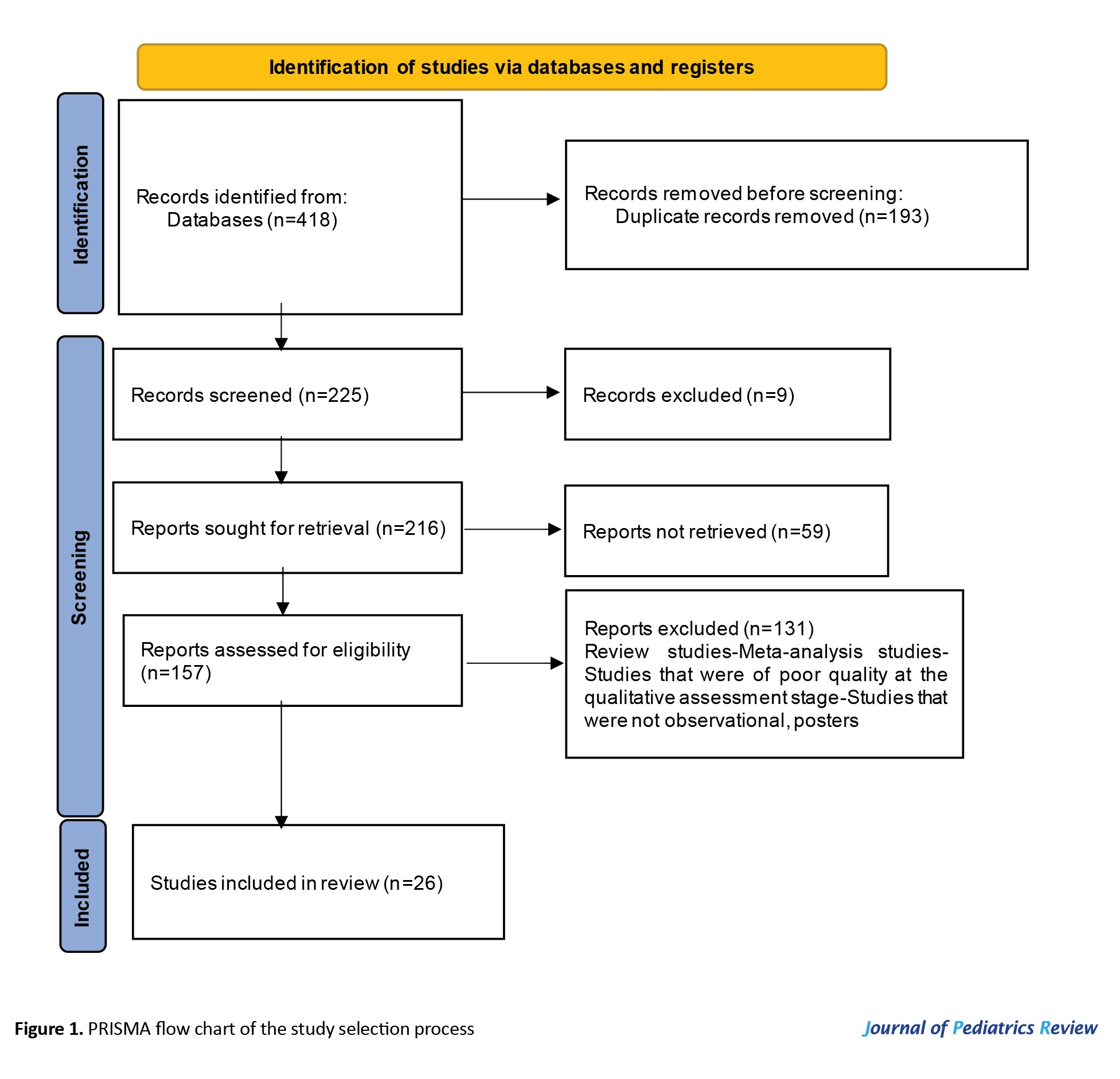
The search in databases yielded 418 articles, among which 193 were excluded due to being duplicate records. After reviewing the abstracts of 225 articles, 9 studies with incomplete abstracts or unavailable full texts were removed. Of 216 articles with full texts, 59 articles were excluded due to lacking the required data for analysis. Subsequently, 157 articles were included in the next stage, 131 of which were removed based on the other exclusion criteria, and 26 observational studies remained for the review (Figure 1).
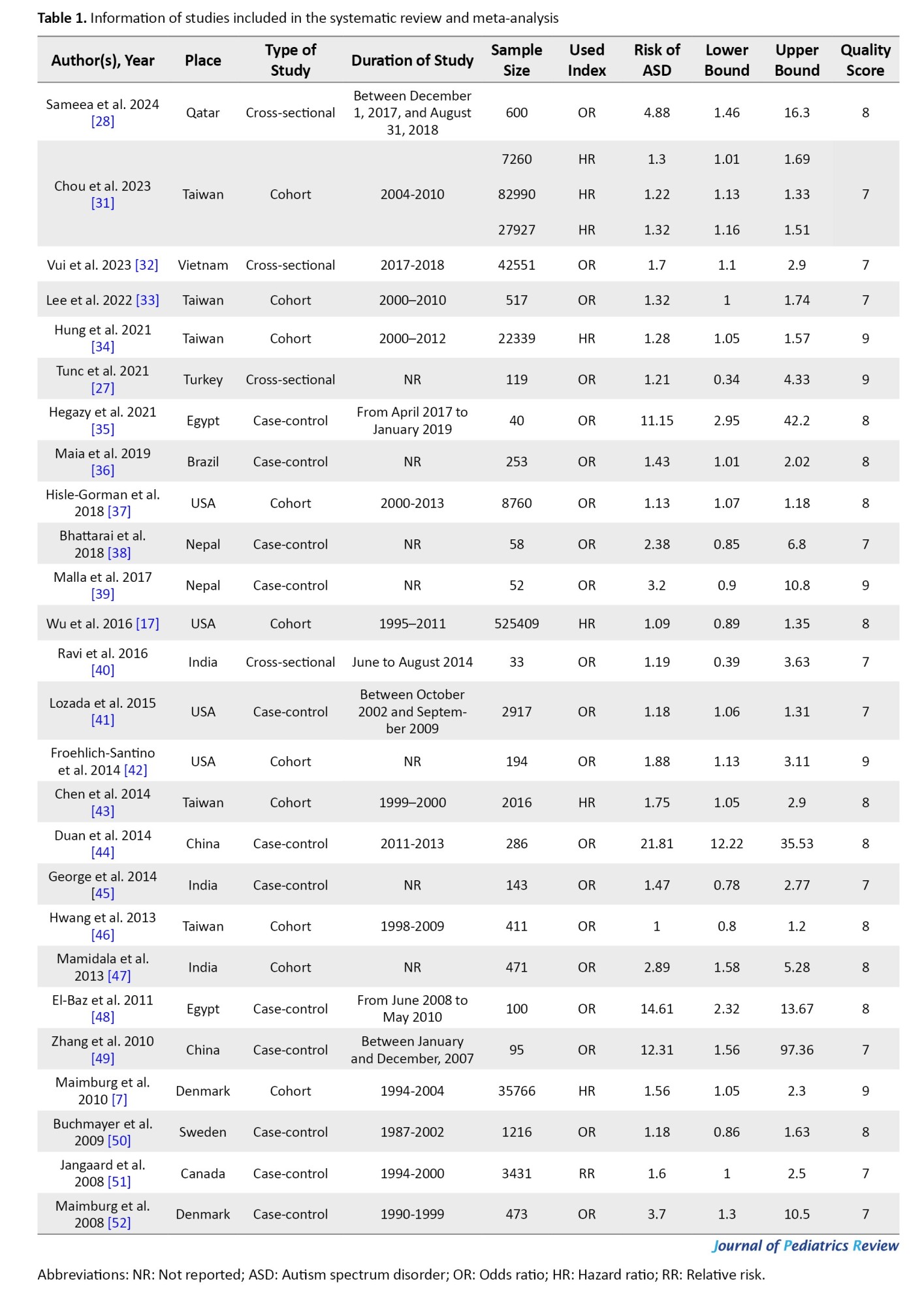
They included 12 case-control studies, 10 cohort studies, and 4 cross-sectional studies, with a total of 766,422 participants (Table 1).
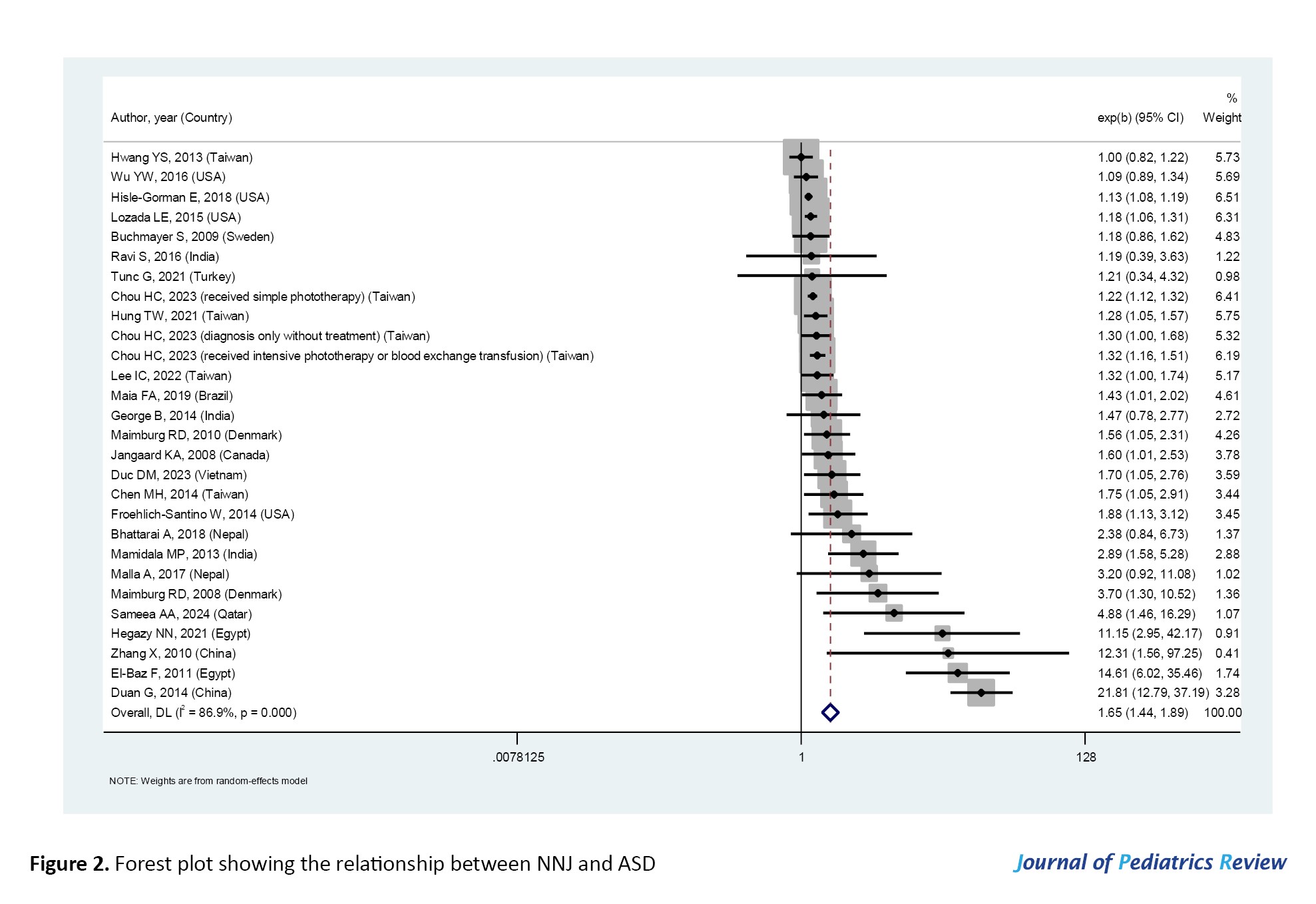
As shown in Figure 2, the risk of ASD increased due to NNJ with an overall OR of 1.65 (95% CI, 1.44%, 1.89%).
As shown in Figure 2, the risk of ASD increased due to NNJ with an overall OR of 1.65 (95% CI, 1.44%, 1.89%).
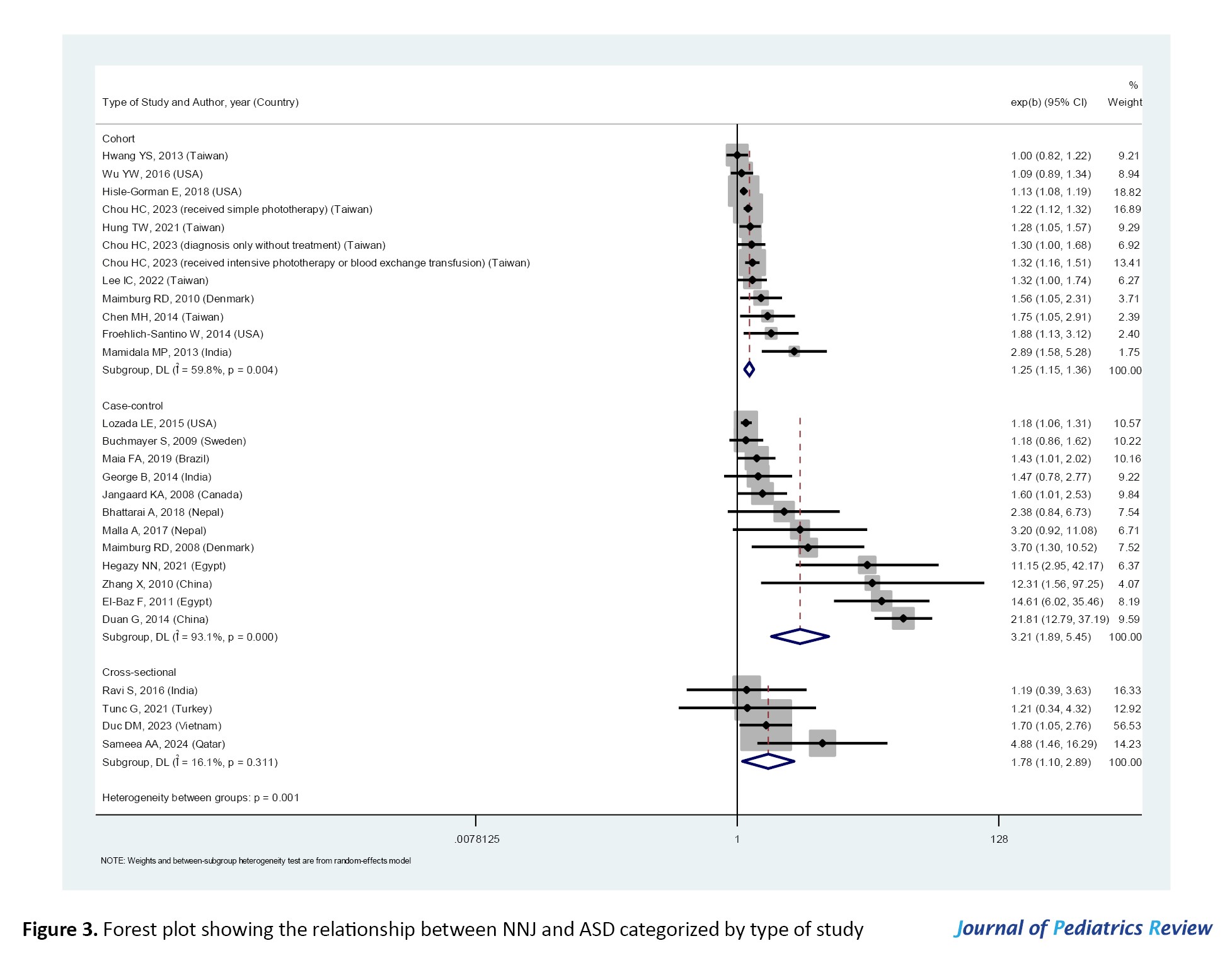
According to Figure 3, the OR was 1.25 in cohort studies (95% CI, 1.15%, 1.36%); 3.21 in case-control studies (95% CI, 1.89%, 5.45%); and 1.78 in cross-sectional studies (95% CI, 1.1%, 2.89%).
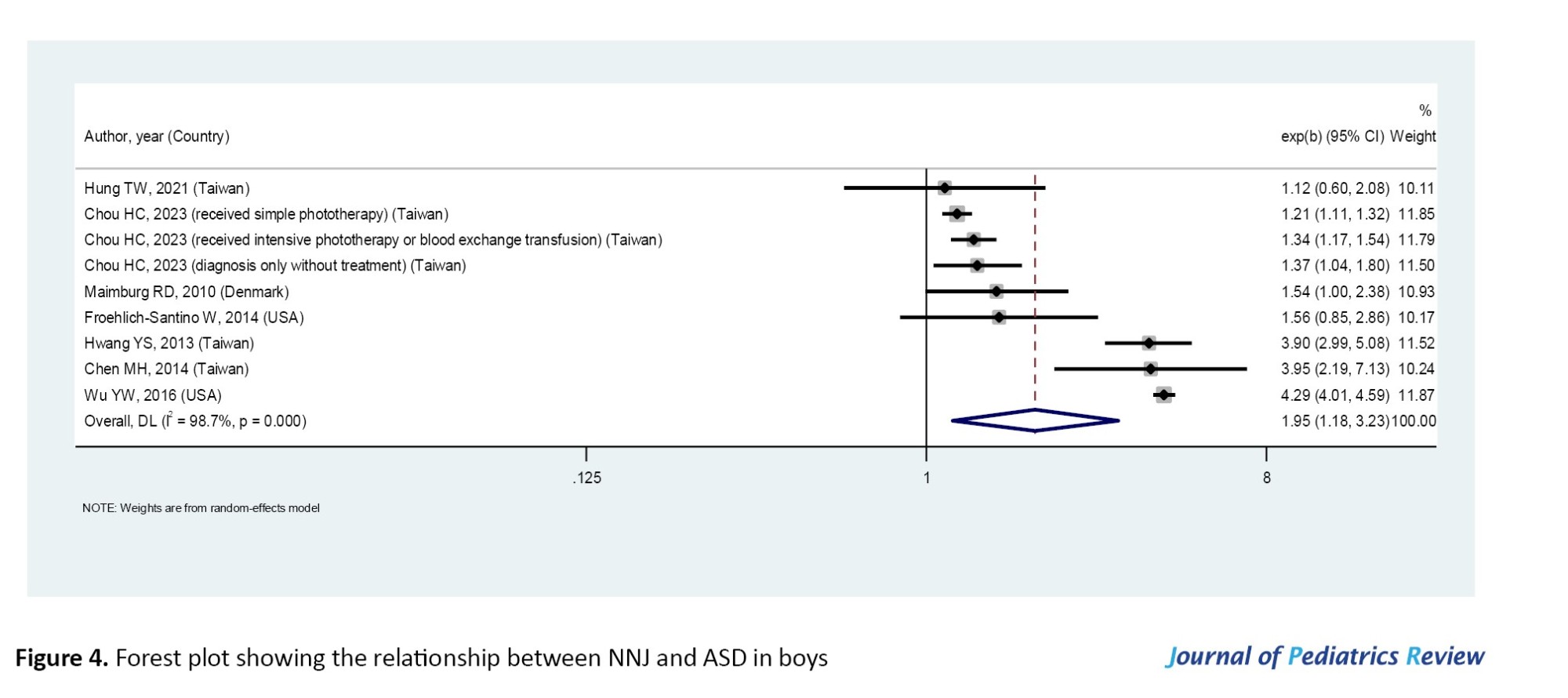
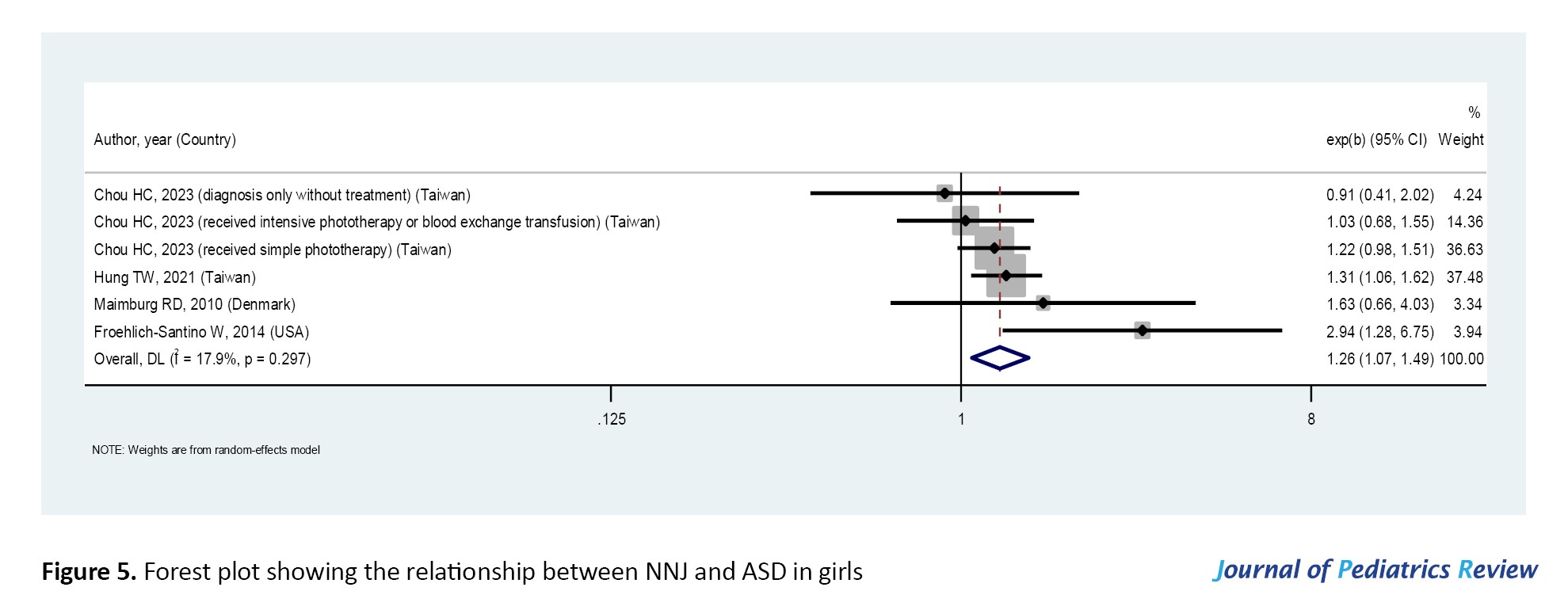
The risk of ADHD also increased due to NNJ (OR: 1.17, 95% CI, 1.1%, 1.24%). NNJ multiplied the risk of ASD in infants undergoing phototherapy (OR: 1.19, 95% CI, 1.11%, 1.27%). The OR of association between ASD and NNJ was higher in boys (OR: 1.95, 95% CI, 1.18%, 3.23%) than in girls (OR: 1.26, 95% CI, 1.07%, 1.49%), according to Figures 4 and 5.
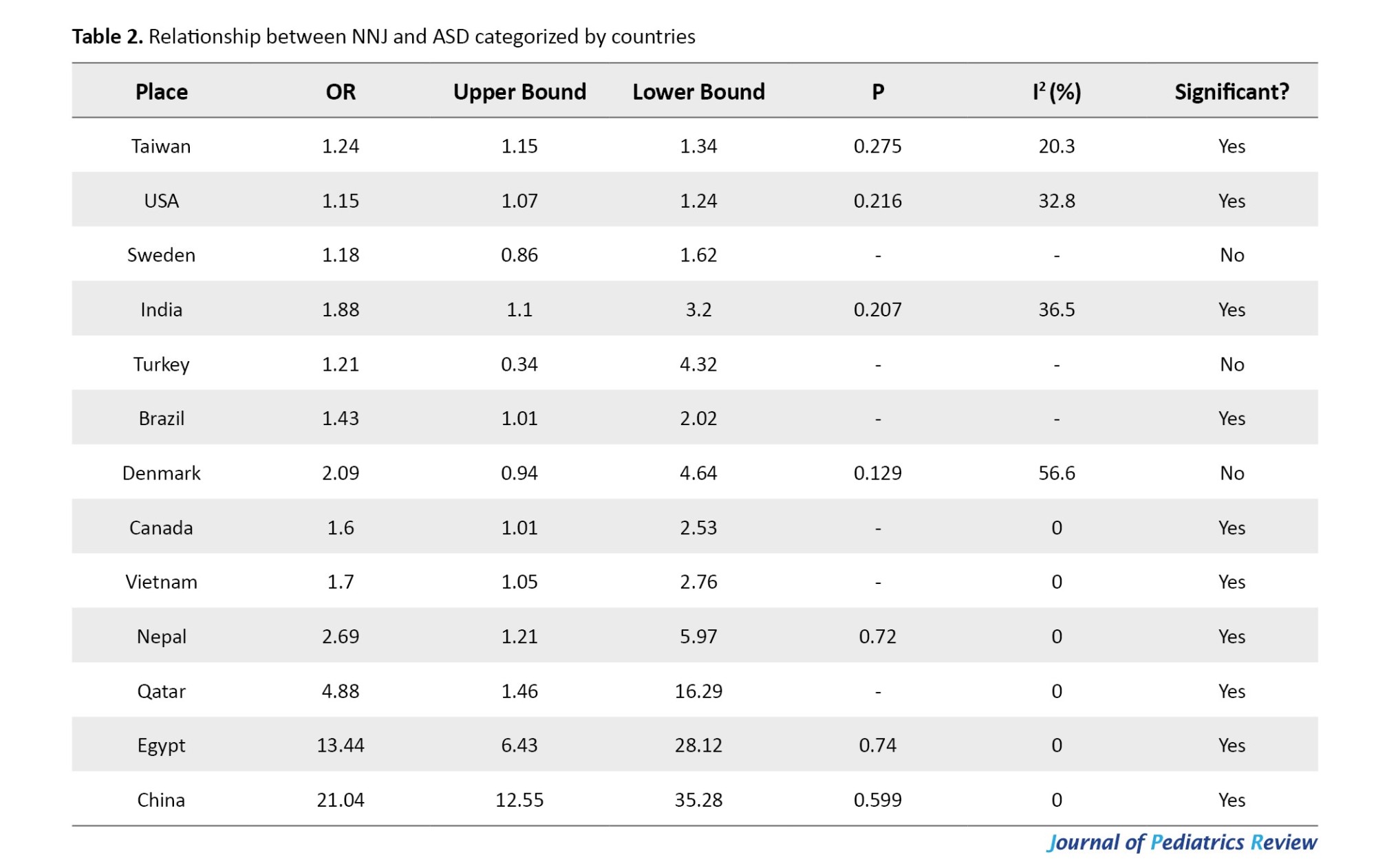
As shown in Table 2, the association of NNJ with increased risk of ASD in children was significant in Taiwan, the USA, India, Brazil, Canada, Vietnam, Nepal, Qatar, Egypt, and China, while it was not significant in Sweden, Turkey, and Denmark.
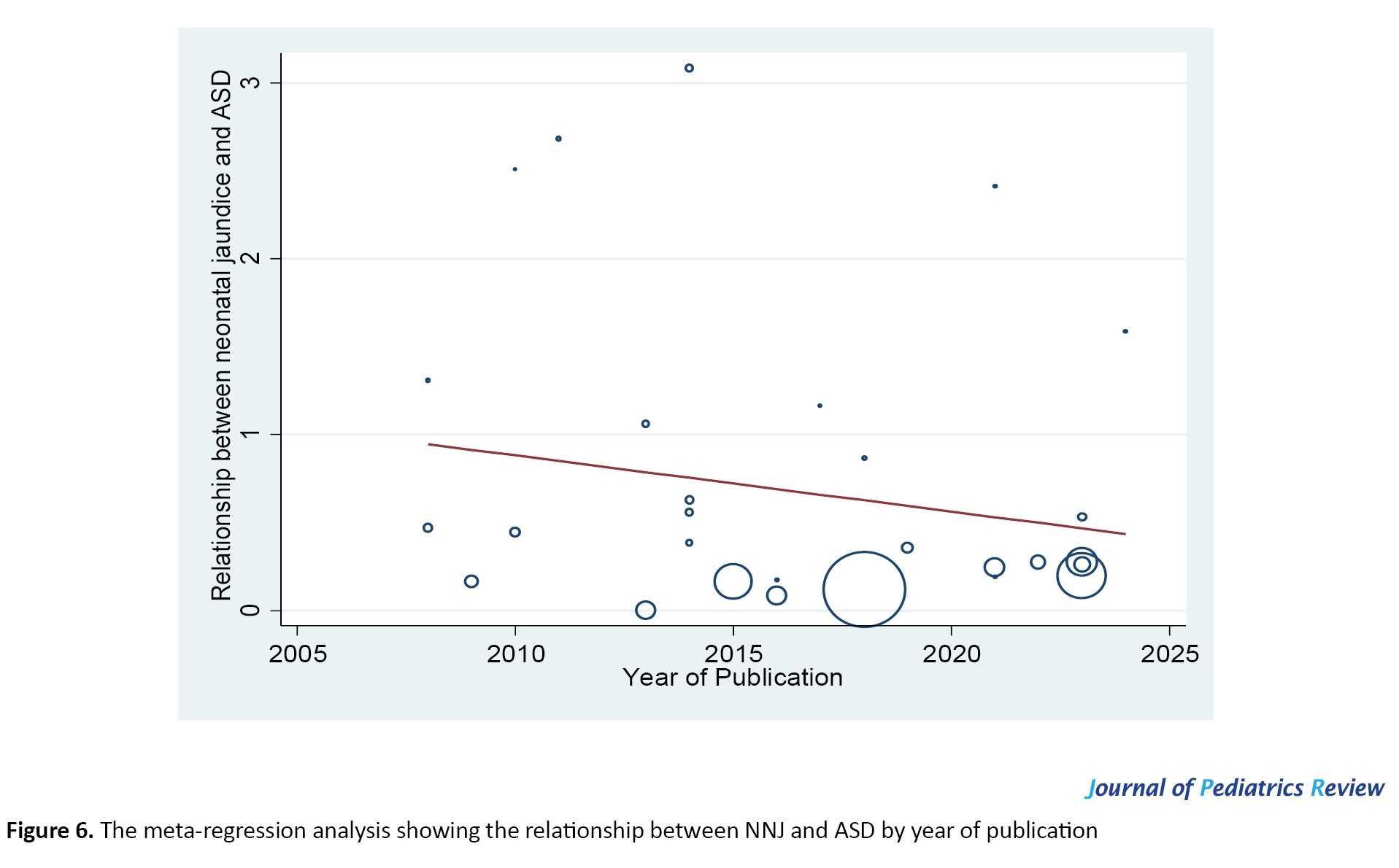
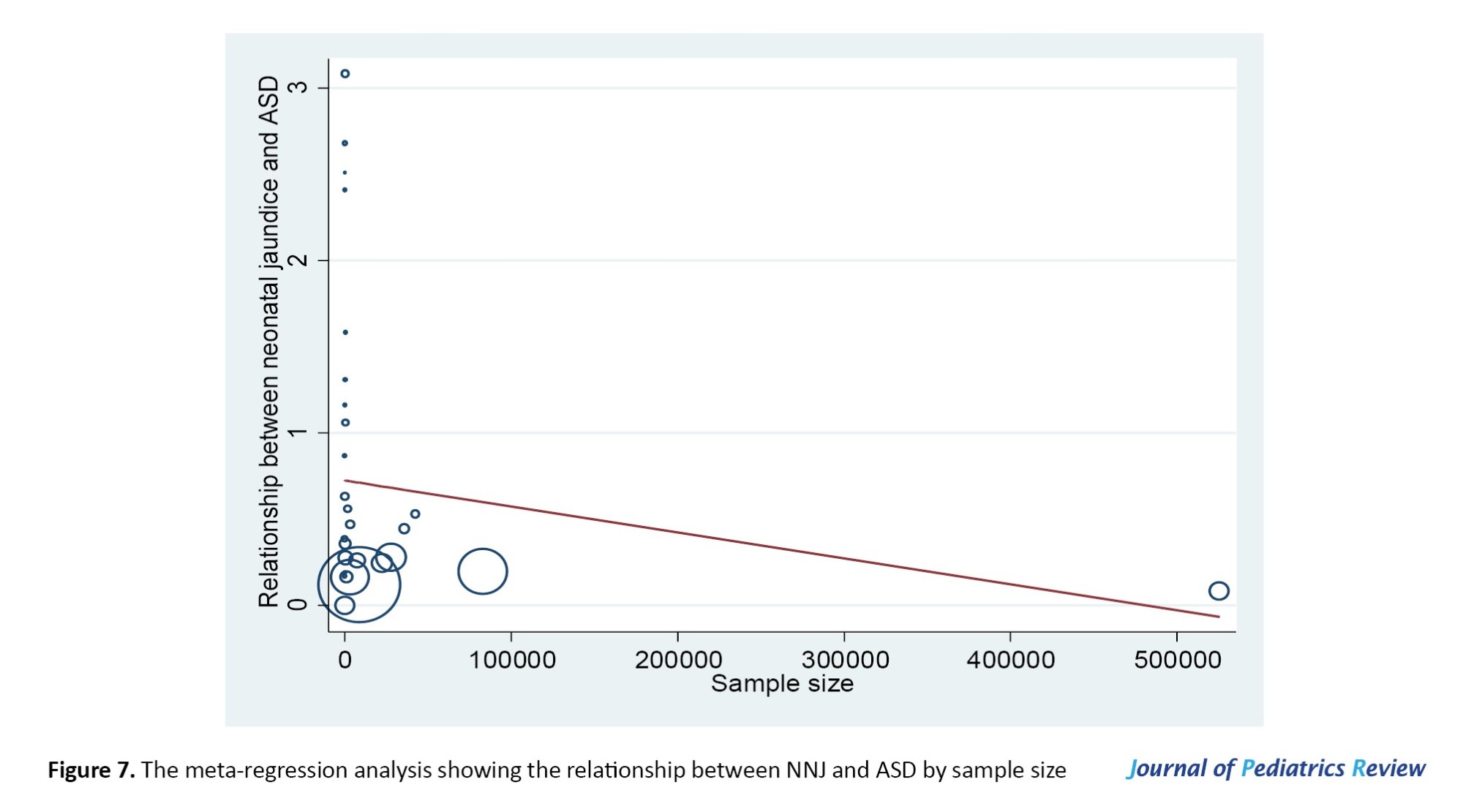
The meta-regression curves in Figures 6 and 7 indicated no statistically significant relationships between the NJJ and the ASD risk based on publication years (P=0.313) and sample size (P=0.309).
The meta-regression curves in Figures 6 and 7 indicated no statistically significant relationships between the NJJ and the ASD risk based on publication years (P=0.313) and sample size (P=0.309).
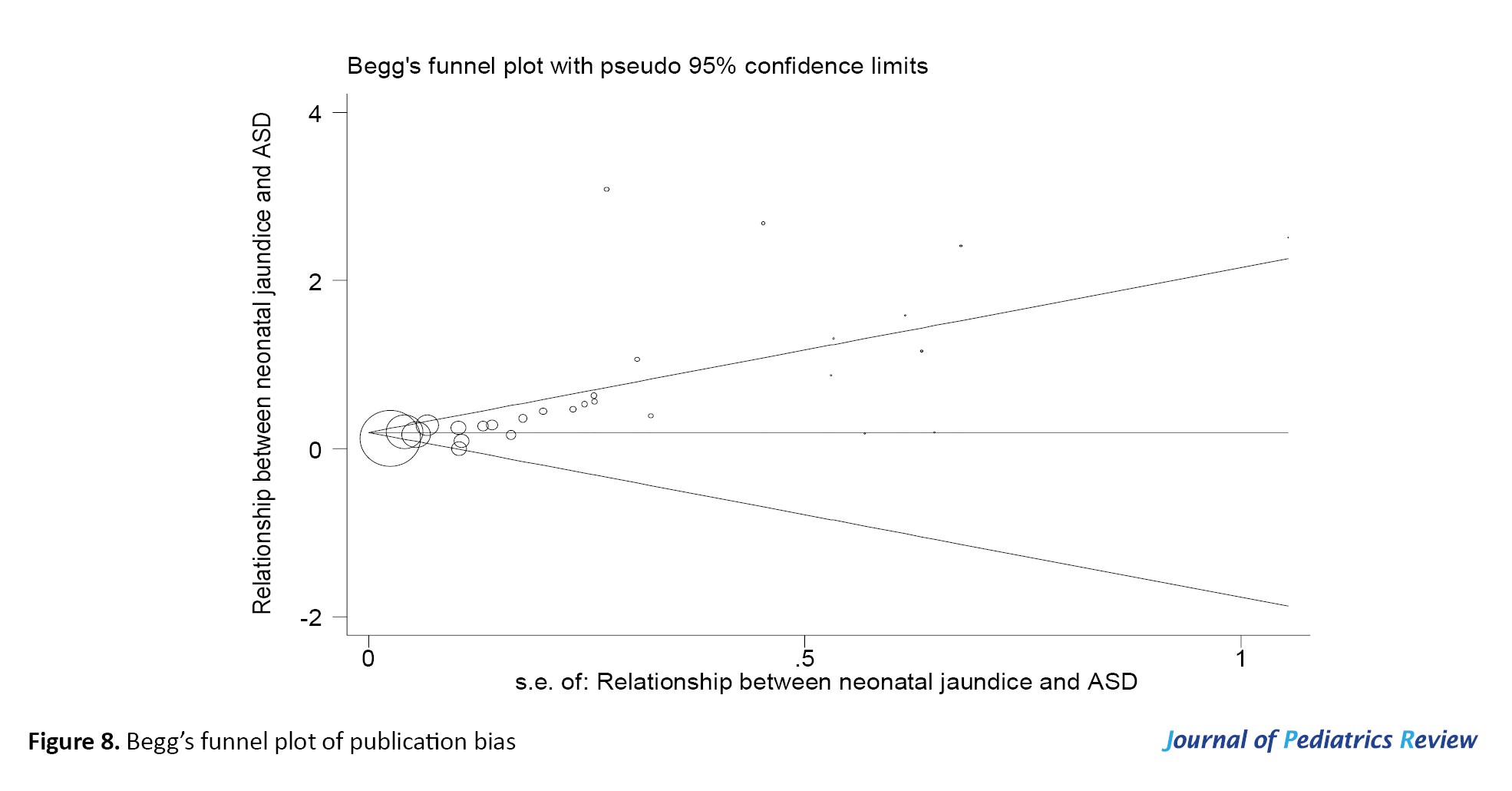
According to Figure 8, the presence of publication bias was significant (P<0.05).
In other words, studies that did not report a significant association between NNJ and the risk of ASD were less likely to be published.
Discussion
In total, 26 observational studies (12 case-control, 10 cohort, and four cross-sectional studies) were reviewed in this study. The OR obtained from case-control studies (OR=3.21) was more than twice that in cohort studies (OR=1.25). The difference in the number of studies by study type may be one reason for this difference. The NNJ increased the risk of ASD and ADHD by 65% and 17%, respectively, and boys were more exposed to the risk of ASD than girls. Additionally, the risk of ASD due to NNJ was significantly higher in Taiwan, the USA, India, Brazil, Canada, Vietnam, Nepal, Qatar, Egypt, and China. No significant associations were found between NNJ and ASD in Sweden, Turkey, and Denmark. This result suggests that ethnicity and race may be involved in the association between NNJ and ASD development.
In a meta-analysis by Jenabi et al. [53], a significant association was identified between NNJ and ASD in children [(OR: 1.35; 95% CI, 1.02%, 1.68%) or (RR: 1.39; 95% CI, 1.05%, 1.74%)]. Another meta-analysis by Amin et al. [9] revealed that NNJ was associated with an elevated risk of ASD (OR=1.43, 95% CI, 1.22%, 1.67%). Gardener et al. [54] reported an association between NNJ and the risk of ASD development in a meta-analysis (summary effect estimate: 1.87, 95% CI, 1.01%, 3.47%). In an umbrella review by Salehi et al. [55], NNJ was also a risk factor for ASD (OR: 1.74; 95% CI, 1.42%, 2.12%). Our results are consistent with the results of these studies. In a meta-analysis by Kujabi et al. [4], NNJ and ASD were not significantly associated with each other in the cohort (RR: 1.09, 95% CI, 0.99%, 1.2%) and case-control (RR: 1.29, 95% CI, 0.95%, 1.76%) studies. A meta-analysis on newborn infants by Lai et al. [56] indicated that total serum bilirubin was related to the kernicterus spectrum disorder in high-risk newborns (OR: 1.1, 95% CI, 1.07%, 1.13%). However, total serum bilirubin (OR: 1.1, 95% CI, 0.98%, 1.23%) and hyperbilirubinemia (OR: 1, 95% CI, 0.51%, 1.95%) were not associated with kernicterus or neural detection in the general neonate population. These results are not in agreement with our findings. This discrepancy seems natural due to the different ages and bilirubin levels of participants.
In a cross-sectional study by Sameea et al. on children aged 18-48 months, ASD was linked to the history of NNHB (OR: 4.88; 95% CI, 1.5%, 16.3%) [28]. In our meta-analysis of cross-sectional studies, it was also indicated that the risk of ASD was intensified by NNJ. In a case-control study, Maia et al. [36] presented evidence that NNJ was a risk factor for ASD (OR: 1.43; 95% CI, 1.01%, 2.02%). Similarly, the meta-analysis of case-control studies in our study showed the occurrence of ASD in childhood due to NNJ. The results of a cohort study by Chou et al. [31] demonstrated that NNJ groups, including diagnosed only (HR: 1.3, 95% CI, 1.01%, 1.69%), simple phototherapy (HR: 1.22, 95% CI, 1.13%, 1.33%), and intensive phototherapy or blood exchange transfusion (HR: 1.32, 95% CI, 1.16, 1.16%) were significantly linked to ASD; besides, NNJ was correlated with ADHD. Based on a cohort study by Hung et al. [34], infants with hyperbilirubinemia were exposed to an increased risk of ASD (HR: 1.28, 95% CI, 1.05%, 1.57%), and boys were almost 6 times more exposed to ASD risk than girls (HR: 5.89, 95% CI, 4.41%, 7.86%). In our meta-analysis, the meta-analysis of cohort studies also showed that NNJ is a risk factor for ASD development. Additionally, the risk of ASD was greater in boys with jaundice than in girls; hence, the male gender is a risk factor for ASD development in NNJ populations.
There were some limitations in this study. Since ASD is a long-term complication of NNJ and may occur in childhood or adolescence, it was not possible to categorize studies by age, because the age groups reported in the reviewed studies were diverse and scattered. As a result, subgroup analysis for the age variable was not performed, and the role of age in the association between NNJ and the risk of ASD was not examined. Very few studies had examined the association between NNJ and ASD risk by gender, and there was a lack of studies in this field. Therefore, the results presented by gender may not be generalizable to the entire study population. The reviewed studies did not examine the association between NNJ and the risk of ASD by severity of jaundice (low, moderate, high). The severity of jaundice plays an important role in the occurrence of complications, including ASD. Therefore, the lack of studies to examine this important factor causes heterogeneity. Very few studies reported the treatment method of NNJ (phototherapy, blood exchange transfusion, or drug therapy). Therefore, it was not possible to compare the risk of ASD in infants of these three treatment groups, which also causes heterogeneity between studies.
Conclusion
The present findings indicate that NNJ is associated with an increased risk of both ASD and ADHD, with a more pronounced vulnerability observed in boys than in girls. These results support the hypothesis that early neonatal factors may contribute to neurodevelopmental outcomes. While the observed associations do not establish causality, they underscore the importance of careful monitoring and timely management of NNJ, as well as heightened developmental surveillance for affected infants.
Ethical Considerations
Compliance with ethical guidelines
This protocol was registered on the PROSPERO website (Code: CRD42025521493).
Funding
This study was funded by Mazandaran University of Medical Sciences, Sari, Iran.
Authors contributions
Conceptualization, study design, data analysis, and data interpretation: Moloud Fakhri; Writing and final approval: All authors.
Conflicts of interest
The authors declared no conflict of interest.
Acknowledgements
The authors would like to thank Mazandaran University of Medical Sciences, Sari, Iran for the financial support of the research.
References
- Burke BL, Robbins JM, Bird TM, Hobbs CA, Nesmith C, Tilford JM. Trends in hospitalizations for neonatal jaundice and kernicterus in the United States, 1988-2005. Pediatrics. 2009; 123(2):524-32. [DOI:10.1542/peds.2007-2915] [PMID]
- Boskabadi H, Rakhshanizadeh F, Zakerihamidi M. Evaluation of maternal risk factors in neonatal hyperbilirubinemia. Arch Iran Med. 2020; 23(2):128-40. [PMID]
- Okumura A, Ichimura S, Hayakawa M, Arai H, Maruo Y, Kusaka T, et al. Neonatal jaundice in preterm infants with bilirubin encephalopathy. Neonatology. 2021; 118(3):301-9. [DOI:10.1159/000513785] [PMID]
- Kujabi ML, Petersen JP, Pedersen MV, Parner ET, Henriksen TB. Neonatal jaundice and autism spectrum disorder: A systematic review and meta-analysis. Pediatr Res. 2021; 90(5):934-49. [DOI:10.1038/s41390-020-01272-x] [PMID]
- Ross G. Hyperbilirubinemia in the 2000s: What should we do next? Am J Perinatol. 2003; 20(8):415-24. [DOI:10.1055/s-2003-45385] [PMID]
- Seidman DS, Paz I, Stevenson DK, Laor A, Danon YL, Gale R. Neonatal hyperbilirubinemia and physical and cognitive performance at 17 years of age. Pediatrics. 1991; 88(4):828-33. [DOI:10.1542/peds.88.4.828] [PMID]
- Maimburg RD, Bech BH, Vaeth M, Møller-Madsen B, Olsen J. Neonatal jaundice, autism, and other disorders of psychological development. Pediatrics. 2010; 126(5):872-8. [DOI:10.1542/peds.2010-0052] [PMID]
- Bhutani VK, Johnson-Hamerman L. The clinical syndrome of bilirubin-induced neurologic dysfunction. Semin Fetal Neonatal Med. 2015; 20(1):6-13. [DOI:10.1016/j.siny.2014.12.008] [PMID]
- Amin SB, Smith T, Wang H. Is neonatal jaundice associated with autism spectrum disorders: A systematic review. J Autism Dev Disord. 2011; 41(11):1455-63. [DOI:10.1007/s10803-010-1169-6] [PMID]
- Posar A, Visconti P. Autism in 2016: The need for answers. J Pediatr (Rio J). 2017; 93(2):111-9. [DOI:10.1016/j.jped.2016.09.002] [PMID]
- Taylor MJ, Rosenqvist MA, Larsson H, Gillberg C, D'Onofrio BM, Lichtenstein P, et al. Etiology of autism spectrum disorders and autistic traits over time. JAMA Psychiatry. 2020; 77(9):936-43. [DOI:10.1001/jamapsychiatry.2020.0680] [PMID]
- Li Q, Li Y, Liu B, Chen Q, Xing X, Xu G, et al. Prevalence of autism spectrum disorder among children and adolescents in the United States from 2019 to 2020. JAMA Pediatr. 2022; 176(9):943-5. [DOI:10.1001/jamapediatrics.2022.1846] [PMID]
- Zeglam AM, Maound AJ. Prevalence of autistic spectrum disorders in Tripoli, Libya: The need for more research and planned services. East Mediterr Health J. 2012; 18(2):184-8. [DOI:10.26719/2012.18.2.184] [PMID]
- Salhia HO, Al-Nasser LA, Taher LS, Al-Khathaami AM, El-Metwally AA. Systemic review of the epidemiology of autism in Arab Gulf countries. Neurosciences (Riyadh). 2014; 19(4):291-6. [DOI:10.17712/1658-3183.2097] [PMID]
- Chaaya M, Saab D, Maalouf FT, Boustany RM. Prevalence of autism spectrum disorder in nurseries in Lebanon: A cross sectional study. J Autism Dev Disord. 2016; 46(2):514-22. [DOI:10.1007/s10803-015-2590-7] [PMID]
- Baio J, Wiggins L, Christensen DL, Maenner MJ, Daniels J, Warren Z, et al. Prevalence of autism spectrum disorder among children aged 8 years - autism and developmental disabilities monitoring network, 11 sites, United States, 2014. MMWR Surveill Summ. 2018; 67(6):1-23.[DOI:10.15585/mmwr.ss6706a1] [PMID]
- Wu YW, Kuzniewicz MW, Croen L, Walsh EM, McCulloch CE, Newman TB. Risk of autism associated with hyperbilirubinemia and phototherapy. Pediatrics. 2016; 138(4):e20161813. [DOI:10.1542/peds.2016-1813] [PMID]
- Nadeem M, Al-Abbasi F, Kazmi I, Murtaza B, Zamzami M, Kamal M, et al. Multiple risk factors: A challenge in the management of Autism. Curr Pharm Des. 2020; 26(7):743-54. [DOI:10.2174/1381612826666200226101218] [PMID]
- Schendel D, Bhasin TK. Birth weight and gestational age characteristics of children with autism, including a comparison with other developmental disabilities. Pediatrics. 2008; 121(6):1155-64. [DOI:10.1542/peds.2007-1049] [PMID]
- Rossignol DA, Frye RE. A review of research trends in physiological abnormalities in autism spectrum disorders: Immune dysregulation, inflammation, oxidative stress, mitochondrial dysfunction and environmental toxicant exposures. Mol Psychiatry. 2012; 17(4):389-401. [DOI:10.1038/mp.2011.165] [PMID]
- Visser JC, Rommelse N, Vink L, Schrieken M, Oosterling IJ, van der Gaag RJ, et al. Narrowly versus broadly defined autism spectrum disorders: Differences in pre-and perinatal risk factors. J Autism Dev Disord. 2013; 43(7):1505-16.[DOI:10.1007/s10803-012-1678-6] [PMID]
- Klin A. [Autism and Asperger syndrome: An overview (Portuguese)]. Braz J Psychiatry. 2006; 28(Suppl 1):S3-11.[DOI:10.1590/S1516-44462006000500002] [PMID]
- Ma X, Zhang J, Su Y, Lu H, Li J, Wang L, et al. Association of birth weight with risk of autism: A systematic review and meta-analysis. Res Autism Spectr Disord. 2022; 92:101934. [DOI:10.1016/j.rasd.2022.101934]
- Jenabi E, Bashirian S, Asali Z, Seyedi M. Association between small for gestational age and risk of autism spectrum disorders: A meta-analysis. Clin Exp Pediatr. 2021; 64(10):538-42. [DOI:10.3345/cep.2020.01956] [PMID]
- Larsson HJ, Eaton WW, Madsen KM, Vestergaard M, Olesen AV, Agerbo E, et al. Risk factors for autism: Perinatal factors, parental psychiatric history, and socioeconomic status. Am J Epidemiol. 2005; 161(10):916-25. [DOI:10.1093/aje/kwi123] [PMID]
- Karst JS, Van Hecke AV. Parent and family impact of autism spectrum disorders: A review and proposed model for intervention evaluation. Clin Child Fam Psychol Rev. 2012; 15(3):247-77. [DOI:10.1007/s10567-012-0119-6] [PMID]
- Tunç G, Uzun Çiçek A, Kılıçbay F. Risk of autism spectrum disorder in children with a history of hospitalization forneonatal jaundice. Turk J Med Sci. 2021; 51(5):2657-65. [DOI:10.3906/sag-2103-263] [PMID]
- Sameea AA, Abd El-Wahab EW, Osman SO. Risk of autism spectrum disorder (ASD) among 18 to 48 month old children: A multi-center study in Qatar. Glob Pediatr Health. 2024; 11:2333794X241284476. [DOI:10.1177/2333794X241284476] [PMID]
- Moher D, Shamseer L, Clarke M, Ghersi D, Liberati A, Petticrew M, et al. Preferred reporting items for systematic review and meta-analysis protocols (PRISMA-P) 2015 statement. Syst Rev. 2015; 4(1):1. [DOI:10.1186/2046-4053-4-1]
- Stang A. Critical evaluation of the Newcastle-Ottawa scale for the assessment of the quality of nonrandomized studies in meta-analyses. Eur J Epidemiol. 2010; 25(9):603-5.[DOI:10.1007/s10654-010-9491-z] [PMID]
- Chou HC, Lin HC, Huang KH, Chang YC. Associations between neonatal jaundice and autism spectrum disorder or attention deficit hyperactivity disorder: Nationwide population based cohort study. J Formos Med Assoc. 2023; 122(11):1150-7. [DOI:10.1016/j.jfma.2023.05.010] [PMID]
- Vui LT, Duc DM, Quynh CTT, Tuan DK, Huong NM, Thanh NTM, et al. Ante-, Peri-, and neonatal factors associated with autism spectrum disorders in Vietnam: A population-based cross-sectional survey. Iran J Public Health. 2023; 52(5):950-9. [PMID]
- Lee IC, Wang YH, Chiou JY, Wei JC. Perinatal factors in newborn are insidious risk factors for childhood autism spectrum disorders: A population-based study. J Autism Dev Disord. 2022; 52(1):52-60. [DOI:10.1007/s10803-021-04921-0] [PMID]
- Hung TW, Tsai JD, Pan HH, Chen HJ, Liao PF, Sheu JN. Is neonatal hyperbilirubinemia exposure associated with a risk of autism spectrum disorder? Am J Perinatol. 2021; 38(12):1244-53. [DOI:10.1055/s-0040-1708033] [PMID]
- Hegazy N, Ragab S, El Hofey W. Environmental risk factors associated with children autism spectrum disorders in, Menoufia governorate. Egypt J Hosp Med. 2021; 82(3):461-70. [DOI:10.12816/ejhm.2021.146977]
- Maia FA, Oliveira LMM, Almeida MTC, Alves MR, Saeger VSA, Silva VBD, et al. Autism spectrum disorder and postnatal factors: A case-control study in Brazil. Rev Paul Pediatr. 2019; 37(4):398-405. [DOI:10.1590/1984-0462/;2019;37;4;00006] [PMID]
- Hisle-Gorman E, Susi A, Stokes T, Gorman G, Erdie-Lalena C, Nylund CM. Prenatal, perinatal, and neonatal risk factors of autism spectrum disorder. Pediatr Res. 2018; 84(2):190-8. [DOI:10.1038/pr.2018.23] [PMID]
- Bhattarai A, Nawaraj K, Subedi N, Namrata K, Bijukchhe S, Paudel S. Prenatal and perinatal risk factors for autism at national children’s hospital. J Gandaki Med Coll Nepal. 2018; 11(02):67-73. [DOI:10.3126/jgmcn.v11i02.22987]
- Malla A, Pathak J, Shrestha S, Pant A, Shrivastava T, Amatya S, et al. A study on parental age, pregnancy events and autism spectrum disorders. J Kathmandu Med Coll. 2017; 6(1):14-21. [DOI:10.3126/jkmc.v6i1.18581]
- Ravi S, Chandrasekaran V, Kattimani S, Subramanian M. Maternal and birth risk factors for children screening positive for autism spectrum disorders on M-CHAT-R. Asian J Psychiatr. 2016; 22:17-21. [DOI:10.1016/j.ajp.2016.04.001] [PMID]
- Lozada LE, Nylund CM, Gorman GH, Hisle-Gorman E, Erdie-Lalena CR, Kuehn D. Association of autism spectrum disorders with neonatal hyperbilirubinemia. Glob Pediatr Health. 2015; 2:2333794X15596518.[DOI:10.1177/2333794X15596518] [PMID]
- Froehlich-Santino W, Londono Tobon A, Cleveland S, Torres A, Phillips J, Cohen B, et al. Prenatal and perinatal risk factors in a twin study of autism spectrum disorders. J Psychiatr Res. 2014; 54:100-8. [DOI:10.1016/j.jpsychires.2014.03.019] [PMID]
- Chen M, Su T, Chen Y, Hsu J, Huang K, Chang W, et al. Is neonatal jaundice associated with autism spectrum disorder, attention deficit hyperactivity disorder, and other psychological development? A nationwide prospective study. Res Autism Spectr Disord. 2014; 8(6):625-32. [DOI:10.1016/j.rasd.2014.03.006]
- Duan G, Yao M, Ma Y, Zhang W. Perinatal and background risk factors for childhood autism in central China. Psychiatry Res. 2014; 220(1-2):410-7. [DOI:10.1016/j.psychres.2014.05.057] [PMID]
- George B, Padmam MS, Nair MK, Leena ML, Russell PS. CDC Kerala 13: Antenatal, Natal and postnatal factors among children (2-6 y) with autism-a case control study. Indian J Pediatr. 2014; 81 Suppl 2:S133-7. [DOI:10.1007/s12098-014-1594-1] [PMID]
- Hwang YS, Weng SF, Cho CY, Tsai WH. Higher prevalence of autism in Taiwanese children born prematurely: A nationwide population-based study. Res Dev Disabil. 2013; 34(9):2462-8. [DOI:10.1016/j.ridd.2013.05.019] [PMID]
- Mamidala MP, Polinedi A, P T V PK, Rajesh N, Vallamkonda OR, Udani V, et al. Prenatal, perinatal and neonatal risk factors of autism spectrum disorder: A comprehensive epidemiological assessment from India. Res Dev Disabil. 2013; 34(9):3004-13. [DOI:10.1016/j.ridd.2013.06.019] [PMID]
- El-Baz F, Ismael N, El-Din S. Risk factors for autism: An Egyptian study. Egypt J Med Hum Genet. 2011; 12(1):31-8. [DOI:10.1016/j.ejmhg.2011.02.011]
- Zhang X, Lv C, Tian J, Miao R, Xi W, Hertz-Picciotto I, et al. Prenatal and perinatal risk factors for autism in China. J Autism Dev Disord. 2010; 40(11):1311-21. [DOI:10.1007/s10803-010-0992-0] [PMID]
- Buchmayer S, Johansson S, Johansson A, Hultman C, Sparén P, Cnattingius S. Can association between preterm birth and autism be explained by maternal or neonatal morbidity? Pediatrics. 2009; 124(5):e817-25. [DOI:10.1542/peds.2008-3582] [PMID]
- Jangaard KA, Fell DB, Dodds L, Allen AC. Outcomes in a population of healthy term and near-term infants with serum bilirubin levels of≥ 325 μmol/L (≥ 19 mg/dL) who were born in Nova Scotia, Canada, between 1994 and 2000. Pediatrics. 2008; 122(1):119-24. [DOI:10.1542/peds.2007-0967] [PMID]
- Maimburg R, Væth M, Schendel D, Bech B, Olsen J, Thorsen P. Neonatal jaundice: A risk factor for infantile autism? Paediatr Perinat Epidemiol. 2008; 22(6):562-8. [DOI:10.1111/j.1365-3016.2008.00973.x] [PMID]
- Jenabi E, Bashirian S, Khazaei S. Association between neonatal jaundice and autism spectrum disorders among children: A meta-analysis. Clin Exp Pediatr. 2020; 63(1):8-13.[DOI:10.3345/kjp.2019.00815] [PMID]
- Gardener H, Spiegelman D, Buka SL. Perinatal and neonatal risk factors for autism: A comprehensive meta-analysis. Pediatrics. 2011; 128(2):344-55. [DOI:10.1542/peds.2010-1036] [PMID]
- Salehi AM, Ayubi E, Khazaei S, Jenabi E, Bashirian S, Salimi Z. Neonatal risk factors associated with autism spectrum disorders: An umbrella review. Clin Exp Pediatr. 2024; 67(9):459-64. [DOI:10.3345/cep.2024.00136] [PMID]
- Lai NM, Gerard JP, Ngim CF, Kamar AA, Chen KH. The association between serum bilirubin and kernicterus spectrum disorder: A systematic review and meta-analysis. Neonatology. 2021; 118(6):654-64. [DOI:10.1159/000519497] [PMID]
Type of Study: Meta-analysis Review |
Subject:
Neonatology
Received: 2025/04/19 | Accepted: 2026/09/19 | Published: 2026/09/19
Received: 2025/04/19 | Accepted: 2026/09/19 | Published: 2026/09/19
Send email to the article author
| Rights and permissions | |
 |
This work is licensed under a Creative Commons Attribution-NonCommercial 4.0 International License. |

Copyright © The Author(s);
This is an open access article distributed under the terms of the Creative Commons Attribution License (CC-By-NC),
which permits use, distribution, and reproduction in any medium, provided the original work is properly cited and is not used for commercial purposes.
Contact Information