Tue, Oct 20, 2026


Volume 14, Issue 3 (9-2026)
J. Pediatr. Rev 2026, 14(3): 251-262 |
Back to browse issues page



Download citation:
BibTeX | RIS | EndNote | Medlars | ProCite | Reference Manager | RefWorks
Send citation to:


BibTeX | RIS | EndNote | Medlars | ProCite | Reference Manager | RefWorks
Send citation to:
Salehihikouei G, Rostami Maskopaii S, Gholami A. Gene Therapy for Rare Pediatric Genetic Disorders: A Narrative Review of Strategies and Challenges. J. Pediatr. Rev 2026; 14 (3) :251-262
URL: http://jpr.mazums.ac.ir/article-1-847-en.html
URL: http://jpr.mazums.ac.ir/article-1-847-en.html


1- Department of Biological Sciences and Technologies, Sar.C., Islamic Azad University, Sari, Iran.
2- Pediatric Infectious Diseases Research Center, Communicable Diseases Institute, Mazandaran University of Medical Sciences, Sari, Iran.
3- Department of Biological Sciences and Technologies, Sar.C., Islamic Azad University, Sari, Iran. ,alamaragholamy@iausari.ac.ir
2- Pediatric Infectious Diseases Research Center, Communicable Diseases Institute, Mazandaran University of Medical Sciences, Sari, Iran.
3- Department of Biological Sciences and Technologies, Sar.C., Islamic Azad University, Sari, Iran. ,
Full-Text [PDF 493 kb]
(111 Downloads)
| Abstract (HTML) (315 Views)
Full-Text: (69 Views)
Introduction
Rare genetic disorders affecting children represent a substantial global health burden that is often neglected. Although these disorders affect a limited number of children, they affect millions of children worldwide [1]. The majority of rare pediatric genetic disorders lack disease-modifying therapies, and current standards of care are mainly supportive or symptomatic, leaving profound unmet medical needs for affected children and their families [2]. Delays in diagnosis, differences in how the disease appears among patients, and the lack of available treatments make clinical care and long-term outcomes more difficult in children [3, 4]. Rare pediatric genetic disorders arise from a wide spectrum of genetic defects that may result from single-gene mutations, chromosomal abnormalities, copy number variations, or complex genomic rearrangements. Depending on the underlying molecular mechanism, genetic defects may lead to loss-of-function, gain-of-function, dominant-negative effects, or abnormal gene regulation. These alterations can affect various biological processes such as metabolism, neuromuscular function, and immune regulation, which are associated with severe clinical symptoms in the first years of life [5].
Genetic disorders in children can have several types. For instance, monogenic disorders, such as spinal muscular atrophy (SMA), are caused by mutations in a single gene. Other conditions arise from chromosomal abnormalities involving changes in chromosome structure or number. Some children may have inherited metabolic disorders, which occur when mutations affect genes responsible for producing enzymes or transport proteins that play essential roles in metabolic processes. Primary immunodeficiency disorders are other types that develop as a result of genetic alterations that impair the formation or activity of the immune system. Therefore, the severity and clinical presentation of these disorders can vary widely depending on the affected gene and the resulting functional consequences [5, 6].
Over the past decade, gene therapy has emerged as a groundbreaking therapeutic approach for rare genetic disorders that directly targets the molecular basis of the disease. Unlike conventional pharmacological interventions, gene therapy targets defective genes, thereby offering the potential for sustained or even lifelong clinical benefit [7-9]. Advances in viral vector engineering—particularly adeno-associated virus (AAV) and lentiviral systems— have enhanced gene delivery to specific tissues, supporting clinical use in several pediatric diseases [10-12]. At the same time, advances in genome-editing technologies, particularly CRISPR-based systems, have further expanded the therapeutic landscape [13, 14]. Clinical studies have already demonstrated significant therapeutic effects on pediatric disorders, including neuromuscular diseases such as SMA, inherited retinal diseases (IRDs), and primary immunodeficiency conditions [15-17]. Meanwhile, gene-based approaches are also being investigated for certain inherited pediatric cancer syndromes, including inherited retinoblastoma, showing that genetic therapies can extend beyond traditional single-gene disorders [18].
Despite remarkable progress, gene therapy in pediatric populations presents unique clinical challenges that distinguish it from adult applications. Safety and the possibility of immune responses are important factors, as the body’s response to viral vectors or the delivered gene can reduce treatment effectiveness [19, 20]. Pediatric-specific biological factors—including growth, organ development, and cellular turnover—raise critical questions regarding the optimal dose, the persistence of gene expression, and the stability of treatment outcomes over the long term [21, 22]. Moreover, the need for long-term follow-up after treatment brings practical, financial, and ethical challenges, which are especially significant in pediatric care [23]. Ethical and legal considerations also influence gene therapy in pediatrics. Ensuring informed consent is needed to find the right balance between parents’ choices and the child’s best interest, while rules and guidelines must accommodate the realities of rare patient groups and incomplete long-term data [24, 25]. Addressing these limitations will require continued modification of therapeutic platforms and disease-specific treatment strategies. In this study, we aim to provide a comprehensive review of gene therapy strategies for rare genetic disorders in children, with a particular focus on clinical challenges.
Materials and Methods
This is a narrative review study. A comprehensive search was conducted in PubMed, Scopus, Web of Science, and Google Scholar databases to identify all pertinent studies concerning gene therapy applications in rare pediatric genetic diseases, published from January 1, 2010, to August 31, 2026, by using medical subject headings (MeSH) terms (combined with Boolean operators “AND” and “OR”) related to three important concepts including intervention (“gene therapy” OR “gene transfer” OR “genome editing” OR “CRISPR-Cas9” OR “viral vectors” OR “AAV” OR “lentivirus”); population (“pediatric” OR “child” OR “children” OR “adolescent” OR “infant” OR “neonate” OR “rare diseases” OR “orphan diseases”); and outcome (“clinical trial” OR “treatment outcome” OR “safety” OR “adverse events”). Furthermore, to capture literature that might be missed by keyword matching alone, we manually searched the reference lists of articles and included additional eligible citations (snowballing technique). The screening process was conducted in a rigorous, multi-phase manner to uphold the integrity of the review. Two authors, working independently, performed the initial assessment of titles and abstracts to minimize selection bias. Discrepancies between the two reviewers were resolved through consensus or consultation with the third author.
Studies would be included if they met the following criteria: published in the English language, focused on human subjects or clinically relevant preclinical models; investigated therapeutic interventions, clinical efficacy, or safety profiles of gene therapy in pediatric patients (aged 0–18 years) with rare genetic disorders; and were original research articles, clinical trials, phase I-III trials, systematic reviews, or meta-analyses. We excluded non-English articles, conference abstracts, editorials, letters to the editor, expert opinions lacking data, and studies that exclusively addressed adult populations or non-genetic conditions.
The data from the included studies were extracted using an online form. The extraction process targeted specific variables, including study design, participants’ demographic characteristics, specific disease types (e.g. SMA, metabolic disorders), vector types, genome editing tools, therapeutic outcomes, and reported adverse events such as immune reactions or off-target effects. The synthesized data was then subjected to a narrative analysis to discuss technological progress, clinical challenges, and future directions in the field.
Results
In this study, we reviewed more than 85 papers on challenges and concerns related to innovations in gene therapy technologies, particularly in pediatrics. The results are categorized into three sections: “Gene therapy strategies in rare pediatric genetic disorders”, “clinical applications in rare pediatric genetic disorders”, and “challenges and limitations in pediatric gene therapy”.
Gene therapy strategies in rare pediatric genetic disorders
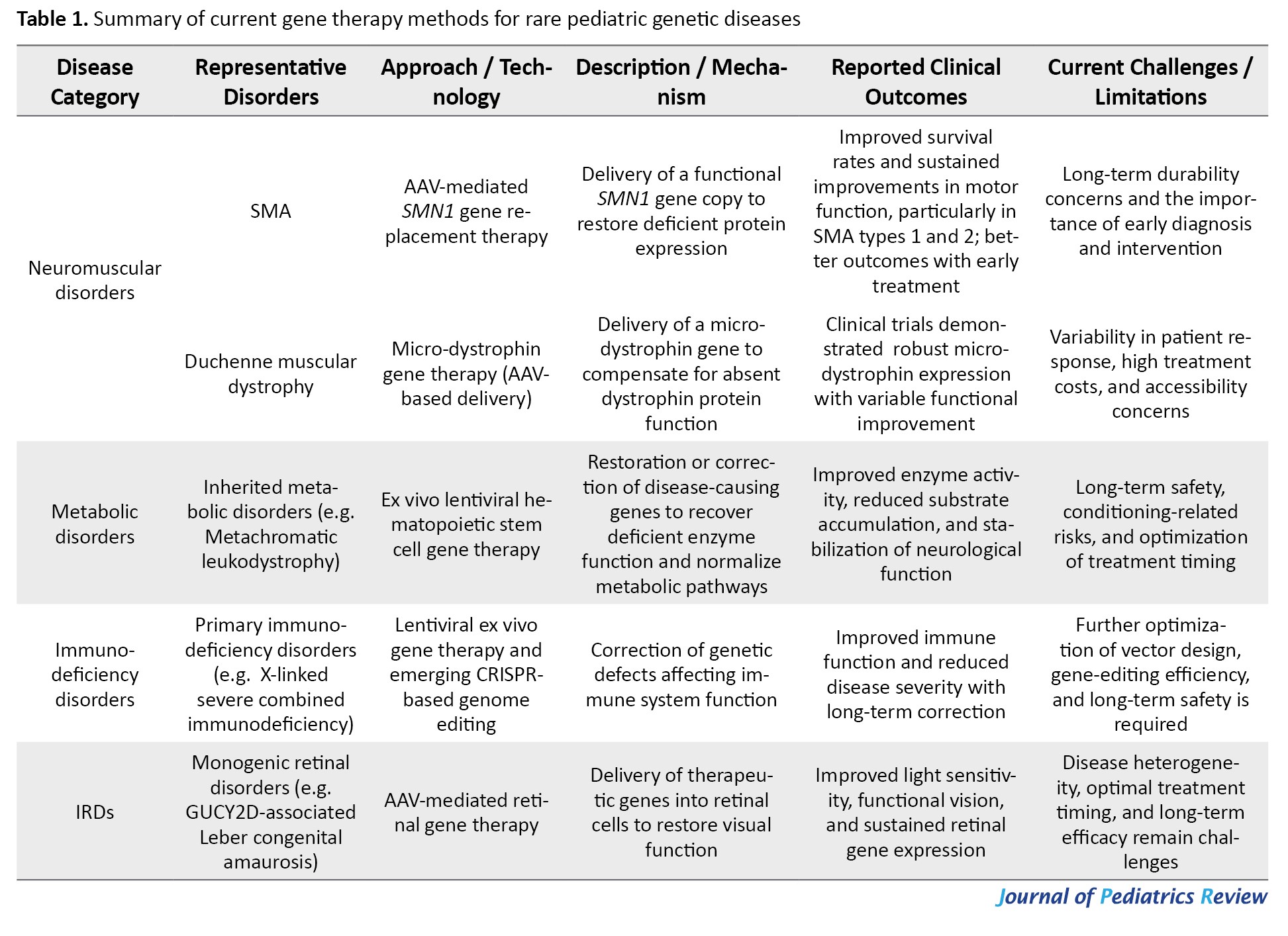
Gene therapy has become a promising method for correcting genetic abnormalities by modifying DNA sequences. Through a range of therapeutic methods, gene therapy aims to overcome the genetic abnormalities that cause disease. In rare pediatric genetic disorders, rapid progress has been made, particularly through the use of viral vectors and genome editing technologies to treat these conditions. These methods can be categorized into gene replacement therapy, gene addition therapy, gene silencing therapy, genome-editing therapy, and cell-based gene therapy (Table 1).
The clinical application of each gene therapy approach depends on the underlying genetic defect. Gene replacement therapy involves delivering a healthy copy of a defective gene into target cells using a viral vector as a delivery system. The goal of this approach is to restore normal gene function and reduce the effects caused by the underlying genetic defect. In gene addition therapy, therapeutic genetic material is delivered to cells to replace lost function and improve cellular performance. In the gene silencing approach, the expression of harmful genes is reduced. The genome-editing approach, particularly those based on the CRISPR-Cas system, modifies disease-causing DNA sequences and offers the possibility of correcting pathogenic mutations. In cell-based gene therapy, a patient’s own cells are genetically engineered outside the body and subsequently returned to the patient, as exemplified by CAR-T cells [26].
Viral vectors
Viral vectors are genetically engineered viruses that are modified to deliver therapeutic genetic material into target cells. They serve as delivery vehicles for gene replacement, gene addition, or genome-editing components. Several viral vector systems have been developed, including AAVs and lentiviruses [27].
The AAV vectors are among the most widely used tools in pediatric gene therapy, because they can efficiently deliver genes into cells. These vectors are particularly suitable for neuromuscular disorders and IRDs [28-31]. AAV vectors may elicit immune responses that can influence treatment efficacy; nevertheless, several AAV-based therapies have demonstrated meaningful clinical benefits in pediatric populations [20, 28–31]. In addition, advances in the development of tissue-specific AAV capsids have enabled more selective targeting of particular tissues, thereby improving the precision of gene delivery [30, 31].
Lentiviral vectors integrate therapeutic genes directly into the host cell’s genome, making them ideal for ex vivo treatments such as modifying hematopoietic stem cells for immunodeficiency disorders [32]. These vectors can provide lasting gene expression but must be carefully engineered to minimize the risk of insertional mutagenesis [32, 33]. Overall, viral vectors form the foundation for many of the current clinical approaches to treating rare pediatric genetic diseases [28, 29].
Genome editing technologies (CRISPR-Cas system based)
The CRISPR-Cas system has transformed gene therapy by allowing scientists to precisely edit disease-causing mutations. The CRISPR-Cas9 system works through a guide RNA (gRNA) that directs the Cas9 nuclease to a specific DNA sequence located next to a PAM site. Once bound, Cas9 creates a targeted DNA break, which is then repaired by the cell’s endogenous repair machinery, resulting in genomic modification [34]. This system was first found in bacteria, and its mechanism contains three steps: recognition, cleavage, and repair. This technology relies on two key elements: gRNA and the CRISPR-associated Cas9 protein. The single gRNA (sgRNA), formed from crRNA and tracRNA, guides the Cas9 endonuclease to the specific genomic sequence, where it introduces a double-strand break in the DNA. Cas9 cleaves the DNA at a position located three base pairs upstream of the PAM site. These double-strand breaks are then repaired by non-homologous end joining (NHEJ) or, with the presence of a template DNA, through homology-directed repair (HDR) [35]. This technology is particularly valuable for monogenic disorders in children as the underlying mutation can be directly targeted and corrected [36-38]. Preclinical studies using CRISPR-based correction have shown promising results in treating metabolic and immune disorders, suggesting therapeutic benefits [36, 37]. However, overcoming hurdles such as off-target effects, immune responses, ethical concerns, and efficient delivery is crucial, as most of the research in this field is still in the preclinical stage; using viral vectors or nanoparticles to carry these components to human patients is still in progress [36, 39].
Cell-based methods
Research into gene therapy for rare pediatric cancers such as inherited retinoblastoma is still in its early phases. Current strategies aim to restore tumor suppressor gene function or to strengthen immune system responses that eliminate cancer cells [33]. Approaches involving viral delivery systems and engineered immune cells are being studied to specifically target cancer-causing pathways. In recent years, one of these novel therapies that revolutionized immunotherapy is chimeric antigen receptor (CAR) T cell therapy. CAR T cells are a type of T-lymphocyte that have been genetically modified. This modification involves equipping them with a synthetic receptor. This engineered receptor is designed to specifically identify and bind to antigens present on the surface of tumor cells. Upon successful recognition and binding, the CAR T-cell is triggered to eliminate the targeted tumor cell.
The first U.S. Food and Drug Administration (FDA) -approved CAR T Cell therapy product in the United States was a landmark event, spurred by the promising outcomes observed with a specific CAR T-cell therapy called tisagenlecleucel. This therapy, which targets the CD19 antigen, demonstrated significant success in treating pediatric patients with B-cell acute lymphoblastic leukemia (B-ALL) [40-42]. This method illustrates how genetically engineered immune cells can provide a targeted and effective treatment option for children diagnosed with cancer. Despite these advances, broader clinical use remains limited by factors including safety, manufacturing complexity, and access [33, 40-42].
Clinical applications in rare pediatric genetic disorders
Neuromuscular disorders
Neuromuscular disorders are one of the most developed fields in pediatric gene therapy, with SMA and Duchenne muscular dystrophy (DMD) as the most prominent methods. The clinical success of gene delivery using AAV has significantly changed the treatment options for these diseases [43, 44]. In SMA, gene replacement therapy aimed at the SMN1 gene has shown considerable clinical benefits, especially when treatment begins early in life. Clinical trials have demonstrated better survival rates and lasting improvements in motor function in pediatric patients, particularly in SMA types 1 and 2 [45, 46]. These findings emphasize the critical importance of early diagnosis and treatment for the best therapeutic outcomes.
The development of AAV-based therapies for SMA is reflected in regulatory approvals and expanding clinical indications [43, 44]. For DMD, gene therapy focuses on delivering a micro-dystrophin gene to make up for the absence of functional dystrophin protein. Early clinical trials have reported promising results, such as improvements in muscle function and disease stabilization. However, the variability in patient responses still poses challenges [43, 47, 48]. Beyond clinical effectiveness, the high cost and complexity of one-time gene therapies for chronic diseases like DMD present major issues related to accessibility and affordability [47]. Together, these findings highlight the potential of gene therapy for pediatric neuromuscular disorders, while also recognizing the challenges that still need to be addressed in clinical and systemic contexts [49].
Metabolic and immunodeficiency disorders
Gene therapy has also shown significant promise for treating rare pediatric metabolic and immunodeficiency disorders. These disorders are often caused by single-gene defects, making them ideal candidates for gene replacement or gene enhancement therapies [50-52]. AAV-based gene delivery systems have been widely studied for conditions such as lysosomal storage diseases, hemophilia, and inherited metabolic disorders, with several clinical trials demonstrating significant biochemical and clinical improvements [50, 51]. In pediatric immunodeficiency disorders, gene therapy has enabled long-term correction of genetic defects, which reduces the need for lifelong supportive treatments. Clinical data from recent clinical trials show improvements in immune function and reduced disease severity after gene-based therapies [52]. As the number of successful clinical trials increases, the regulatory frameworks for these pediatric gene therapies continue to evolve, leading to more trials and approvals [50, 52]. Despite these advances, challenges such as variable gene expression, immune reactions to viral vectors, and the need for long-term safety monitoring remain important in translating gene therapies for metabolic and immunodeficiency disorders into widespread clinical use [49, 51]. Ongoing research is focused on refining vector designs and optimizing dosing strategies to enhance the effectiveness and durability of these therapies in children.
Inherited retinal diseases
The Inherited retinal diseases (IRDs) represent another area where pediatric gene therapy has made significant achievements. AAV-based gene delivery to retinal cells has shown promising safety profiles and functional improvements across various IRD subtypes [53-55]. The eye’s unique immune environment and accessibility have played a key role in the success of gene therapy for these disorders [56]. Clinical trials targeting monogenic retinal diseases have demonstrated improvements in visual functions, such as better light sensitivity and the ability to navigate visually, especially in pediatric patients [53, 54]. Improvements in vector engineering, delivery methods, and promoter choices have further boosted treatment precision and therapeutic outcomes [55].
Long-term follow-up remains important for determining the durability of therapeutic effects and monitoring safety [53-56]. Although clinical results are promising, disease heterogeneity and the optimal timing of intervention remain important challenges [53-56]. Nevertheless, IRDs continue to provide an important model for demonstrating the clinical potential of gene therapy in rare genetic disorders [53-56]. Although clinical results are promising, challenges like disease heterogeneity and the timing of intervention still require ongoing research [53-56]. Nevertheless, IRDs continue to serve as an excellent model for demonstrating the clinical potential of gene therapy in rare pediatric genetic disorders.
Challenges and limitations in pediatric gene therapy
Age-dependent and developmental factors
Pediatric patients present unique challenges because they are still undergoing growth and organ development. The pharmacokinetics, tissue distribution, and immune responses associated with gene therapy vectors may differ substantially between children and adults, potentially affecting both treatment safety and the durability of therapeutic effects [20, 21]. In addition, vector platforms that do not integrate their genetic cargo into the host genome may exhibit reduced persistence over time as target cells proliferate and are replaced [11, 20]. The timing of treatment is also an important consideration. Early intervention may be particularly beneficial for certain pediatric disorders by limiting irreversible tissue damage; however, treatment decisions should also take into account age-related safety concerns and developmental differences in immune responses [15, 45]. These age-dependent and developmental considerations are likewise emphasized in the broader literature on pediatric gene therapy [57–60].
Durability of gene expression and long-term follow-up
One of the ongoing challenges in pediatric gene therapy is achieving durable and stable gene expression. Over time, the body’s immune system or epigenetic mechanisms may lead to the loss of transgene expression. This becomes even more complex when patients develop vector-neutralizing antibodies that reduce the effectiveness of future treatments [61-63]. Long-term follow-up is essential to monitor both the safety and effectiveness of gene therapy, especially because some pediatric patients may require monitoring for many years after treatment [64, 65]. Continued development of standardized long-term follow-up approaches is therefore important for assessing safety, efficacy, and organ-specific outcomes over time [62, 64-66].
Ethical and regulatory considerations
Ethical considerations are particularly important in pediatric gene therapy because of the vulnerability of children and the uncertainties surrounding the long-term consequences of genetic interventions. Key ethical issues include obtaining appropriate informed consent and assent, carefully evaluating the risk–benefit balance, and ensuring equitable access to these therapies [57, 67–69]. In addition, variations in regulatory frameworks across countries may complicate the standardization and implementation of clinical trials [60, 68, 69]. The substantial costs associated with gene therapy also create considerable economic and accessibility barriers, potentially restricting patient access and exacerbating existing healthcare inequalities [58, 60]. The broader impact of gene therapy on patients and their families should also be considered, highlighting the need for healthcare systems to develop innovative financing and reimbursement strategies that improve affordability while minimizing budgetary pressures [70]. Addressing these challenges requires close collaboration among regulatory authorities, researchers, healthcare professionals, and patient advocacy groups to support the safe, effective, equitable, and ethically responsible development and implementation of pediatric gene therapies [60, 71, 72].
Off-target effects
One of the primary challenges associated with the use of the CRISPR-Cas9 system is the risk of off-target effects, which involve unintended and potentially harmful changes to the genome. These effects occur when the Cas9–sgRNA complex binds to genes that are similar to the target, leading to unintended DNA cleavage. Such modifications may result in random mutations, disruption of gene function, or other undesirable biological consequences. The accuracy of this gene editing method is based on two main factors. First, the specificity of sgRNA that recognizes the target sequence, and also the presence of a PAM sequence. PAM-free targets tend to increase the risk of off-target effects. More restricted PAM sequences reduce unwanted effects, as the Cas9 protein is limited to cutting non-specific targets. Understanding and minimizing off-target activity is essential for improving the precision, safety, and reliability of CRISPR-Cas9 system-based research and therapeutic applications. Scientists are working on new methods such as designing more specific guide RNA, using AI for prediction, and also vectors with improved targeted delivery to minimize these non-specific effects [73-75].
Safety and immunogenicity
Safety remains a significant concern in pediatric gene therapy, particularly while using viral vectors like AAV. Immune reactions to these vectors can halt the expression of therapeutic genes and pose risks to the patient’s health. Both innate and adaptive immune responses can be triggered, potentially causing inflammation or the elimination of transduced cells. Viral proteins that are similar to antigens that humans have been exposed to might be neutralized by antibodies. In addition, innate immune cells can cause tissue infiltration if they recognize viral structures [76]. To minimize these risks, strategies such as pre-treatment with immunosuppressive drugs, careful vector selection, and optimizing dosing protocols have been adopted [61, 65, 68, 77]. However, despite these efforts, some pediatric patients still experience unpredictable immune responses, which highlights the need for continuous monitoring throughout treatment [62, 65]. Additionally, recent studies have shown that age-related differences in immune maturity can affect how the body responds to therapy, making personalized treatment plans essential for safety [59].
In recent years, non-viral delivery systems have emerged as promising platforms for introducing gene-editing tools, including CRISPR-Cas9, into target cells. Various nanoparticle-based approaches have been investigated in both in vitro and in vivo models, including the use of non-viral nanoparticles for CRISPR-mediated engineering of immune cells [78]. Despite these advances, such strategies remain largely experimental, and further studies are required to determine their delivery efficiency, safety profile, and therapeutic durability.
Discussion
Gene therapy has emerged as a promising therapeutic strategy for rare pediatric genetic disorders, offering new treatment opportunities for children affected by conditions that have historically had limited therapeutic options. Substantial progress has been achieved through the development of viral vectors, particularly AAV vectors, as well as genome-editing technologies based on the CRISPR-Cas system. Nevertheless, several important biological, clinical, and translational challenges must be addressed before these approaches can be implemented more broadly in routine clinical practice.
One of the major challenges is immunogenicity, particularly the immune response directed against viral vectors and their associated components. Following administration, viral vectors may be recognized as foreign by the host immune system, potentially reducing therapeutic efficacy and increasing the risk of adverse immune-mediated effects. Consequently, considerable research has focused on developing safer vector platforms and alternative delivery strategies capable of minimizing these risks. Non-viral delivery systems, including nanoparticles, have attracted increasing attention because their physicochemical properties can be engineered to optimize the delivery of therapeutic agents and nucleic acids. Surface modification may further alter nanoparticle interactions with target cells and enhance delivery specificity [79–82]. In addition, functional ligands such as aptamers, antibodies, and peptides can be incorporated into lipid- and polymer-based nanocarriers to improve their targeting characteristics [83–85]. Nanoparticle-based platforms have also been investigated for the delivery of CRISPR-Cas components, including applications in in vivo genome editing; however, most of these approaches remain at the preclinical stage [86–91]. Further clinical studies are therefore required to determine whether non-viral delivery systems can achieve levels of efficacy, safety, and durability comparable to those of established viral-vector platforms.
Overall, gene therapy represents a transformative approach to the treatment of rare pediatric genetic disorders, although substantial clinical and biological challenges remain. Current gene therapy strategies are particularly well suited to monogenic disorders, in which correction, replacement, or modulation of a single disease-causing gene may provide meaningful clinical benefit. In contrast, the treatment of polygenic disorders is considerably more complex because disease development and progression are influenced by interactions among multiple genetic variants and environmental factors. Broader and safer implementation of gene therapy in pediatric populations will therefore require continued technological innovation, rigorous clinical investigation, and long-term follow-up to evaluate therapeutic efficacy, durability, and safety [90, 91].
Conclusion
Gene therapy is a great method for treating rare pediatric genetic diseases. While significant achievements have been made in this field, several clinical challenges hinder its widespread use in children. The safety of these treatments remains a critical concern, as immune responses increase the risk of low efficacy and poor long-term outcomes. Moreover, children have unique physiological characteristics; therefore, they require careful consideration in treatment. Another concern is the durability of gene expression, which requires long-term follow-up, as immune responses or loss of gene function over time remain a concern. Ethical considerations further complicate the clinical adoption of gene therapies, especially in pediatric patients. The high costs associated with gene therapy are also significant barriers, particularly in resource-limited settings. Despite these challenges, the future of gene therapy in rare pediatric diseases remains promising.
As gene therapy evolves toward advanced and innovative treatment approaches, such as next-generation CRISPR-Cas9 genome editing, non-viral vectors based on nanotechnology, and AI-driven personalized therapies, it is crucial to maintain a human-centered approach to ensure equal access to healthcare services for all people. These approaches not only have the potential to improve clinical outcomes but also accelerate global access to these treatments by integrating digital platforms and advanced cold-chain supply systems. With more advancement and availability, gene therapy can offer new hope for children with genetic disorders, helping them lead healthier lives and achieve better long-term outcomes.
Table 1 provides an overview of the main gene therapy approaches discussed in this review and their use in selected rare pediatric diseases. This highlights the diversity of gene therapy platforms and their expanding role in pediatric precision medicine.
Ethical Considerations
Compliance with ethical guidelines
There were no ethical considerations to be considered in this research.
Funding
This research did not receive any grant from funding agencies in the public, commercial, or non-profit sectors.
Authors contributions
All authors contributed equally to the conception and design of the study, data collection and analysis, interception of the results and drafting of the manuscript. Each author approved the final version of the manuscript for submission.
Conflicts of interest
The authors declared no conflict of interest.
Rare genetic disorders affecting children represent a substantial global health burden that is often neglected. Although these disorders affect a limited number of children, they affect millions of children worldwide [1]. The majority of rare pediatric genetic disorders lack disease-modifying therapies, and current standards of care are mainly supportive or symptomatic, leaving profound unmet medical needs for affected children and their families [2]. Delays in diagnosis, differences in how the disease appears among patients, and the lack of available treatments make clinical care and long-term outcomes more difficult in children [3, 4]. Rare pediatric genetic disorders arise from a wide spectrum of genetic defects that may result from single-gene mutations, chromosomal abnormalities, copy number variations, or complex genomic rearrangements. Depending on the underlying molecular mechanism, genetic defects may lead to loss-of-function, gain-of-function, dominant-negative effects, or abnormal gene regulation. These alterations can affect various biological processes such as metabolism, neuromuscular function, and immune regulation, which are associated with severe clinical symptoms in the first years of life [5].
Genetic disorders in children can have several types. For instance, monogenic disorders, such as spinal muscular atrophy (SMA), are caused by mutations in a single gene. Other conditions arise from chromosomal abnormalities involving changes in chromosome structure or number. Some children may have inherited metabolic disorders, which occur when mutations affect genes responsible for producing enzymes or transport proteins that play essential roles in metabolic processes. Primary immunodeficiency disorders are other types that develop as a result of genetic alterations that impair the formation or activity of the immune system. Therefore, the severity and clinical presentation of these disorders can vary widely depending on the affected gene and the resulting functional consequences [5, 6].
Over the past decade, gene therapy has emerged as a groundbreaking therapeutic approach for rare genetic disorders that directly targets the molecular basis of the disease. Unlike conventional pharmacological interventions, gene therapy targets defective genes, thereby offering the potential for sustained or even lifelong clinical benefit [7-9]. Advances in viral vector engineering—particularly adeno-associated virus (AAV) and lentiviral systems— have enhanced gene delivery to specific tissues, supporting clinical use in several pediatric diseases [10-12]. At the same time, advances in genome-editing technologies, particularly CRISPR-based systems, have further expanded the therapeutic landscape [13, 14]. Clinical studies have already demonstrated significant therapeutic effects on pediatric disorders, including neuromuscular diseases such as SMA, inherited retinal diseases (IRDs), and primary immunodeficiency conditions [15-17]. Meanwhile, gene-based approaches are also being investigated for certain inherited pediatric cancer syndromes, including inherited retinoblastoma, showing that genetic therapies can extend beyond traditional single-gene disorders [18].
Despite remarkable progress, gene therapy in pediatric populations presents unique clinical challenges that distinguish it from adult applications. Safety and the possibility of immune responses are important factors, as the body’s response to viral vectors or the delivered gene can reduce treatment effectiveness [19, 20]. Pediatric-specific biological factors—including growth, organ development, and cellular turnover—raise critical questions regarding the optimal dose, the persistence of gene expression, and the stability of treatment outcomes over the long term [21, 22]. Moreover, the need for long-term follow-up after treatment brings practical, financial, and ethical challenges, which are especially significant in pediatric care [23]. Ethical and legal considerations also influence gene therapy in pediatrics. Ensuring informed consent is needed to find the right balance between parents’ choices and the child’s best interest, while rules and guidelines must accommodate the realities of rare patient groups and incomplete long-term data [24, 25]. Addressing these limitations will require continued modification of therapeutic platforms and disease-specific treatment strategies. In this study, we aim to provide a comprehensive review of gene therapy strategies for rare genetic disorders in children, with a particular focus on clinical challenges.
Materials and Methods
This is a narrative review study. A comprehensive search was conducted in PubMed, Scopus, Web of Science, and Google Scholar databases to identify all pertinent studies concerning gene therapy applications in rare pediatric genetic diseases, published from January 1, 2010, to August 31, 2026, by using medical subject headings (MeSH) terms (combined with Boolean operators “AND” and “OR”) related to three important concepts including intervention (“gene therapy” OR “gene transfer” OR “genome editing” OR “CRISPR-Cas9” OR “viral vectors” OR “AAV” OR “lentivirus”); population (“pediatric” OR “child” OR “children” OR “adolescent” OR “infant” OR “neonate” OR “rare diseases” OR “orphan diseases”); and outcome (“clinical trial” OR “treatment outcome” OR “safety” OR “adverse events”). Furthermore, to capture literature that might be missed by keyword matching alone, we manually searched the reference lists of articles and included additional eligible citations (snowballing technique). The screening process was conducted in a rigorous, multi-phase manner to uphold the integrity of the review. Two authors, working independently, performed the initial assessment of titles and abstracts to minimize selection bias. Discrepancies between the two reviewers were resolved through consensus or consultation with the third author.
Studies would be included if they met the following criteria: published in the English language, focused on human subjects or clinically relevant preclinical models; investigated therapeutic interventions, clinical efficacy, or safety profiles of gene therapy in pediatric patients (aged 0–18 years) with rare genetic disorders; and were original research articles, clinical trials, phase I-III trials, systematic reviews, or meta-analyses. We excluded non-English articles, conference abstracts, editorials, letters to the editor, expert opinions lacking data, and studies that exclusively addressed adult populations or non-genetic conditions.
The data from the included studies were extracted using an online form. The extraction process targeted specific variables, including study design, participants’ demographic characteristics, specific disease types (e.g. SMA, metabolic disorders), vector types, genome editing tools, therapeutic outcomes, and reported adverse events such as immune reactions or off-target effects. The synthesized data was then subjected to a narrative analysis to discuss technological progress, clinical challenges, and future directions in the field.
Results
In this study, we reviewed more than 85 papers on challenges and concerns related to innovations in gene therapy technologies, particularly in pediatrics. The results are categorized into three sections: “Gene therapy strategies in rare pediatric genetic disorders”, “clinical applications in rare pediatric genetic disorders”, and “challenges and limitations in pediatric gene therapy”.
Gene therapy strategies in rare pediatric genetic disorders
Gene therapy has become a promising method for correcting genetic abnormalities by modifying DNA sequences. Through a range of therapeutic methods, gene therapy aims to overcome the genetic abnormalities that cause disease. In rare pediatric genetic disorders, rapid progress has been made, particularly through the use of viral vectors and genome editing technologies to treat these conditions. These methods can be categorized into gene replacement therapy, gene addition therapy, gene silencing therapy, genome-editing therapy, and cell-based gene therapy (Table 1).
The clinical application of each gene therapy approach depends on the underlying genetic defect. Gene replacement therapy involves delivering a healthy copy of a defective gene into target cells using a viral vector as a delivery system. The goal of this approach is to restore normal gene function and reduce the effects caused by the underlying genetic defect. In gene addition therapy, therapeutic genetic material is delivered to cells to replace lost function and improve cellular performance. In the gene silencing approach, the expression of harmful genes is reduced. The genome-editing approach, particularly those based on the CRISPR-Cas system, modifies disease-causing DNA sequences and offers the possibility of correcting pathogenic mutations. In cell-based gene therapy, a patient’s own cells are genetically engineered outside the body and subsequently returned to the patient, as exemplified by CAR-T cells [26].
Viral vectors
Viral vectors are genetically engineered viruses that are modified to deliver therapeutic genetic material into target cells. They serve as delivery vehicles for gene replacement, gene addition, or genome-editing components. Several viral vector systems have been developed, including AAVs and lentiviruses [27].
The AAV vectors are among the most widely used tools in pediatric gene therapy, because they can efficiently deliver genes into cells. These vectors are particularly suitable for neuromuscular disorders and IRDs [28-31]. AAV vectors may elicit immune responses that can influence treatment efficacy; nevertheless, several AAV-based therapies have demonstrated meaningful clinical benefits in pediatric populations [20, 28–31]. In addition, advances in the development of tissue-specific AAV capsids have enabled more selective targeting of particular tissues, thereby improving the precision of gene delivery [30, 31].
Lentiviral vectors integrate therapeutic genes directly into the host cell’s genome, making them ideal for ex vivo treatments such as modifying hematopoietic stem cells for immunodeficiency disorders [32]. These vectors can provide lasting gene expression but must be carefully engineered to minimize the risk of insertional mutagenesis [32, 33]. Overall, viral vectors form the foundation for many of the current clinical approaches to treating rare pediatric genetic diseases [28, 29].
Genome editing technologies (CRISPR-Cas system based)
The CRISPR-Cas system has transformed gene therapy by allowing scientists to precisely edit disease-causing mutations. The CRISPR-Cas9 system works through a guide RNA (gRNA) that directs the Cas9 nuclease to a specific DNA sequence located next to a PAM site. Once bound, Cas9 creates a targeted DNA break, which is then repaired by the cell’s endogenous repair machinery, resulting in genomic modification [34]. This system was first found in bacteria, and its mechanism contains three steps: recognition, cleavage, and repair. This technology relies on two key elements: gRNA and the CRISPR-associated Cas9 protein. The single gRNA (sgRNA), formed from crRNA and tracRNA, guides the Cas9 endonuclease to the specific genomic sequence, where it introduces a double-strand break in the DNA. Cas9 cleaves the DNA at a position located three base pairs upstream of the PAM site. These double-strand breaks are then repaired by non-homologous end joining (NHEJ) or, with the presence of a template DNA, through homology-directed repair (HDR) [35]. This technology is particularly valuable for monogenic disorders in children as the underlying mutation can be directly targeted and corrected [36-38]. Preclinical studies using CRISPR-based correction have shown promising results in treating metabolic and immune disorders, suggesting therapeutic benefits [36, 37]. However, overcoming hurdles such as off-target effects, immune responses, ethical concerns, and efficient delivery is crucial, as most of the research in this field is still in the preclinical stage; using viral vectors or nanoparticles to carry these components to human patients is still in progress [36, 39].
Cell-based methods
Research into gene therapy for rare pediatric cancers such as inherited retinoblastoma is still in its early phases. Current strategies aim to restore tumor suppressor gene function or to strengthen immune system responses that eliminate cancer cells [33]. Approaches involving viral delivery systems and engineered immune cells are being studied to specifically target cancer-causing pathways. In recent years, one of these novel therapies that revolutionized immunotherapy is chimeric antigen receptor (CAR) T cell therapy. CAR T cells are a type of T-lymphocyte that have been genetically modified. This modification involves equipping them with a synthetic receptor. This engineered receptor is designed to specifically identify and bind to antigens present on the surface of tumor cells. Upon successful recognition and binding, the CAR T-cell is triggered to eliminate the targeted tumor cell.
The first U.S. Food and Drug Administration (FDA) -approved CAR T Cell therapy product in the United States was a landmark event, spurred by the promising outcomes observed with a specific CAR T-cell therapy called tisagenlecleucel. This therapy, which targets the CD19 antigen, demonstrated significant success in treating pediatric patients with B-cell acute lymphoblastic leukemia (B-ALL) [40-42]. This method illustrates how genetically engineered immune cells can provide a targeted and effective treatment option for children diagnosed with cancer. Despite these advances, broader clinical use remains limited by factors including safety, manufacturing complexity, and access [33, 40-42].
Clinical applications in rare pediatric genetic disorders
Neuromuscular disorders
Neuromuscular disorders are one of the most developed fields in pediatric gene therapy, with SMA and Duchenne muscular dystrophy (DMD) as the most prominent methods. The clinical success of gene delivery using AAV has significantly changed the treatment options for these diseases [43, 44]. In SMA, gene replacement therapy aimed at the SMN1 gene has shown considerable clinical benefits, especially when treatment begins early in life. Clinical trials have demonstrated better survival rates and lasting improvements in motor function in pediatric patients, particularly in SMA types 1 and 2 [45, 46]. These findings emphasize the critical importance of early diagnosis and treatment for the best therapeutic outcomes.
The development of AAV-based therapies for SMA is reflected in regulatory approvals and expanding clinical indications [43, 44]. For DMD, gene therapy focuses on delivering a micro-dystrophin gene to make up for the absence of functional dystrophin protein. Early clinical trials have reported promising results, such as improvements in muscle function and disease stabilization. However, the variability in patient responses still poses challenges [43, 47, 48]. Beyond clinical effectiveness, the high cost and complexity of one-time gene therapies for chronic diseases like DMD present major issues related to accessibility and affordability [47]. Together, these findings highlight the potential of gene therapy for pediatric neuromuscular disorders, while also recognizing the challenges that still need to be addressed in clinical and systemic contexts [49].
Metabolic and immunodeficiency disorders
Gene therapy has also shown significant promise for treating rare pediatric metabolic and immunodeficiency disorders. These disorders are often caused by single-gene defects, making them ideal candidates for gene replacement or gene enhancement therapies [50-52]. AAV-based gene delivery systems have been widely studied for conditions such as lysosomal storage diseases, hemophilia, and inherited metabolic disorders, with several clinical trials demonstrating significant biochemical and clinical improvements [50, 51]. In pediatric immunodeficiency disorders, gene therapy has enabled long-term correction of genetic defects, which reduces the need for lifelong supportive treatments. Clinical data from recent clinical trials show improvements in immune function and reduced disease severity after gene-based therapies [52]. As the number of successful clinical trials increases, the regulatory frameworks for these pediatric gene therapies continue to evolve, leading to more trials and approvals [50, 52]. Despite these advances, challenges such as variable gene expression, immune reactions to viral vectors, and the need for long-term safety monitoring remain important in translating gene therapies for metabolic and immunodeficiency disorders into widespread clinical use [49, 51]. Ongoing research is focused on refining vector designs and optimizing dosing strategies to enhance the effectiveness and durability of these therapies in children.
Inherited retinal diseases
The Inherited retinal diseases (IRDs) represent another area where pediatric gene therapy has made significant achievements. AAV-based gene delivery to retinal cells has shown promising safety profiles and functional improvements across various IRD subtypes [53-55]. The eye’s unique immune environment and accessibility have played a key role in the success of gene therapy for these disorders [56]. Clinical trials targeting monogenic retinal diseases have demonstrated improvements in visual functions, such as better light sensitivity and the ability to navigate visually, especially in pediatric patients [53, 54]. Improvements in vector engineering, delivery methods, and promoter choices have further boosted treatment precision and therapeutic outcomes [55].
Long-term follow-up remains important for determining the durability of therapeutic effects and monitoring safety [53-56]. Although clinical results are promising, disease heterogeneity and the optimal timing of intervention remain important challenges [53-56]. Nevertheless, IRDs continue to provide an important model for demonstrating the clinical potential of gene therapy in rare genetic disorders [53-56]. Although clinical results are promising, challenges like disease heterogeneity and the timing of intervention still require ongoing research [53-56]. Nevertheless, IRDs continue to serve as an excellent model for demonstrating the clinical potential of gene therapy in rare pediatric genetic disorders.
Challenges and limitations in pediatric gene therapy
Age-dependent and developmental factors
Pediatric patients present unique challenges because they are still undergoing growth and organ development. The pharmacokinetics, tissue distribution, and immune responses associated with gene therapy vectors may differ substantially between children and adults, potentially affecting both treatment safety and the durability of therapeutic effects [20, 21]. In addition, vector platforms that do not integrate their genetic cargo into the host genome may exhibit reduced persistence over time as target cells proliferate and are replaced [11, 20]. The timing of treatment is also an important consideration. Early intervention may be particularly beneficial for certain pediatric disorders by limiting irreversible tissue damage; however, treatment decisions should also take into account age-related safety concerns and developmental differences in immune responses [15, 45]. These age-dependent and developmental considerations are likewise emphasized in the broader literature on pediatric gene therapy [57–60].
Durability of gene expression and long-term follow-up
One of the ongoing challenges in pediatric gene therapy is achieving durable and stable gene expression. Over time, the body’s immune system or epigenetic mechanisms may lead to the loss of transgene expression. This becomes even more complex when patients develop vector-neutralizing antibodies that reduce the effectiveness of future treatments [61-63]. Long-term follow-up is essential to monitor both the safety and effectiveness of gene therapy, especially because some pediatric patients may require monitoring for many years after treatment [64, 65]. Continued development of standardized long-term follow-up approaches is therefore important for assessing safety, efficacy, and organ-specific outcomes over time [62, 64-66].
Ethical and regulatory considerations
Ethical considerations are particularly important in pediatric gene therapy because of the vulnerability of children and the uncertainties surrounding the long-term consequences of genetic interventions. Key ethical issues include obtaining appropriate informed consent and assent, carefully evaluating the risk–benefit balance, and ensuring equitable access to these therapies [57, 67–69]. In addition, variations in regulatory frameworks across countries may complicate the standardization and implementation of clinical trials [60, 68, 69]. The substantial costs associated with gene therapy also create considerable economic and accessibility barriers, potentially restricting patient access and exacerbating existing healthcare inequalities [58, 60]. The broader impact of gene therapy on patients and their families should also be considered, highlighting the need for healthcare systems to develop innovative financing and reimbursement strategies that improve affordability while minimizing budgetary pressures [70]. Addressing these challenges requires close collaboration among regulatory authorities, researchers, healthcare professionals, and patient advocacy groups to support the safe, effective, equitable, and ethically responsible development and implementation of pediatric gene therapies [60, 71, 72].
Off-target effects
One of the primary challenges associated with the use of the CRISPR-Cas9 system is the risk of off-target effects, which involve unintended and potentially harmful changes to the genome. These effects occur when the Cas9–sgRNA complex binds to genes that are similar to the target, leading to unintended DNA cleavage. Such modifications may result in random mutations, disruption of gene function, or other undesirable biological consequences. The accuracy of this gene editing method is based on two main factors. First, the specificity of sgRNA that recognizes the target sequence, and also the presence of a PAM sequence. PAM-free targets tend to increase the risk of off-target effects. More restricted PAM sequences reduce unwanted effects, as the Cas9 protein is limited to cutting non-specific targets. Understanding and minimizing off-target activity is essential for improving the precision, safety, and reliability of CRISPR-Cas9 system-based research and therapeutic applications. Scientists are working on new methods such as designing more specific guide RNA, using AI for prediction, and also vectors with improved targeted delivery to minimize these non-specific effects [73-75].
Safety and immunogenicity
Safety remains a significant concern in pediatric gene therapy, particularly while using viral vectors like AAV. Immune reactions to these vectors can halt the expression of therapeutic genes and pose risks to the patient’s health. Both innate and adaptive immune responses can be triggered, potentially causing inflammation or the elimination of transduced cells. Viral proteins that are similar to antigens that humans have been exposed to might be neutralized by antibodies. In addition, innate immune cells can cause tissue infiltration if they recognize viral structures [76]. To minimize these risks, strategies such as pre-treatment with immunosuppressive drugs, careful vector selection, and optimizing dosing protocols have been adopted [61, 65, 68, 77]. However, despite these efforts, some pediatric patients still experience unpredictable immune responses, which highlights the need for continuous monitoring throughout treatment [62, 65]. Additionally, recent studies have shown that age-related differences in immune maturity can affect how the body responds to therapy, making personalized treatment plans essential for safety [59].
In recent years, non-viral delivery systems have emerged as promising platforms for introducing gene-editing tools, including CRISPR-Cas9, into target cells. Various nanoparticle-based approaches have been investigated in both in vitro and in vivo models, including the use of non-viral nanoparticles for CRISPR-mediated engineering of immune cells [78]. Despite these advances, such strategies remain largely experimental, and further studies are required to determine their delivery efficiency, safety profile, and therapeutic durability.
Discussion
Gene therapy has emerged as a promising therapeutic strategy for rare pediatric genetic disorders, offering new treatment opportunities for children affected by conditions that have historically had limited therapeutic options. Substantial progress has been achieved through the development of viral vectors, particularly AAV vectors, as well as genome-editing technologies based on the CRISPR-Cas system. Nevertheless, several important biological, clinical, and translational challenges must be addressed before these approaches can be implemented more broadly in routine clinical practice.
One of the major challenges is immunogenicity, particularly the immune response directed against viral vectors and their associated components. Following administration, viral vectors may be recognized as foreign by the host immune system, potentially reducing therapeutic efficacy and increasing the risk of adverse immune-mediated effects. Consequently, considerable research has focused on developing safer vector platforms and alternative delivery strategies capable of minimizing these risks. Non-viral delivery systems, including nanoparticles, have attracted increasing attention because their physicochemical properties can be engineered to optimize the delivery of therapeutic agents and nucleic acids. Surface modification may further alter nanoparticle interactions with target cells and enhance delivery specificity [79–82]. In addition, functional ligands such as aptamers, antibodies, and peptides can be incorporated into lipid- and polymer-based nanocarriers to improve their targeting characteristics [83–85]. Nanoparticle-based platforms have also been investigated for the delivery of CRISPR-Cas components, including applications in in vivo genome editing; however, most of these approaches remain at the preclinical stage [86–91]. Further clinical studies are therefore required to determine whether non-viral delivery systems can achieve levels of efficacy, safety, and durability comparable to those of established viral-vector platforms.
Overall, gene therapy represents a transformative approach to the treatment of rare pediatric genetic disorders, although substantial clinical and biological challenges remain. Current gene therapy strategies are particularly well suited to monogenic disorders, in which correction, replacement, or modulation of a single disease-causing gene may provide meaningful clinical benefit. In contrast, the treatment of polygenic disorders is considerably more complex because disease development and progression are influenced by interactions among multiple genetic variants and environmental factors. Broader and safer implementation of gene therapy in pediatric populations will therefore require continued technological innovation, rigorous clinical investigation, and long-term follow-up to evaluate therapeutic efficacy, durability, and safety [90, 91].
Conclusion
Gene therapy is a great method for treating rare pediatric genetic diseases. While significant achievements have been made in this field, several clinical challenges hinder its widespread use in children. The safety of these treatments remains a critical concern, as immune responses increase the risk of low efficacy and poor long-term outcomes. Moreover, children have unique physiological characteristics; therefore, they require careful consideration in treatment. Another concern is the durability of gene expression, which requires long-term follow-up, as immune responses or loss of gene function over time remain a concern. Ethical considerations further complicate the clinical adoption of gene therapies, especially in pediatric patients. The high costs associated with gene therapy are also significant barriers, particularly in resource-limited settings. Despite these challenges, the future of gene therapy in rare pediatric diseases remains promising.
As gene therapy evolves toward advanced and innovative treatment approaches, such as next-generation CRISPR-Cas9 genome editing, non-viral vectors based on nanotechnology, and AI-driven personalized therapies, it is crucial to maintain a human-centered approach to ensure equal access to healthcare services for all people. These approaches not only have the potential to improve clinical outcomes but also accelerate global access to these treatments by integrating digital platforms and advanced cold-chain supply systems. With more advancement and availability, gene therapy can offer new hope for children with genetic disorders, helping them lead healthier lives and achieve better long-term outcomes.
Table 1 provides an overview of the main gene therapy approaches discussed in this review and their use in selected rare pediatric diseases. This highlights the diversity of gene therapy platforms and their expanding role in pediatric precision medicine.
Ethical Considerations
Compliance with ethical guidelines
There were no ethical considerations to be considered in this research.
Funding
This research did not receive any grant from funding agencies in the public, commercial, or non-profit sectors.
Authors contributions
All authors contributed equally to the conception and design of the study, data collection and analysis, interception of the results and drafting of the manuscript. Each author approved the final version of the manuscript for submission.
Conflicts of interest
The authors declared no conflict of interest.
References
- Khawaja S, Ali RH, Ahmed I, Umair M. Gene Therapy in Rare Genetic Disorders: Current Progress and Future Perspectives. Curr Genomics. 2025; 26(4):278-89. [DOI:10.2174/0113892029361490250310041259]
- Nguengang Wakap S, Lambert DM, Olry A, Rodwell C, Gueydan C, Lanneau V, et al. Estimating cumulative point prevalence of rare diseases: Analysis of the Orphanet database. Eur J Hum Genet. 2020; 28(2):165-73. [DOI:10.1038/s41431-019-0508-0] [PMID]
- Hwu WL. New era in the diagnosis and treatment of pediatric genetic diseases. Pediatr Neonatol. 2023; 64(Suppl 1):S1-S2. [DOI:10.1016/j.pedneo.2022.12.003] [PMID]
- Hedrich CM. Importance and Potential of Rare Disease Research in Pediatric Rheumatology and Beyond: Pushing Frontiers. ACR Open Rheumatol. 2025; 7(12):e70138. [DOI:10.1002/acr2.70138] [PMID]
- Jackson M, Marks L, May GHW, Wilson JB. The genetic basis of disease. Essays Biochem. 2018; 62(5):643-723. [DOI:10.1042/EBC20170053] [PMID]
- Chauhan PR, Tanaka J. Genetics, Chromosome Abnormalities. 2026 Apr 11. In: StatPearls [Internet]. Treasure Island (FL): StatPearls Publishing; 2026. [PMID]
- Boycott KM, Hartley T, Kernohan KD, Dyment DA, Howley H, Innes AM, et al. Care4Rare Canada: Outcomes from a decade of network science for rare disease gene discovery. Am J Hum Genet. 2022; 109(11):1947-59. [DOI:10.1016/j.ajhg.2022.10.002] [PMID]
- Grošelj U, Kavčič M, Drole Torkar A, Kafol J, Lainšček D, Jerala R, et al. Gene therapy of rare diseases as a milestone in medicine-overview of the field and report on initial experiences in Slovenia. Orphanet J Rare Dis. 2025; 20(1):279. [DOI:10.1186/s13023-025-03828-8] [PMID]
- Dunbar CE, High KA, Joung JK, Kohn DB, Ozawa K, Sadelain M. Gene therapy comes of age. Science. 2018; 359(6372):eaan4672. [DOI:10.1126/science.aan4672] [PMID]
- Kirschner J, Cathomen T. Gene therapy for monogenic inherited disorders: Opportunities and challenges. Dtsch Arztebl Int. 2020; 117(51-52):878. [DOI:10.3238/arztebl.2020.0878]
- Wang D, Tai PW, Gao G. Adeno-associated virus vector as a platform for gene therapy delivery. Nat Rev Drug Discov. 2019; 18(5):358-78. [DOI:10.1038/s41573-019-0012-9] [PMID]
- Wang JH, Gessler DJ, Zhan W, Gallagher TL, Gao G. Adeno-associated virus as a delivery vector for gene therapy of human diseases. Signal Transduct Target Ther. 2024; 9(1):78. [DOI:10.1038/s41392-024-01780-w] [PMID]
- Li T, Yang Y, Qi H, Cui W, Zhang L, Fu X, et al. CRISPR/Cas9 therapeutics: Progress and prospects. Signal Transduct Target Ther. 2023; 8(1):36. [DOI:10.1038/s41392-023-01309-7] [PMID]
- Asmamaw M, Zawdie B. Mechanism and applications of CRISPR/Cas-9-mediated genome editing. Biologics. 2021; 15:353-61. [DOI:10.2147/BTT.S326422] [PMID]
- Mendell JR, Al-Zaidy S, Shell R, Arnold WD, Rodino-Klapac LR, Prior TW, et al. Single-dose gene-replacement therapy for spinal muscular atrophy. N Engl J Med. 2017; 377(18):1713-22. [DOI:10.1056/NEJMoa1706198]
- Hu ML, Edwards TL, O'Hare F, Hickey DG, Wang JH, Liu Z, et al. Gene therapy for inherited retinal diseases: Progress and possibilities. Clin Exp Optom. 2021; 104(4):444-54. [DOI:10.1080/08164622.2021.1880863] [PMID]
- Kohn LA, Kohn DB. Gene therapies for primary immune deficiencies. Front Immunol. 2021; 12:648951. [DOI:10.3389/fimmu.2021.648951] [PMID]
- Moaveni AK, Amiri M, Shademan B, Farhadi A, Behroozi J, Nourazarian A. Advances and challenges in gene therapy strategies for pediatric cancer: A comprehensive update. Front Mol Biosci. 2024; 11:1382190. [DOI:10.3389/fmolb.2024.1382190] [PMID]
- Mohammadian Gol T, Zahedipour F, Trosien P, Ureña-Bailén G, Kim M, Antony JS, et al. Gene therapy in pediatrics - Clinical studies and approved drugs (as of 2023). Life Sci. 2024; 348:122685. [DOI:10.1016/j.lfs.2024.122685] [PMID]
- Muramatsu K, Muramatsu SI. Adeno-associated virus vector-based gene therapies for pediatric diseases. Pediatr Neonatol. 2023; 64(Suppl 1):S3-S9. [DOI:10.1016/j.pedneo.2022.09.004] [PMID]
- Gardin A, Ronzitti G. Current limitations of gene therapy for rare pediatric diseases: Lessons learned from clinical experience with AAV vectors. Arch Pediatr. 2023; 30(8S1):8S46-52. [DOI:10.1016/S0929-693X(23)00227-0] [PMID]
- Alexander MS, Robin NH. Riding the gene therapy wave: challenges and opportunities for rare disease patients and clinicians. Curr Opin Pediatr. 2024; 36(6):619-23. [DOI:10.1097/MOP.0000000000001402] [PMID]
- Ansah EO. Ethical challenges and controversies in the practice and advancement of gene therapy. Adv Cell Gene Ther. 2022; 2022(1):1015996. [DOI:10.1155/2022/1015996]
- Bateman-House A, Shah LD, Escandon R, McFadyen A, Hunt C. Somatic gene therapy research in pediatric populations: Ethical issues and guidance for operationalizing early phase trials. Pharmaceut Med. 2023; 37(1):17-24.[DOI:10.1007/s40290-022-00451-x] [PMID]
- Iyer AA, Saade D, Bharucha-Goebel D, Foley AR, Paredes E, Gray S, et al. Ethical challenges for a new generation of early-phase pediatric gene therapy trials. Genet Med. 2021; 23(11):2057-66. [DOI:10.1038/s41436-021-01245-3] [PMID]
- Ji R, Chen Q, Zhang Y. Emerging trends in gene and cell therapy: CRISPR in DNA editing and beyond. Cell Rep Med. 2026; 7(1):102459. [DOI:10.1016/j.xcrm.2025.102459] [PMID]
- Park KS, Cho YI, Mitragotri S, Zhao Z. Viral vector-based gene therapies in the clinic: An update. Bioeng Transl Med. 2025; 11(1):e70106. [DOI:10.1002/btm2.70106] [PMID]
- Zhou L, Wang Y, Xu Y, Zhang Y, Zhu C. Advances in AAV-mediated gene replacement therapy for pediatric monogenic neurological disorders. Mol Ther Methods Clin Dev. 2024; 32(4):101357. [DOI:10.1016/j.omtm.2024.101357] [PMID]
- Bengtsson NE, Tasfaout H, Chamberlain JS. The road toward AAV-mediated gene therapy of Duchenne muscular dystrophy. Mol Ther. 2025; 33(5):2035-51. [DOI:10.1016/j.ymthe.2025.03.065] [PMID]
- Wang X, Lin X, He H, Peng J. Adeno-associated virus-mediated gene therapy for rare pediatric neurogenetic diseases: Current status and outlook. J Cent South Univ Med Sci. 2023; 48(9):1388-96. [DOI:10.11817/j.issn.1672-7347.2023.220639] [PMID]
- Mendell JR, Al-Zaidy SA, Rodino-Klapac LR, Goodspeed K, Gray SJ, Kay CN, et al. Current clinical applications of in vivo gene therapy with AAVs. Mol Ther. 2021; 29(2):464-88. [DOI:10.1016/j.ymthe.2020.12.007] [PMID]
- Papaioannou I, Owen JS, Yáñez-Muñoz RJ. Clinical applications of gene therapy for rare diseases: A review. Int J Exp Pathol. 2023; 104(4):154-76. [DOI:10.1111/iep.12478] [PMID]
- Rossig C, Pearson AD, Vassal G, Scobie N, Bird N, Blanc P, et al. Chimeric Antigen Receptor (CAR) T-Cell Products for Pediatric Cancers: Why Alternative Development Paths Are Needed. J Clin Oncol. 2024; 42(3):253-7. [DOI:10.1200/JCO.23.01314] [PMID]
- Miao Y, Li C, Su Y, Peng T, Wang J, Liu S, et al. The application of CRISPR-Cas9 system in brain diseases. Nanomedicine (Lond). 2026; 21(6):899-920. [DOI:10.1080/17435889.2026.2629031] [PMID]
- Park SJ, Lee GE, Cho SM, Choi EH. Recent applications, future perspectives, and limitations of the CRISPR-Cas system. Mol Ther Nucleic Acids. 2025; 36(3):102634. [DOI:10.1016/j.omtn.2025.102634] [PMID]
- Levesque S, Bauer DE. CRISPR-based therapeutic genome editing for inherited blood disorders. Nat Rev Drug Discov. 2025; 24(12):907-25. [DOI:10.1038/s41573-025-01236-y] [PMID]
- Lu Y, Song Y, Sun S, Zhang L, Chen Y. Gene therapy for pediatric genetic kidney diseases. Pediatr Discov. 2023; 1(1):e16. [DOI:10.1002/pdi3.16] [PMID]
- Peng J, Zou WW, Wang XL, Zhang ZG, Huo R, Yang L. Viral-mediated gene therapy in pediatric neurological disorders. World J Pediatr. 2024; 20(6):533-55. [DOI:10.1007/s12519-022-00669-4] [PMID]
- Karimi MA, Paryan M, Behrouzian Fard G, Sadeghian H, Zarrinfar H, Hosseini Bafghi M. Challenges and Opportunities in the Application of CRISPR-Cas9: A Review on Genomic Editing and Therapeutic Potentials. Med Princ Pract. 2026; 35(1):1-17. [DOI:10.1159/000547334] [PMID]
- Brudno JN, Maus MV, Hinrichs CS. CAR T Cells and T-Cell Therapies for Cancer: A Translational Science Review. JAMA. 2024; 332(22):1924-35. [DOI:10.1001/jama.2024.19462] [PMID]
- Boettcher M, Joechner A, Li Z, Yang SF, Schlegel P. Development of CAR T Cell Therapy in Children-A Comprehensive Overview. J Clin Med. 2022; 11(8):2158. [DOI:10.3390/jcm11082158] [PMID]
- Hiramatsu H. Current status of CAR-T cell therapy for pediatric hematologic malignancies. Int J Clin Oncol. 2023; 28(6):729-35. [DOI:10.1007/s10147-023-02346-6]
- Aguti S, Malerba A, Zhou H. The progress of AAV-mediated gene therapy in neuromuscular disorders. Expert Opin Biol Ther. 2018; 18(6):681-93. [DOI:10.1080/14712598.2018.1479739]
- Lejman J, Panuciak K, Nowicka E, Mastalerczyk A, Wo- jciechowska K, Lejman M. Gene therapy in ALS and SMA: Advances, challenges and perspectives. Int J Mol Sci. 2023; 24(2):1130. [DOI:10.3390/ijms24021130]
- Chongmelaxme B, Yodsurang V, Vichayachaipat P, Sri- matimanon T, Sanmaneechai O. Gene-based therapy for the treatment of spinal muscular atrophy types 1 and 2: A systematic review and meta-analysis. Gene Ther. 2025; 32(4):301-30. [DOI:10.1038/s41434-024-00503-8]
- Zanoteli E, França MC Jr, Marques W Jr. Gene-based therapies for neuromuscular disorders. Arq Neuropsiquiatr. 2024; 82(6):1-10. [DOI:10.1055/s-0043-1777755] [PMID]
- Landfeldt E. Gene therapy for neuromuscular diseases: Health economic challenges and future perspectives. J Neuromuscul Dis. 2022; 9(6):675-88. [DOI:10.3233/JND-221540]
- Shimizu-Motohashi Y. Gene therapy for Duchenne muscular dystrophy. Brain Dev. 2025; 47(5):104424. [DOI:10.1016/j.braindev.2025.104424]
- Kohn DB, Chen YY, Spencer MJ. Successes and challenges in clinical gene therapy. Gene Ther. 2023; 30(10-11):738- 46. [DOI:10.1038/s41434-023-00390-5]
- Galy A, Dewannieux M. Recent advances in hematopoietic gene therapy for genetic disorders. Arch Pediatr. 2023; 30(8S1):8S24-31. [DOI:10.1016/S0929-693X(23)00224-5]
- Byrne BJ, Flanigan KM, Matesanz SE, Finkel RS, Waldrop MA, D’Ambrosio ES, et al. Current clinical applications of AAV-mediated gene therapy. Mol Ther. 2025; 33(6):2479- 516. [DOI:10.1016/j.ymthe.2025.04.045]
- Afzal SY, MacDougall MS, McGhee SA. Immunodeficiency: Gene therapy for primary immune deficiency. Allergy Asthma Proc. 2024; 45(5):384-8. [DOI:10.2500/aap.2024.45.240054]
- Butt FR, Dhivagaran T, Li B, Ashamalla M, Tao BK, Balas M, et al. Gene therapy for inherited retinal disease: current strategies, personalized medicine, and future implications- a comprehensive review. J Pers Med. 2025; 15(12):619. [DOI:10.3390/jpm15120619]
- Hinsch VG, Boye SL, Boye SE. A comprehensive review of clinically applied adeno-associated virus-based gene therapies for ocular disease. Hum Gene Ther. 2025; 36(19- 20):1301-20. [DOI:10.1089/hum.2024.252]
- Bremond-Gignac D, Robert MP, Daruich A. Update on gene therapies in pediatric ophthalmology. Arch Pediatr. 2023; 30(8S1):8S41-45. [DOI:10.1016/S0929-693X(23)00226-9
- Lonfat N, Moreno-Leon L, Punzo C, Khanna H. Up- date on Gene therapy clinical trials for eye diseases. Hum Gene Ther. 2025; 36(19-20):1287-300. [DOI:10.1177/10430342251379824]
- Ormond KE, Blasimme A, Vayena E. Ethical aspects of pediatric genetic care: testing and treatment. Pediatr Clin North Am. 2023; 70(5):1029-46. [DOI:10.1016/j.pcl.2023.05.011]
- Mackall CL, Bollard CM, Goodman N, Carr C, Gardner R, Rouce R, et al. Enhancing pediatric access to cell and gene therapies. Nat Med. 2024; 30(7):1836-46. [DOI:10.1038/s41591-024-03035-1]
- Buckland, K. F., & Bobby Gaspar, H. (2014). Gene and cell therapy for children--new medicines, new challenges?. Advanced drug delivery reviews, 73(100), 162–169. [https://doi.org/10.1016/j.addr.2014.02.010]
- Qie B, Tuo J, Chen F, Ding H, Lyu L. Gene therapy for genet- ic diseases: Challenges and future directions. MedComm (2020). 2025; 6(2):e70091. [DOI:10.1002/mco2.70091]
- Vrellaku B, Hassan IS, Howitt R, Webster CP, Harriss E, McBlane F, et al. A systematic review of immunosuppres- sive protocols used in AAV gene therapy for monogenic disorders. Mol Ther. 2024; 32(10):3220-59. [DOI:10.1016/j.ymthe.2024.07.016]
- Rohde M, Huh S, D’Souza V, Arkin S, Roberts E, McIn- tosh A. Practical and statistical considerations for the long term follow-up of gene therapy trial participants. Clin Pharmacol Ther. 2024; 115(1):139-46. [DOI:10.1002/cpt.3087]
- Yang W, Wang A, Liu B. Adeno-associated virus gene therapy for hemophilia: An update meta-analysis and sys- tematic review. Front Med (Lausanne). 2025; 12:1580264. [DOI:10.3389/fmed.2025.1580264]
- Youssef, E., Weddle, K., Zimmerman, L., & Palmer, D. (2026). Pharmacovigilance in cell and gene therapy: evolving challenges in risk management and long-term follow-Up. Drug safety, 49(1), 27–53. [https://doi.org/10.1007/s40264-025-01596-9]
- Wen S, Anderson P, Duan R, Sverdlov O, Chiang AY. Esti- mands for long-term follow-up trials in gene therapy prod- ucts. J Biopharm Stat. 2025; 1-12. [DOI:10.1080/10543406.2025.2592619]
- Cring MR, Sheffield VC. Gene therapy and gene correc- tion: Targets, progress, and challenges for treating human diseases. Gene Ther. 2022; 29(1-2):3-12. [DOI:10.1038/s41434-020-00197-8]
- Kimberly L, Hunt C, Beaverson K, James E, Bateman-House A, McGowan R, et al. The lived experience of pediatric gene therapy: a scoping review. Hum Gene Ther. 2023; 34(23-24):1180-9. DOI:10.1089/hum.2023.157]
- Olaghere J, Williams DA, Farrar J, Büning H, Calhoun C, Ho T, et al. Scientific advancements in gene therapies: opportunities for global regulatory convergence. Biomedicines. 2025; 13(3):758. [PMID] DOI:10.3390/biomedicines13030758]
- Shellhaas RA, deVeber G, Bonkowsky JL; Child neurology society research committee. gene-targeted therapies in pediatric neurology: challenges and opportunities in diagnosis and delivery. Pediatr Neurol. 2021; 125:53-7. [DOI:10.1016/j.pediatrneurol.2021.09.011]
- Phares S, Trusheim M, Emond SK, Pearson SD. Manag- ing the challenges of paying for gene therapy: Strategies for market action and policy reform in the United States. J Comp Eff Res. 2024; 13(12):e240118. [DOI:10.57264/cer-2024-0118]
- Domingues, C., Jarak, I., Veiga, F., Dourado, M., & Figueiras, A. (2023). Pediatric drug development: reviewing challenges and opportunities by tracking innovative therapies. Pharmaceutics, 15(10), 2431. [https://doi.org/10.3390/pharmaceutics15102431]
- Neuhaus CP, Zacharias RL. Compassionate use of gene therapies in pediatrics: An ethical analysis. Semin Perinatol. 2018; 42(8):508-14. [DOI:10.1053/j.semperi.2018.09.010]
- Guo C, Ma X, Gao F, Guo Y. Off-target effects in CRISPR/Cas9 gene editing. Front Bioeng Biotechnol. 2023; 11:1143157. [DOI:10.3389/fbioe.2023.1143157]
- Xu YY, Zhou SM, Wang LY, Zhang R, Li K, Qian ZY, Xiao L. Methods for detecting off-target effects of CRISPR/Cas9. Biotechnol Adv. 2026; 86:108750. [DOI:10.1016/j.biotechadv.2025.108750] [PMID]
- Basit A, Zhu J, Zheng W. Assessing off-target effects in CRISPR/Cas9: Challenges and strategies for precision DNA editing. Arch Microbiol. 2026; 208(2):114. [DOI:10.1007/s00203-025-04687-4]
- Shirley JL, de Jong YP, Terhorst C, Herzog RW. Immune responses to viral gene therapy vectors. Mol Ther. 2020; 28(3):709-22. [DOI:10.1016/j.ymthe.2020.01.001]
- Mann CJ, Giblin J, Braun M, Schmid F, Sørensen MR, Ca- ferra P, et al. Current regulatory requirements for assess- ment of immunogenicity for gene therapy medicinal prod- ucts. Cell Rep Med. 2025; 6(12):102422. [DOI:10.1016/j.xcrm.2025.102422]
- My B, Lia A, Rizzo L, Maiorano G, Galeone A, Palamà IE, et al. CRISPR-Cas9 engineering of CAR-T cells: Can non- viral nanoparticles unlock safer and scalable genome editing? iScience. 2026; 29(5):115422. [DOI:10.1016/j.isci.2026.115422]
- Ahmed A, Sarwar S, Hu Y, Munir MU, Nisar MF, Ikram F, et al. Surface-modified polymeric nanoparticles for drug de- livery to cancer cells. Expert Opin Drug Deliv. 2021; 18(1):1- 24. [DOI:10.1080/17425247.2020.1822321]
- Priya S, Desai VM, Singhvi G. Surface modification of li- pid-based nanocarriers: A potential approach to enhance targeted drug delivery. ACS Omega. 2022; 8(1):74-86. [DOI:10.1021/acsomega.2c05976]
- Huang P, Wang C, Deng H, Zhou Y, Chen X. Surface en- gineering of nanoparticles toward cancer theranostics. Acc Chem Res. 2023; 56(13):1766-79. [DOI:10.1021/acs.accounts.3c00122]
- Lummerstorfer M, Lächelt U. Non-Viral CRISPR carriers: Transient delivery with lasting effects. Drug Deliv. 2026; 33(1):2614125. [DOI:10.1080/10717544.2026.2614125]
- Bajracharya R, Song JG, Patil BR, Lee SH, Noh HM, Kim DH, et al. Functional ligands for improving anticancer drug therapy: Current status and applications to drug delivery systems. Drug Deliv. 2022; 29(1):1959-70. [DOI:10.1080/10717544.2022.2089296]
- Seo Y, Lim H, Park H, Yu J, An J, Yoo HY, et al. Recent pro- gress of lipid nanoparticles-based lipophilic drug delivery: Focus on surface modifications. Pharmaceutics. 2023; 15(3):772. [DOI:10.3390/pharmaceutics15030772]
- Patel D, Solanki J, Kher MM, Azagury A. A review: Surface engineering of lipid-based drug delivery systems. Small. 2024; 20(43):e2401990. [DOI:10.1002/smll.202401990]
- Kim M, Hwang Y, Lim S, Jang HK, Kim HO. Advances in nan- oparticles as non-viral vectors for efficient delivery of CRIS- PR/Cas9. Pharmaceutics. 2024; 16(9):1197. [DOI:10.3390/pharmaceutics16091197]
- Rauf MA, Rao A, Sivasoorian SS, Iyer AK. Nanotech- nology-based delivery of CRISPR/Cas9 for cancer treat- ment: A comprehensive review. Cells. 2025; 14(15):1136. [DOI:10.3390/cells14151136]
- Duan L, Ouyang K, Xu X, Xu L, Wen C, Zhou X, et al. Na- noparticle delivery of CRISPR/Cas9 for genome edit- ing. Front Genet. 2021; 12:673286. [DOI:10.3389/fgene.2021.673286]
- Han JP, Kim M, Choi BS, Lee JH, Lee GS, Jeong M, et al. In vivo delivery of CRISPR-Cas9 using lipid nanoparticles enables antithrombin gene editing for sustainable he- mophilia A and B therapy. Sci Adv. 2022; 8(3):eabj6901. [DOI:10.1126/sciadv.abj6901]
- Givens BE, Naguib YW, Geary SM, Devor EJ, Salem AK. Nanoparticle-based delivery of CRISPR/Cas9 genome-edit- ing therapeutics. AAPS J. 2018; 20(6):108. [DOI:10.1208/s12248-018-0267-9]
- Zhang T, Ding J, Lv Q, Zhao M, Liu Y, Wang Q, et al. Strate- gies for organic nanoparticles delivering CRISPR/Cas9 for cancer therapy: Challenges and breakthroughs. Mater Des. 2024; 244:113097. [DOI:10.1016/j.matdes.2024.113097]
Type of Study: Narrative Review |
Subject:
Genetics
Received: 2026/01/26 | Accepted: 2026/09/19 | Published: 2026/09/19
Received: 2026/01/26 | Accepted: 2026/09/19 | Published: 2026/09/19
Send email to the article author
| Rights and permissions | |
 |
This work is licensed under a Creative Commons Attribution-NonCommercial 4.0 International License. |

Copyright © The Author(s);
This is an open access article distributed under the terms of the Creative Commons Attribution License (CC-By-NC),
which permits use, distribution, and reproduction in any medium, provided the original work is properly cited and is not used for commercial purposes.
Contact Information