Mon, Jul 13, 2026


Volume 14, Issue 2 (April 2026)
J. Pediatr. Rev 2026, 14(2): 177-186 |
Back to browse issues page



Download citation:
BibTeX | RIS | EndNote | Medlars | ProCite | Reference Manager | RefWorks
Send citation to:


BibTeX | RIS | EndNote | Medlars | ProCite | Reference Manager | RefWorks
Send citation to:
Baradaran Eftekhari M, Falahat K, Ebrahimi Tavani M. A Decade Evaluation of Research and Technology Activities in Iranian Pediatric Research Centers: A National Cross-sectional Study. J. Pediatr. Rev 2026; 14 (2) :177-186
URL: http://jpr.mazums.ac.ir/article-1-765-en.html
URL: http://jpr.mazums.ac.ir/article-1-765-en.html


1- Deputy for Research and Technology, Ministry of Health and Medical Education, Tehran, Iran. , mbeftekhari200@gmail.com
2- Deputy for Research and Technology, Ministry of Health and Medical Education, Tehran, Iran.
3- Deputy for Public Health, Ministry of Health and Medical Education, Tehran, Iran.
2- Deputy for Research and Technology, Ministry of Health and Medical Education, Tehran, Iran.
3- Deputy for Public Health, Ministry of Health and Medical Education, Tehran, Iran.
Full-Text [PDF 443 kb]
(100 Downloads)
| Abstract (HTML) (236 Views)
Full-Text: (50 Views)
Introduction
Childhood is a crucial and vital period of growth and development during which the child's behaviors, experiences, and health problems can have significant impact [1]. In developing countries, mortality and morbidity trends in the pediatric age group (0-19 years) are crucial indicators of health status [2]. According to the World Health Organization (WHO), more than 14,000 under-five deaths occurred per day, especially in low income countries [3]. Among the developing countries, almost 80% of under-five mortality occurs in sub-Saharan Africa and Southern Asia alone and therefore, effective international interventions are required [4]. Iran has experienced a significant decrease in the under five mortality rate, declining from 54.5 per 1,000 live births in 1991 to 15.5 per 1,000 live births in 2015 [5].
Receiving timely developmental screenings and recommended health services is essential for early detection of health problems [6]. In addition, positive health behaviors—such as adequate sleep and healthy nutrition—can help prevent a wide range of illnesses and injuries in children. On the other hand, safe, stable and supportive relationships are crucial for children’s health and interventions at family and community levels with strategies focused on children’s health and safety can also help improve health outcomes for children [7]. Racial/ethnic disparities and socioeconomic status also significantly influence child health outcomes [8]. The results of the study on the burden of childhood diseases in Iran indicate that 56% of the disability-adjusted life year (DALY) were due to premature death and the rest were due to disability [9]. In the last two decades, few senior-level pediatricians were interested in pediatric research and a minority of pediatric departments had the resources and research infrastructure to support them. Research training for pediatricians began in the late 1980s. Undoubtedly, conducting clinical and applied research in the field of pediatrics plays an effective role in prevention, treatment and evidence-based decision-making in this subject area [10]. Research activities in pediatric research centers (PRCs) play a vital role in advancing child health and wellbeing. These centers provide an enabling environment where scientists and clinicians collaborate to investigate childhood diseases, improve diagnostic methods, and develop innovative treatments. The necessity of such work lies in its potential to reduce infant and child mortality, enhance quality of life, and enable evidence-based decision-making by policymakers to protect future generations.
The first Iranian PRC was established in 2002 as a crucial research infrastructure. Currently, there are 37 research centers operating in the field of pediatrics in Iran. These centers are evaluated annually based on achieving scientific authority and generating high quality, impactful research.
This study aimed to systematically present the outcomes of ten years of research activities in Iranian PRCs.
Materials and Methods
Study setting
In Iran, 68 universities and faculties of medical sciences, along with more than 900 research centers, are operating in the clinical, biomedical, and health promotion fields. The research activities of these structures are continuously monitored and evaluated by the Deputy of Research and Technology of the Ministry of Health and Medical Education. These evaluations are conducted quantitatively and based on international scientific indicators in research output. In this study, all PRCs in Iran were evaluated from 2014 to 2023.
Study design
This was a cross-sectional study conducted in 2024. All research centers licensed and approved by the Council for the Development of Medical Sciences Universities in the field of pediatrics were evaluated based on their research activities over a decade (2014-2023).
Scientific steps
● Determining the areas, sub-areas and evaluation indicators.
● Designing the scoring system for indicators based on their importance
● Developing a guide for the evaluation of PRC
● Extracting evaluation data through collaboration between research centers and the evaluation team
● Selecting research evaluation referees to review and score the documents
● Providing an evaluation platform capable of reviewing and scoring documents
● Ranking the PRCs.
Research areas and indicators
Three main areas, including stewardship, scientific authority, and research impact, were used to evaluate PRCs from 2014 to 2023, with 20 indicators:
Stewardship
This area includes four indicators as follows:
● Preparing a 5-year strategic plan in collaboration with key stakeholders
● Preparing a list of research priorities based on the scientific method, developed in collaboration with stakeholders and updated annually
● Attracting domestic financial resources to conduct demand-driven research projects
● Attracting international financial resources to conduct joint research projects, an indicator added to the evaluation system since 2021.
Scientific authority
This area includes eleven indicators, which are:
● The number of research articles indexed in Web of Science (WOS), PubMed, or Scopus with the research center affiliation
● The number of paper presentations at domestic or foreign conferences
● The number of books indexed in the Scopus database
● The number of reference books published on various health-related subjects
● The number of published articles in the top 25% of journals (Q1) in the subject area
● The number of joint projects with international collaborators
● The total number of citations to articles published in the last five years with the research center affiliation
● The five-year h-index of the research center
● The number of domestic patents
● The number of foreign patents
Research impact
● This area includes five indicators as follows:
● The number of research projects that have led to changes in decision-making.
● The number of research projects that have led to changes in health status
● The number of research projects that have led to changes in service delivery
● The number of research projects that have led to changes in social determinants of health
● The number of research projects that have led to changes in the economy.
● This domain has been added to the evaluation system since 2021.
Data collection
In the domain of scientific authority, data of each indicator were extracted from International Statistical Institute (ISI), PubMed, Scopus databases and all scores were performed automatically by the system. Also, data related to the Stewardship and Research Impact were extracted from the related uploaded files in evaluation platform.
In this study, the inclusion criteria consisted of PRCs that had completed at least ten full year of research activity and held a valid approval from the Council for the Development of Medical Universities. Centers were excluded if they had less than one year of documented activity, lacked official approval, or did not provide complete and accessible data on research outputs.
Data analysis
Data were analyzed using SPSS software, version 22.0, (SPSS Inc., Chicago, IL, USA). Statistical significance level was set as P<0.05.
Descriptive statistics, such as Mean±SD, absolute and relative frequencies, were implemented. For analytical analysis, correlation tests and t-tests were utilized.
Ethical considerations
This study adhered to all ethical research standards. The data have been collected from reliable and public sources, the report is without distortion or manipulation, and the confidentiality of the research centers was preserved.
Results
A total of 33 PRCs with at least ten years of research activity were included in this study. The results showed that 19 of medical sciences in Iran had at least one pediatric research center. The oldest PRC is the Pediatric Infectious Disease Research Center affiliated with Shahid Beheshti University of Medical Sciences, established in 2003. Also, 254 researchers were working in PRCs in 2023. The highest number (n=25) belonged to the Pediatric Non-Communicable Diseases Research Center affiliated to Babol University of Medical Sciences (UMS). The mean ratio of researchers per center was 7.7. The average duration of activity among the research centers was 12.7.
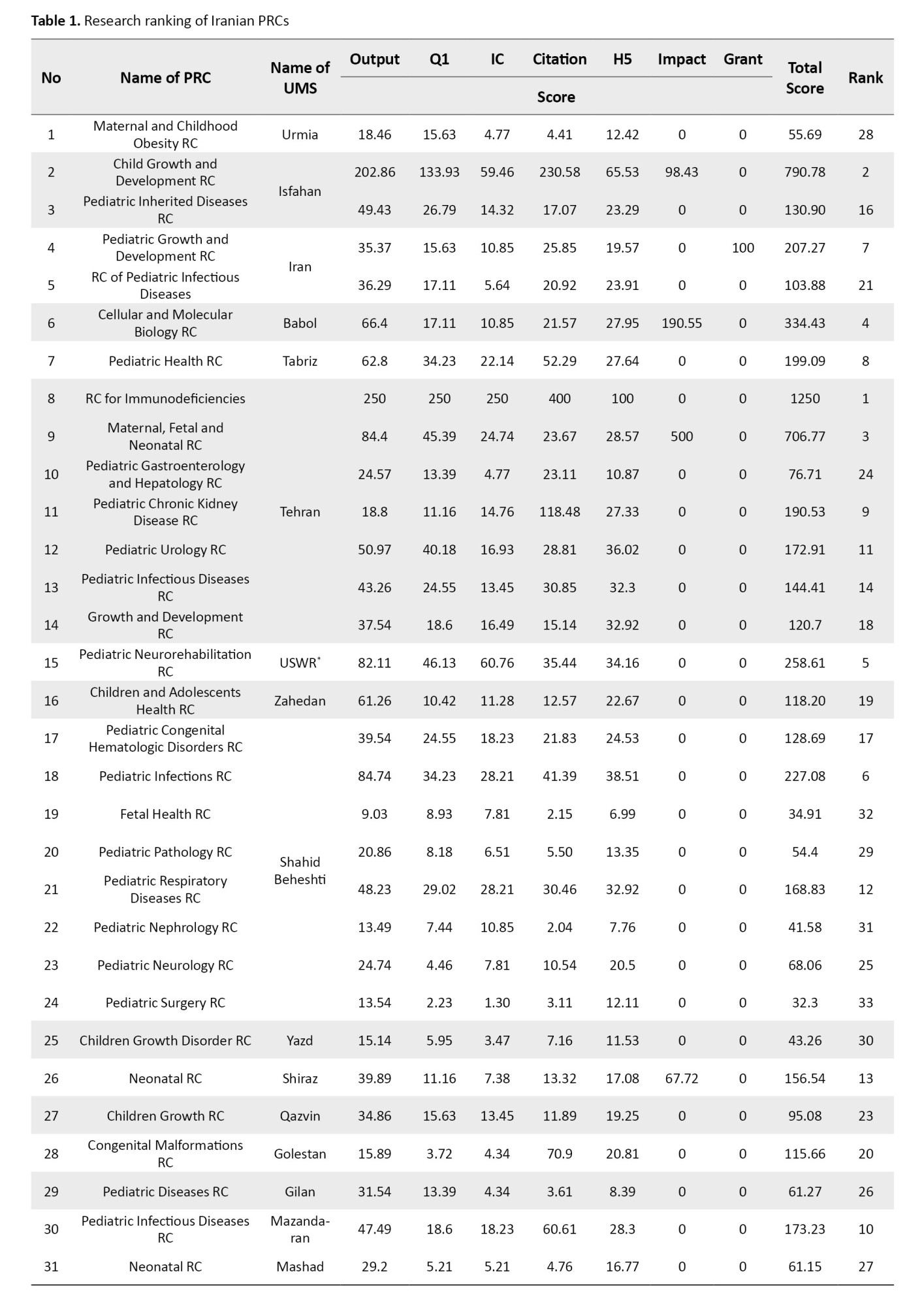
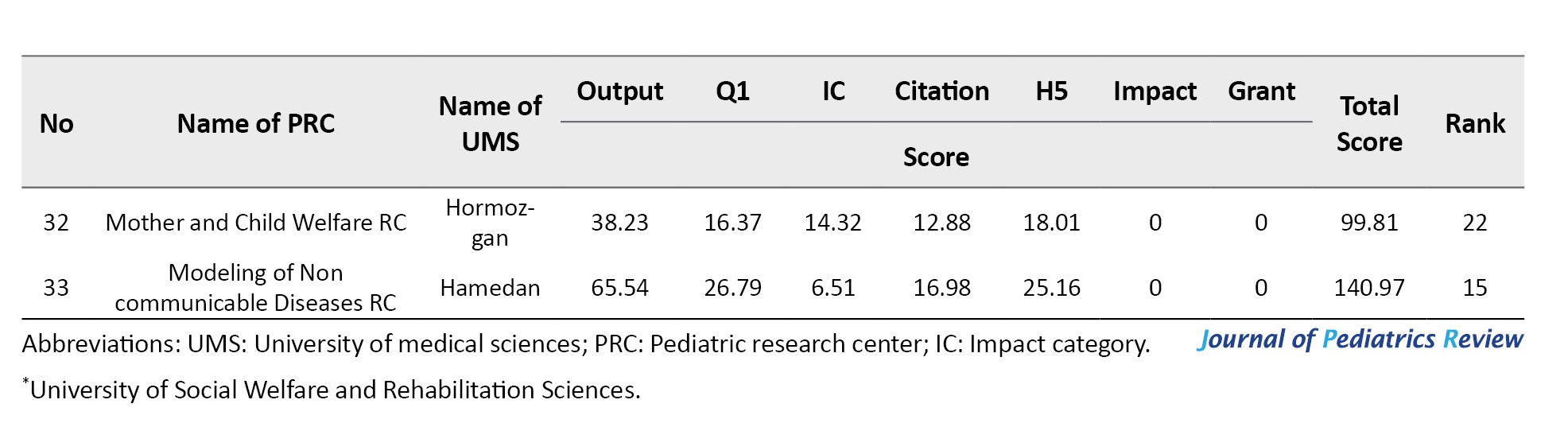
The first, second, and third ranks were achieved by the Research Center for Immunodeficiency of Tehran UMS, Child Growth and Development Research Center of Isfahan UMS and Maternal, Fetal and Neonatal Research Center of Tehran UMS, respectively. Table 1 presents the results of research and technology evaluation and ranking in PRCs.
In the following, the evaluation results are presented separately for each main area.
Stewardship
Strategic plan: All PRCs have a five-year strategic program. This program includes the vision, mission, goals, strategies, SWOT (strengths, weaknesses, opportunities, threats) analysis, objectives and activities and the achievement of relevant goals has been monitored by the evaluation team annually. In more than half of the research centers, key stakeholders did not actively participate in program development.
Research priorities: PRCs identified a total of 260 research priorities. The top ten research priorities included:
● Screening for developmental disorders in children and early interventions
● Childhood obesity (screening, prevention, control and treatment)
● Improving the health system in the field of non-communicable diseases in children
● Infections of children and infants and rational prescription of antibiotics
● Genetic diseases and birth defects in children
● Trauma and accidents in children
● Transfer of knowledge to the field of practice in maternal and child care
● Consequences of high-risk pregnancy
● Asphyxia and nutrition
● Improving the registration program in children’s diseases
Scientific authority
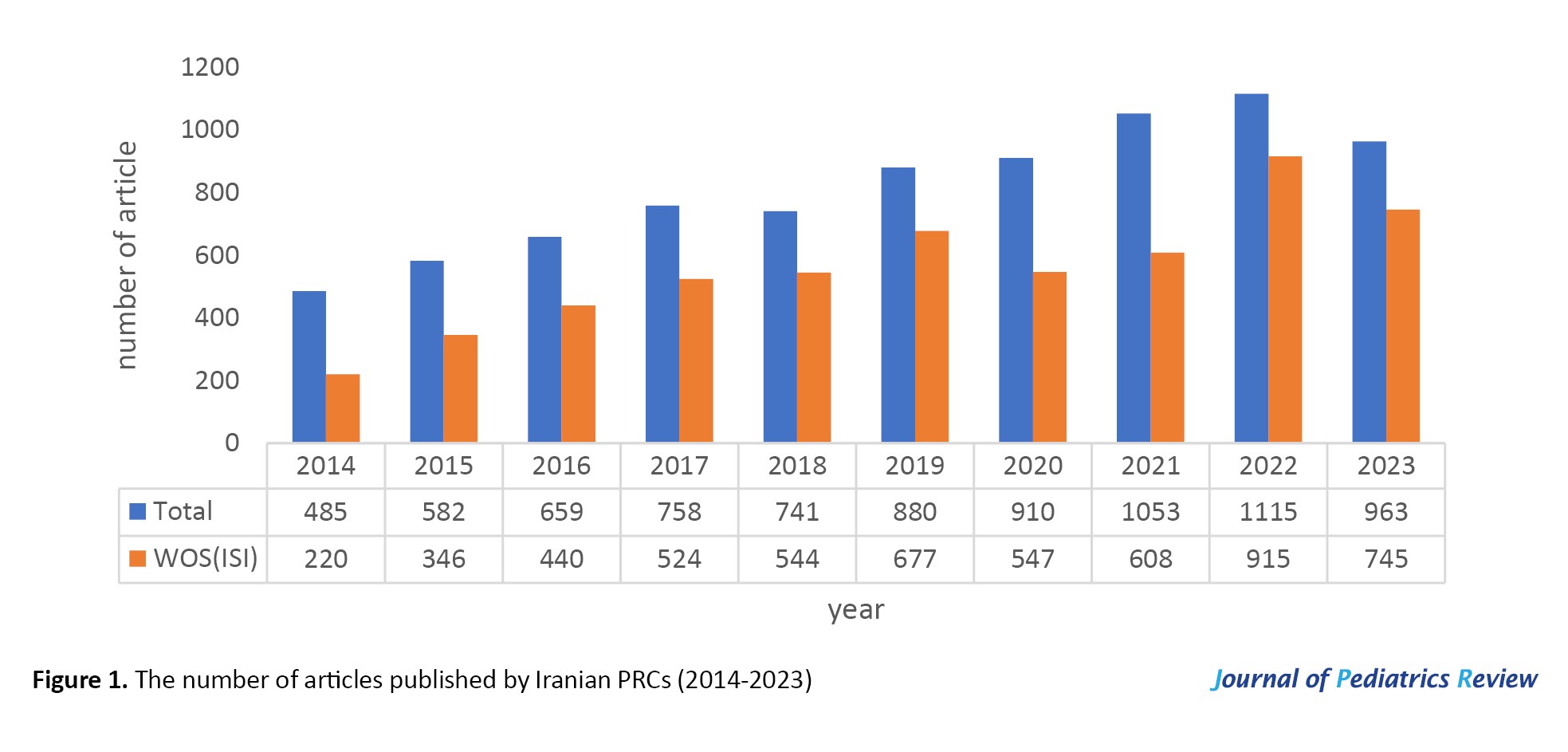
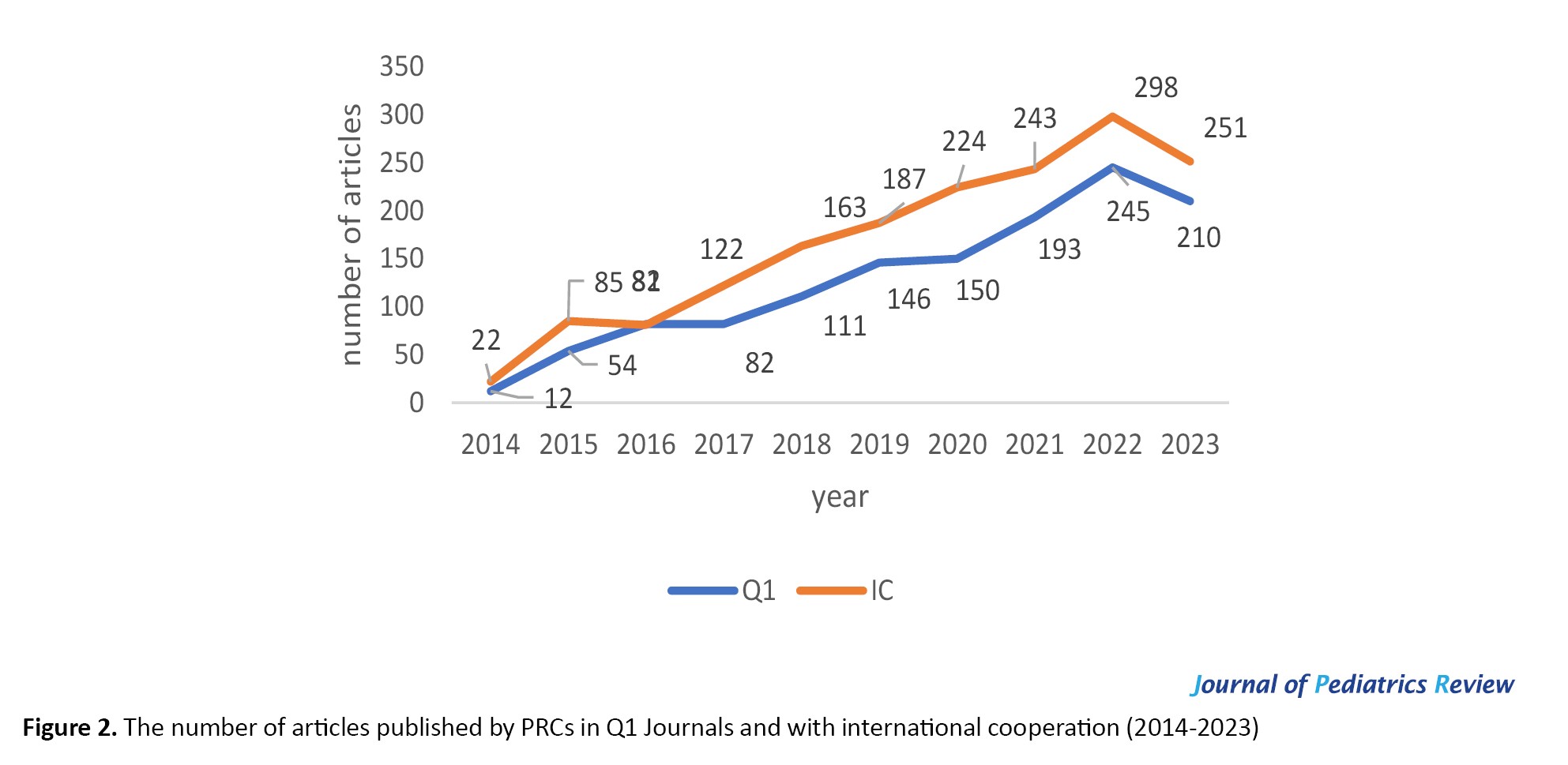
The total number of articles published by PRCs during the evaluation decade was 8,146. Of these, 68.3% (n=5566 articles) were indexed in the WOS database. A total of 15.7% (n=1285 articles) were published in Q1 journals, and 20.6% (n=1677) of articles were published with international collaborations. The number of articles per faculty per year was 3.2. Figures 1 and 2 show the ten-year trend of these indicators.
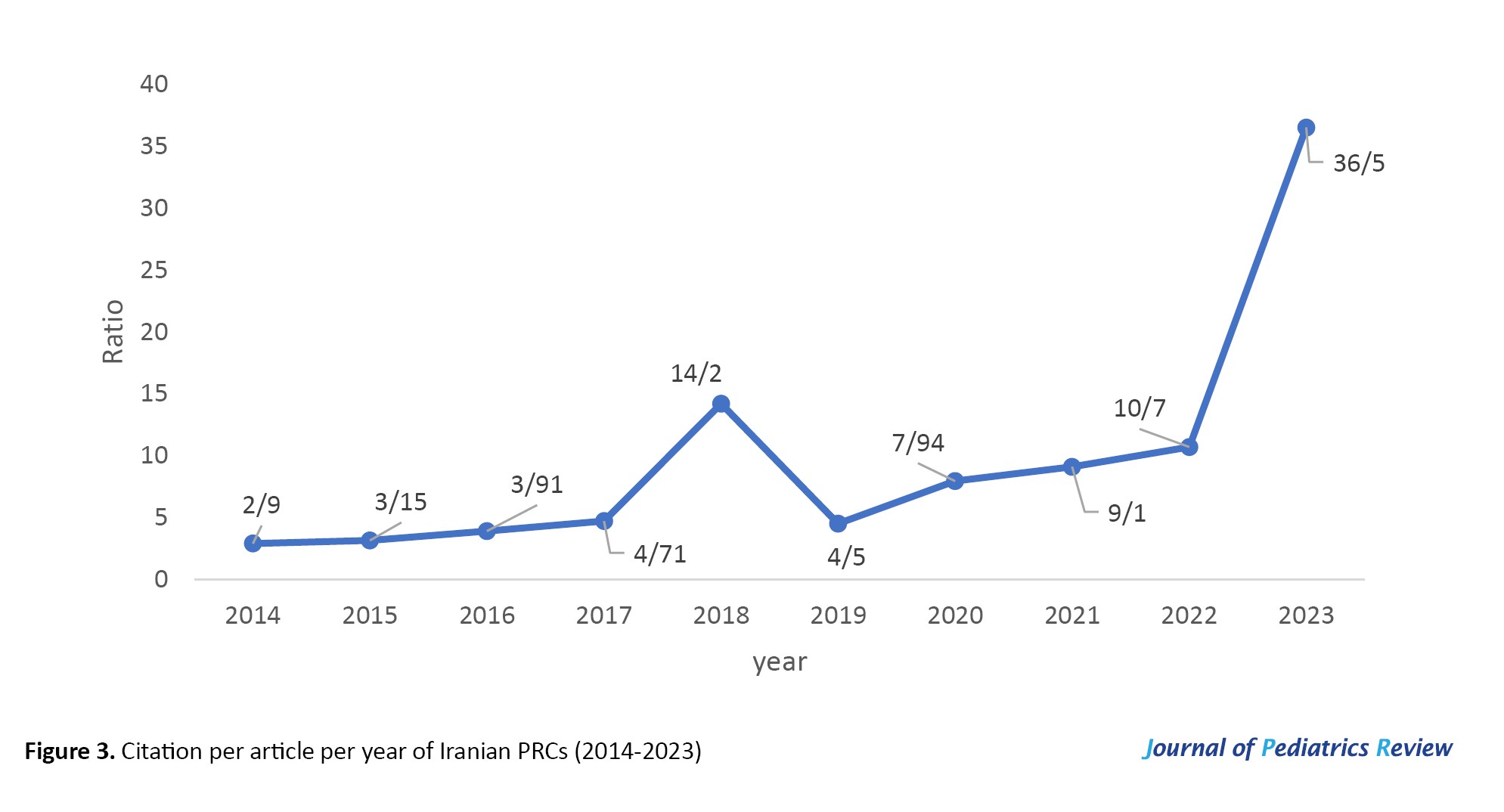
 The annual average number of citations per article was 36.5 in 2023. Figure 3 shows ten-year trend of this indicator.
 Three books and 17 book chapters were published by researchers at these research centers over the past decade and have been indexed in Scopus. Three reference books related to child health were published.
The Research Center for Immunodeficiency affiliated to Tehran UMS has earned the highest score in this area. Child Growth and Development Research Center of Isfahan and Maternal, Fetal and Neonatal Research Center in Tehran rank second and third, respectively. The five-year average h-index of PRCs is 9.2, and the highest one is related to the Research Center for Immunodeficiency of Tehran.
The PRCs did not have any domestic or foreign patent registrations during the evaluation period.
Research impact
During the three-year evaluation period, PRCs submitted a total of eight research impact proposals. The highest score in this domain was achieved by the Tehran Maternal, Fetal and Neonatal Research Center.
Discussion
This study evaluated 33 PRCs across three main domains: stewardship, scientific authority, and research impact.
In the stewardship domain, results revealed that the identified research priorities reflect a comprehensive approach to burden of pediatric disease and problems, from early child developmental screening and childhood obesity to infectious diseases, genetic disorders, trauma, and maternal–child health concerns. These priorities demonstrate an appropriate balance between prevention, early detection, and health service improvements, including enhanced disease registration programs and better translation of evidence into practice [11].
Although all PRCs have developed structured five-year strategic plans, the limited engagement of key stakeholders in formulating these plans remains a critical weakness. Insufficient collaboration between research managers, policymakers, clinicians, and community representatives may result in strategies that are misaligned with population needs and national priorities [12]. Strengthening stakeholder participation is therefore essential to ensure that strategic plans translate into meaningful and impactful actions [13].
The findings related to scientific authority highlight both substantial progress in knowledge production and areas requiring further development within PRCs. The production of more than 8,000 articles over the past decade, with a considerable proportion indexed in reputable databases, reflects a strong foundation of scholarly activity. The presence of publications in high-quality (Q1) journals and the notable rate of international collaborations further demonstrate the growing visibility and credibility of these centers in the global scientific community. Despite these achievements, the average annual number of publications per faculty member suggests that research productivity remains suboptimal. This gap requires strengthening research infrastructure and support systems to facilitate the publication of high-quality research, removing administrative barriers and promoting multidisciplinary projects [14, 15].
A bibliometric study conducted on pediatric research from 1996 to 2022 reported a total of 787,812 pediatric-related publications worldwide, of which 13.4% originated from Asia. Countries such as India, China, and Japan demonstrated substantial growth in this field. Although Iran contributes a notable share among Asian countries, yet Iran does not rank among the leading nations globally [16].
The integration of research impact assessments into the evaluation model since 2021 reflects a growing commitment to ensuring that scientific outputs contribute meaningfully to health system improvement and community promotion. These assessments are designed to capture a wide spectrum of outcomes, including shifts in decision-making processes, enhancements in community health, advancements in service delivery, influences on social determinants of health, and even broader economic effects. Although the number of research impact projects within PRCs remains limited, the focus on multiple dimensions of impact indicates an intentional move toward bridging the gap between knowledge production and addressing community health problems [17].
This study highlights several strengths and weaknesses within Iranian PRCs. The existence of comprehensive strategic plans across all centers, the considerable volume of research outputs, and the growth of international collaborations represent notable strengths that demonstrate organizational maturity and increasing scientific engagement. However, these achievements are tempered by several limitations, including limited stakeholder involvement in strategic planning, a publication rate per faculty member that remains below desirable levels, and the absence of a structured and widely implemented framework for assessing research impact. These weaknesses suggest that, despite progress, further efforts are needed to enhance the effectiveness and influence of pediatric research activities.
To address these challenges, several actions are recommended. First, strengthening stakeholder engagement through collaborative workshops and consultations with academic leaders, health authorities, and child health professionals can ensure that strategic plans more accurately reflect societal needs [18]. Second, expanding international collaborations with reputable global institutions can elevate research quality and improve key scientific indicators such as citation rates and h-index values [19]. Third, establishing robust qualitative and quantitative impact assessment systems would enable systematic documentation of how research contributes to policy development, health outcomes, and service delivery improvements [20]. Finally, increasing access to domestic and international funding sources is essential for supporting high-impact research projects, particularly those with direct implications for child health [21]. Overall, these measures can enhance the performance, relevance, and long-term impact of PRCs in Iran.”
Conclusion
While Iranian PRCs have demonstrated substantial progress in research output, strategic planning, and scientific contributions, further improvements in international collaboration, funding allocation, and translational research are needed to enhance policy impact and child health outcomes. Strengthening research infrastructure and fostering multidisciplinary collaboration will be essential for future progress.
Ethical Considerations
Compliance with ethical guidelines
There were no ethical considerations to be considered in this research.
Funding
This study was conducted in the Deputy for Research and Technology, Ministry of Health and Medical Education with no approved expenditure.
Authors contributions
Conceptualization, study design, project administration, technical, and material support, supervision, review and editing: Monir Baradarn Eftekhari; Data acquisition: Katayoun Falahat and Masoumeh Ebrahimi Tavani; Data analysis, interpretation, and statistical analysis: Katayoun Falahat; Writing the original draft: Masoumeh Ebrahimi Tavani.
Conflicts of interest
The authors declared no conflict of interest.
Acknowledgements
The authors express their sincere appreciation to all individuals who have participated in this study.
References
Childhood is a crucial and vital period of growth and development during which the child's behaviors, experiences, and health problems can have significant impact [1]. In developing countries, mortality and morbidity trends in the pediatric age group (0-19 years) are crucial indicators of health status [2]. According to the World Health Organization (WHO), more than 14,000 under-five deaths occurred per day, especially in low income countries [3]. Among the developing countries, almost 80% of under-five mortality occurs in sub-Saharan Africa and Southern Asia alone and therefore, effective international interventions are required [4]. Iran has experienced a significant decrease in the under five mortality rate, declining from 54.5 per 1,000 live births in 1991 to 15.5 per 1,000 live births in 2015 [5].
Receiving timely developmental screenings and recommended health services is essential for early detection of health problems [6]. In addition, positive health behaviors—such as adequate sleep and healthy nutrition—can help prevent a wide range of illnesses and injuries in children. On the other hand, safe, stable and supportive relationships are crucial for children’s health and interventions at family and community levels with strategies focused on children’s health and safety can also help improve health outcomes for children [7]. Racial/ethnic disparities and socioeconomic status also significantly influence child health outcomes [8]. The results of the study on the burden of childhood diseases in Iran indicate that 56% of the disability-adjusted life year (DALY) were due to premature death and the rest were due to disability [9]. In the last two decades, few senior-level pediatricians were interested in pediatric research and a minority of pediatric departments had the resources and research infrastructure to support them. Research training for pediatricians began in the late 1980s. Undoubtedly, conducting clinical and applied research in the field of pediatrics plays an effective role in prevention, treatment and evidence-based decision-making in this subject area [10]. Research activities in pediatric research centers (PRCs) play a vital role in advancing child health and wellbeing. These centers provide an enabling environment where scientists and clinicians collaborate to investigate childhood diseases, improve diagnostic methods, and develop innovative treatments. The necessity of such work lies in its potential to reduce infant and child mortality, enhance quality of life, and enable evidence-based decision-making by policymakers to protect future generations.
The first Iranian PRC was established in 2002 as a crucial research infrastructure. Currently, there are 37 research centers operating in the field of pediatrics in Iran. These centers are evaluated annually based on achieving scientific authority and generating high quality, impactful research.
This study aimed to systematically present the outcomes of ten years of research activities in Iranian PRCs.
Materials and Methods
Study setting
In Iran, 68 universities and faculties of medical sciences, along with more than 900 research centers, are operating in the clinical, biomedical, and health promotion fields. The research activities of these structures are continuously monitored and evaluated by the Deputy of Research and Technology of the Ministry of Health and Medical Education. These evaluations are conducted quantitatively and based on international scientific indicators in research output. In this study, all PRCs in Iran were evaluated from 2014 to 2023.
Study design
This was a cross-sectional study conducted in 2024. All research centers licensed and approved by the Council for the Development of Medical Sciences Universities in the field of pediatrics were evaluated based on their research activities over a decade (2014-2023).
Scientific steps
● Determining the areas, sub-areas and evaluation indicators.
● Designing the scoring system for indicators based on their importance
● Developing a guide for the evaluation of PRC
● Extracting evaluation data through collaboration between research centers and the evaluation team
● Selecting research evaluation referees to review and score the documents
● Providing an evaluation platform capable of reviewing and scoring documents
● Ranking the PRCs.
Research areas and indicators
Three main areas, including stewardship, scientific authority, and research impact, were used to evaluate PRCs from 2014 to 2023, with 20 indicators:
Stewardship
This area includes four indicators as follows:
● Preparing a 5-year strategic plan in collaboration with key stakeholders
● Preparing a list of research priorities based on the scientific method, developed in collaboration with stakeholders and updated annually
● Attracting domestic financial resources to conduct demand-driven research projects
● Attracting international financial resources to conduct joint research projects, an indicator added to the evaluation system since 2021.
Scientific authority
This area includes eleven indicators, which are:
● The number of research articles indexed in Web of Science (WOS), PubMed, or Scopus with the research center affiliation
● The number of paper presentations at domestic or foreign conferences
● The number of books indexed in the Scopus database
● The number of reference books published on various health-related subjects
● The number of published articles in the top 25% of journals (Q1) in the subject area
● The number of joint projects with international collaborators
● The total number of citations to articles published in the last five years with the research center affiliation
● The five-year h-index of the research center
● The number of domestic patents
● The number of foreign patents
Research impact
● This area includes five indicators as follows:
● The number of research projects that have led to changes in decision-making.
● The number of research projects that have led to changes in health status
● The number of research projects that have led to changes in service delivery
● The number of research projects that have led to changes in social determinants of health
● The number of research projects that have led to changes in the economy.
● This domain has been added to the evaluation system since 2021.
Data collection
In the domain of scientific authority, data of each indicator were extracted from International Statistical Institute (ISI), PubMed, Scopus databases and all scores were performed automatically by the system. Also, data related to the Stewardship and Research Impact were extracted from the related uploaded files in evaluation platform.
In this study, the inclusion criteria consisted of PRCs that had completed at least ten full year of research activity and held a valid approval from the Council for the Development of Medical Universities. Centers were excluded if they had less than one year of documented activity, lacked official approval, or did not provide complete and accessible data on research outputs.
Data analysis
Data were analyzed using SPSS software, version 22.0, (SPSS Inc., Chicago, IL, USA). Statistical significance level was set as P<0.05.
Descriptive statistics, such as Mean±SD, absolute and relative frequencies, were implemented. For analytical analysis, correlation tests and t-tests were utilized.
Ethical considerations
This study adhered to all ethical research standards. The data have been collected from reliable and public sources, the report is without distortion or manipulation, and the confidentiality of the research centers was preserved.
Results
A total of 33 PRCs with at least ten years of research activity were included in this study. The results showed that 19 of medical sciences in Iran had at least one pediatric research center. The oldest PRC is the Pediatric Infectious Disease Research Center affiliated with Shahid Beheshti University of Medical Sciences, established in 2003. Also, 254 researchers were working in PRCs in 2023. The highest number (n=25) belonged to the Pediatric Non-Communicable Diseases Research Center affiliated to Babol University of Medical Sciences (UMS). The mean ratio of researchers per center was 7.7. The average duration of activity among the research centers was 12.7.
The first, second, and third ranks were achieved by the Research Center for Immunodeficiency of Tehran UMS, Child Growth and Development Research Center of Isfahan UMS and Maternal, Fetal and Neonatal Research Center of Tehran UMS, respectively. Table 1 presents the results of research and technology evaluation and ranking in PRCs.
In the following, the evaluation results are presented separately for each main area.
Stewardship
Strategic plan: All PRCs have a five-year strategic program. This program includes the vision, mission, goals, strategies, SWOT (strengths, weaknesses, opportunities, threats) analysis, objectives and activities and the achievement of relevant goals has been monitored by the evaluation team annually. In more than half of the research centers, key stakeholders did not actively participate in program development.
Research priorities: PRCs identified a total of 260 research priorities. The top ten research priorities included:
● Screening for developmental disorders in children and early interventions
● Childhood obesity (screening, prevention, control and treatment)
● Improving the health system in the field of non-communicable diseases in children
● Infections of children and infants and rational prescription of antibiotics
● Genetic diseases and birth defects in children
● Trauma and accidents in children
● Transfer of knowledge to the field of practice in maternal and child care
● Consequences of high-risk pregnancy
● Asphyxia and nutrition
● Improving the registration program in children’s diseases
Scientific authority
The total number of articles published by PRCs during the evaluation decade was 8,146. Of these, 68.3% (n=5566 articles) were indexed in the WOS database. A total of 15.7% (n=1285 articles) were published in Q1 journals, and 20.6% (n=1677) of articles were published with international collaborations. The number of articles per faculty per year was 3.2. Figures 1 and 2 show the ten-year trend of these indicators.
The Research Center for Immunodeficiency affiliated to Tehran UMS has earned the highest score in this area. Child Growth and Development Research Center of Isfahan and Maternal, Fetal and Neonatal Research Center in Tehran rank second and third, respectively. The five-year average h-index of PRCs is 9.2, and the highest one is related to the Research Center for Immunodeficiency of Tehran.
The PRCs did not have any domestic or foreign patent registrations during the evaluation period.
Research impact
During the three-year evaluation period, PRCs submitted a total of eight research impact proposals. The highest score in this domain was achieved by the Tehran Maternal, Fetal and Neonatal Research Center.
Discussion
This study evaluated 33 PRCs across three main domains: stewardship, scientific authority, and research impact.
In the stewardship domain, results revealed that the identified research priorities reflect a comprehensive approach to burden of pediatric disease and problems, from early child developmental screening and childhood obesity to infectious diseases, genetic disorders, trauma, and maternal–child health concerns. These priorities demonstrate an appropriate balance between prevention, early detection, and health service improvements, including enhanced disease registration programs and better translation of evidence into practice [11].
Although all PRCs have developed structured five-year strategic plans, the limited engagement of key stakeholders in formulating these plans remains a critical weakness. Insufficient collaboration between research managers, policymakers, clinicians, and community representatives may result in strategies that are misaligned with population needs and national priorities [12]. Strengthening stakeholder participation is therefore essential to ensure that strategic plans translate into meaningful and impactful actions [13].
The findings related to scientific authority highlight both substantial progress in knowledge production and areas requiring further development within PRCs. The production of more than 8,000 articles over the past decade, with a considerable proportion indexed in reputable databases, reflects a strong foundation of scholarly activity. The presence of publications in high-quality (Q1) journals and the notable rate of international collaborations further demonstrate the growing visibility and credibility of these centers in the global scientific community. Despite these achievements, the average annual number of publications per faculty member suggests that research productivity remains suboptimal. This gap requires strengthening research infrastructure and support systems to facilitate the publication of high-quality research, removing administrative barriers and promoting multidisciplinary projects [14, 15].
A bibliometric study conducted on pediatric research from 1996 to 2022 reported a total of 787,812 pediatric-related publications worldwide, of which 13.4% originated from Asia. Countries such as India, China, and Japan demonstrated substantial growth in this field. Although Iran contributes a notable share among Asian countries, yet Iran does not rank among the leading nations globally [16].
The integration of research impact assessments into the evaluation model since 2021 reflects a growing commitment to ensuring that scientific outputs contribute meaningfully to health system improvement and community promotion. These assessments are designed to capture a wide spectrum of outcomes, including shifts in decision-making processes, enhancements in community health, advancements in service delivery, influences on social determinants of health, and even broader economic effects. Although the number of research impact projects within PRCs remains limited, the focus on multiple dimensions of impact indicates an intentional move toward bridging the gap between knowledge production and addressing community health problems [17].
This study highlights several strengths and weaknesses within Iranian PRCs. The existence of comprehensive strategic plans across all centers, the considerable volume of research outputs, and the growth of international collaborations represent notable strengths that demonstrate organizational maturity and increasing scientific engagement. However, these achievements are tempered by several limitations, including limited stakeholder involvement in strategic planning, a publication rate per faculty member that remains below desirable levels, and the absence of a structured and widely implemented framework for assessing research impact. These weaknesses suggest that, despite progress, further efforts are needed to enhance the effectiveness and influence of pediatric research activities.
To address these challenges, several actions are recommended. First, strengthening stakeholder engagement through collaborative workshops and consultations with academic leaders, health authorities, and child health professionals can ensure that strategic plans more accurately reflect societal needs [18]. Second, expanding international collaborations with reputable global institutions can elevate research quality and improve key scientific indicators such as citation rates and h-index values [19]. Third, establishing robust qualitative and quantitative impact assessment systems would enable systematic documentation of how research contributes to policy development, health outcomes, and service delivery improvements [20]. Finally, increasing access to domestic and international funding sources is essential for supporting high-impact research projects, particularly those with direct implications for child health [21]. Overall, these measures can enhance the performance, relevance, and long-term impact of PRCs in Iran.”
Conclusion
While Iranian PRCs have demonstrated substantial progress in research output, strategic planning, and scientific contributions, further improvements in international collaboration, funding allocation, and translational research are needed to enhance policy impact and child health outcomes. Strengthening research infrastructure and fostering multidisciplinary collaboration will be essential for future progress.
Ethical Considerations
Compliance with ethical guidelines
There were no ethical considerations to be considered in this research.
Funding
This study was conducted in the Deputy for Research and Technology, Ministry of Health and Medical Education with no approved expenditure.
Authors contributions
Conceptualization, study design, project administration, technical, and material support, supervision, review and editing: Monir Baradarn Eftekhari; Data acquisition: Katayoun Falahat and Masoumeh Ebrahimi Tavani; Data analysis, interpretation, and statistical analysis: Katayoun Falahat; Writing the original draft: Masoumeh Ebrahimi Tavani.
Conflicts of interest
The authors declared no conflict of interest.
Acknowledgements
The authors express their sincere appreciation to all individuals who have participated in this study.
References
- Graf GH, Biroli P, Belsky DW. Critical Periods in Child Development and the Transition to Adulthood. JAMA Netw Open. 2021; 4(1):e2033359. [DOI:10.1001/jamanetworkopen.2020.33359] [PMID]
- Adhvaryu A, Daysal NM, Gunnsteinsson S, Molina T, Steingrimsdottir H. Child health, parental well-being, and the social safety net. Massachusetts: National Bureau of Economic Research; 2023. [DOI:10.3386/w31277]
- Birhanie AL, Tessema ZT, Endalew B, Tamirat KS. Under-five mortality and its associated factors in sub-Saharan Africa: a multilevel analysis of recent demographic and health surveys data based on Bayesian approach. BMC Pediatrics. 2025; 25:103. [DOI:10.1186/s12887-025-05454-6] [PMID]
- UNICEF. Levels and trends in child mortality. New York: UNICEF; 2021. [Link]
- Ayubi E, Khazaei S, Mansouri HS, Mansori K. Under-five Mortality in Iran and the World, 2015. Int J Pediatr. 2016; 4(8):2307-9. [Link]
- Halpin PF, de Castro EF, Petrowski N, Cappa C. Monitoring early childhood development at the population level: The ECDI2030. Early Child Res Q. 2024; 67:1-12. [DOI:10.1016/j.ecresq.2023.11.004]
- Fyfe-Johnson AL, Hazlehurst MF, Perrins SP, Bratman GN, Thomas R, Garrett KA, et al. Nature and children’s health: A systematic review. Pediatrics. 2021; 148(4):e2020049155. [DOI:10.1542/peds.2020-049155] [PMID]
- Zhang X, Monnat SM. Racial/ethnic differences in clusters of adverse childhood experiences and associations with adolescent mental health. SSM Popul Health. 2021; 17:100997. [DOI:10.1016/j.ssmph.2021.100997] [PMID]
- Motlagh M, Kazemeini H, Jafari N, Delavar B, Kabir M, Goodarzi KJIMT. The burden of diseases in children aged 0-14 years in Iran (Persian). Intern Med Today 2009; 15 (3):77-84. [Link]
- Winer KK, Rothenberg ME, Guimond J, Handwerger S, Boxer LA, Grave G, et al. The Child Health Research Centers: twenty-one years of promoting the development of pediatrician scientists from 1990-2011. J Pediatr. 2012; 161(6):975-6. [DOI:10.1016/j.jpeds.2012.09.001] [PMID]
- Landi A, Reggiardo G, Didio A, D'Ercole A, Ceci A, Govere GS, et al. Descriptive Analysis of Pediatric Studies Included in the European :union: Post-Authorization Study Register from 2010 to 2023. Pediatr Rep. 2025; 17(1):24. [DOI:10.3390/pediatric17010024] [PMID]
- Mitchell SM, Shortell SM. The governance and management of effective community health partnerships: A typology for research, policy, and practice. Milbank Q. 2000; 78(2):241-89, 151. [DOI:10.1111/1468-0009.00170] [PMID]
- Olutimehin DO, Ofodile OC, Ugochukwu CE, Nwankwo EEJWJoAR, Reviews. Corporate governance and stakeholder engagement in Nigerian enterprises: A review of current practices and future directions. World J Adv Res Rev. 2024; 21(3):736-42. [DOI:10.30574/wjarr.2024.21.3.0737]
- Kayyali M. Promoting Research and Innovation Through Accreditation. In: Quality Assurance and Accreditation in Higher Education. Cham: Palgrave Macmillan; 2024. [DOI:10.1007/978-3-031-66623-0_9]
- Moreno-Galarraga L, Gracía Vera C, Rivero-Calle I, Martinón-Torres F, Diez López I, Cabañas F, et al. Pediatric research in Spain: Challenges and opportunities. An Pediatr (Engl Ed). 2025; 103(1):503854. [DOI:10.1016/j.anpede.2025.503854] [PMID]
- Vaishya R, Sibal A. Trends of Publications and Country Rankings in Pediatrics, Perinatology, and Child Health from Asia: A Bibliometric Study from 1996 to 2022. Indian Pediatr. 2024; 61(4):359-62. [DOI:10.1007/s13312-024-3160-x] [PMID]
- Edler J, Karaulova M, Barker K. Understanding conceptual impact of scientific knowledge on policy: The role of policymaking conditions. Minerva. 2022; 60(2):209-33. [DOI:10.1007/s11024-022-09459-8]
- Gobat N, Slack C, Hannah S, Salzwedel J, Bladon G, Burgos JG, et al. Better engagement, better evidence: working in partnership with patients, the public, and communities in clinical trials with involvement and good participatory practice. Lancet Glob Health. 2025; 13(4):e716-31. [DOI:10.1016/S2214-109X(24)00521-7] [PMID]
- Dominguez Lacasa I, Molina Vogelsang M. Enhancing international collaboration in science, technology, and innovation to achieve sustainable development goals. Sci Public Policy. 2024; 51(3):509-25. [DOI:10.1093/scipol/scad087]
- Falahat K, Baradaran Eftekhari M, Haghjooy Javanmard S, Ghalenoee E, Shakeri H. Designing an impact-oriented model of research and technology evaluation: An experience of I.R.Iran. Int J Prev Med. 2024; 15:53. [DOI:10.4103/ijpvm.ijpvm_146_23] [PMID]
- Abajobir A, de Groot R, Wainaina C, Njeri A, Maina D, Njoki S, et al. The impact of i-PUSH on maternal and child health care utilization, health outcomes, and financial protection: study protocol for a cluster randomized controlled trial based on financial and health diaries data. Trials. 2021; 22(1):629. [DOI:10.1186/s13063-021-05598-7] [PMID]
Type of Study: Original Article |
Subject:
Management of health services in children
Received: 2025/06/10 | Accepted: 2026/01/18 | Published: 2026/04/3
Received: 2025/06/10 | Accepted: 2026/01/18 | Published: 2026/04/3
Send email to the article author
| Rights and permissions | |
 |
This work is licensed under a Creative Commons Attribution-NonCommercial 4.0 International License. |

Copyright © The Author(s);
This is an open access article distributed under the terms of the Creative Commons Attribution License (CC-By-NC),
which permits use, distribution, and reproduction in any medium, provided the original work is properly cited and is not used for commercial purposes.
Contact Information