Wed, Oct 21, 2026


Volume 14, Issue 3 (9-2026)
J. Pediatr. Rev 2026, 14(3): 213-222 |
Back to browse issues page


Download citation:
BibTeX | RIS | EndNote | Medlars | ProCite | Reference Manager | RefWorks
Send citation to:


BibTeX | RIS | EndNote | Medlars | ProCite | Reference Manager | RefWorks
Send citation to:
Rostami-Maskopaee F, Asadi-Aliabadi M, Moosazadeh M, Ladomenou F, Rezai R, Hajialibeig A et al . Clinical Outcomes of Children With MIS-C Treated With Corticosteroids and/or IVIG: A Systematic Review and Meta-analysis. J. Pediatr. Rev 2026; 14 (3) :213-222
URL: http://jpr.mazums.ac.ir/article-1-801-en.html
URL: http://jpr.mazums.ac.ir/article-1-801-en.html
Fereshteh Rostami-Maskopaee1 

 , Mehran Asadi-Aliabadi2 , Mahmood Moosazadeh3 , Fani Ladomenou4 , Raha Rezai1 , Azin Hajialibeig1 , Mohammad Sadegh Rezai *5
1- Pediatric Infectious Diseases Research Center, Communicable Diseases Institute, Mazandaran University of Medical Sciences, Sari, Iran.
2- Health Sciences Research Center, Mazandaran University of Medical Sciences, Sari, Iran.
3- Gastrointestinal Cancer Research Center, Non-communicable Diseases Institute, Mazandaran University of Medical Sciences, Sari, Iran.
4- Department of Pediatrics, Medical School, University of Loannina, Loannina, Greece.
5- Pediatric Infectious Diseases Research Center, Communicable Diseases Institute, Mazandaran University of Medical Sciences, Sari, Iran. ,drmsrezaii@yahoo.com
2- Health Sciences Research Center, Mazandaran University of Medical Sciences, Sari, Iran.
3- Gastrointestinal Cancer Research Center, Non-communicable Diseases Institute, Mazandaran University of Medical Sciences, Sari, Iran.
4- Department of Pediatrics, Medical School, University of Loannina, Loannina, Greece.
5- Pediatric Infectious Diseases Research Center, Communicable Diseases Institute, Mazandaran University of Medical Sciences, Sari, Iran. ,
Keywords: Corticosteroids (CS), Multisystem inflammatory syndrome (MIS), COVID-19, Intravenous immunoglobulin (IVIG), Children
Full-Text [PDF 1346 kb]
(141 Downloads)
| Abstract (HTML) (355 Views)
Meta-analysis for comparison of outcomes
Of the 13 included studies, one was excluded because it was an open-label randomized trial, and 5 were excluded because they did not report propensity scores. Ultimately, 7 studies with propensity scores [6, 10-12, 15-17] were included in the meta-analysis to compare outcomes among the three treatment groups.
All included studies in the meta-analysis were observational and used propensity scores to minimize confounding. The certainty of evidence for ventilator support and mortality was rated as moderate. However, the certainty for ICU admission and length of hospital stay was rated as low. These findings suggest cautious interpretation of results, especially for outcomes with lower certainty.
Need for ventilator support
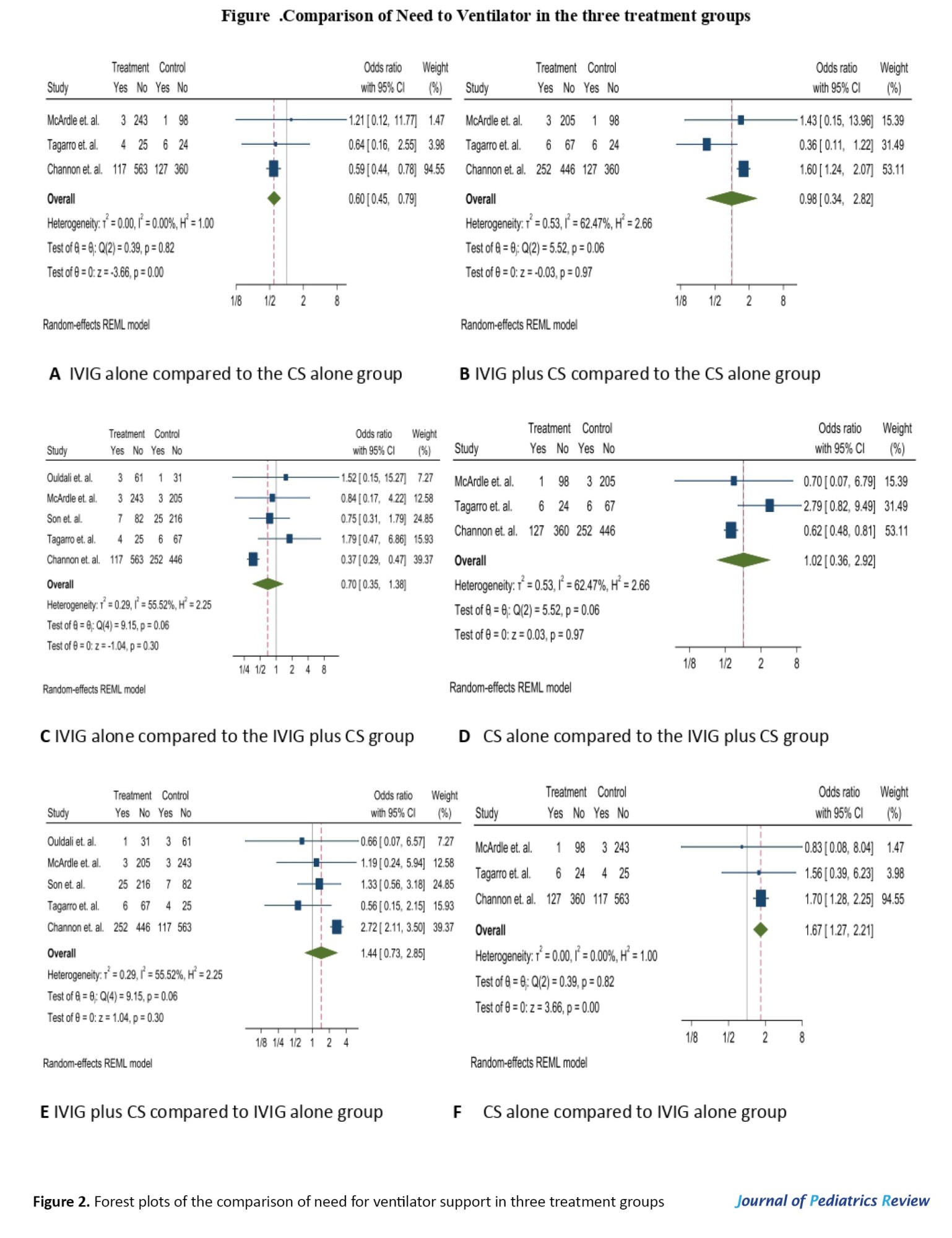
The requirement for mechanical ventilation was significantly higher in the CS group compared to the IVIG group (OR=1.67; 95% CI, 1.27%, 2.21%; I²=0%; P<0.001) (Figure 2F) and vice versa (Figure 2A). Although the IVIG group showed a lower need for ventilator support compared to the combined IVIG-CS group (OR=0.7; 95% CI, 0.35%, 1.38%) (Figure 2C), but this difference was not statistically significant (I²=55.52%, P=0.30). In other conditions, no significant association was observed (Figures 2B, 2D, and 2E). Considering high heterogeneity, a random-effect model was used.
Death rate
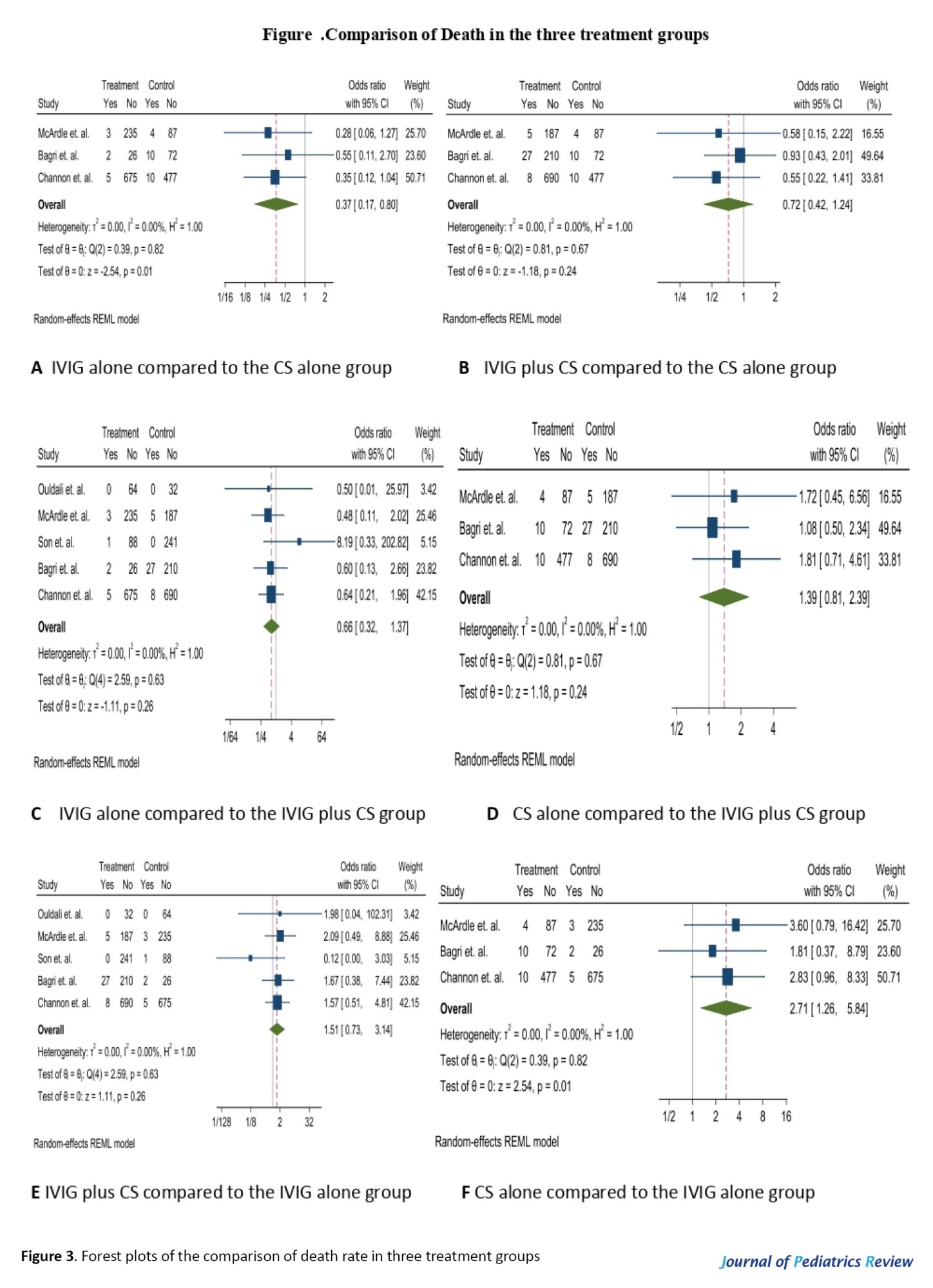
Among the 7 studies included in the meta-analysis, a total of 75 deaths were reported. The odds of death were significantly higher in the CS alone group compared to the IVIG alone group (OR 2.71; 95% CI, 1.26%, 5.84%; I²=0%; P=0.01) (Figure 3F).
Full-Text: (74 Views)
Introduction
Multisystem inflammatory syndrome in children (MIS-C) is a serious condition that typically develops 2-6 weeks after infection with severe acute respiratory syndrome coronavirus 2 (SARS-CoV-2), responsible for COVID-19 [1, 2]. MIS-C is characterized by an exaggerated inflammatory response leading to multi-organ dysfunction [3]. Most affected children require hospitalization in pediatric intensive care units (PICUs) and often need hemodynamic support [4-6]. Despite increasing recognition of MIS-C, its underlying pathogenesis remains unclear, and optimal treatment strategies are still evolving [7]. Management typically involves immunomodulatory therapies, vasoactive agents, antiplatelet, and anticoagulant medications, with treatment choice guided by disease severity and clinical presentation [8].
Intravenous immunoglobulin (IVIG) and corticosteroids (CS) are considered the cornerstone of first-line therapy for MIS-C. Clinicians face challenges in deciding whether to initiate treatment with CS alone, with IVIG alone, or a combination of both in MIS-C patients [9, 10]. Previous studies, including systematic reviews and meta-analyses, have reported conflicting results regarding the efficacy of these treatment methods [3, 11, 12]. Moreover, uncertainty remains about the role of CS monotherapy versus the combined IVIG-CS therapy. To address this gap, we conducted a systematic review and meta-analysis of studies in this field to evaluate best practices in managing MIS-C patients.
Materials and Methods
This is a systematic review and meta-analysis. The study protocol was registered in PROSPERO (Code: CRD42023389964). This review was conducted in accordance with the meta-analysis of observational studies in epidemiology (MOOSE) and the preferred reporting for systematic reviews and meta-analyses (PRISMA) guidelines for systematic reviews of observational studies. A comprehensive literature search was conducted in the PubMed, Web of Science (WOS), and Scopus databases for relevant articles published from January 1, 2020 to December 17, 2023. The search was updated in May 2025. Additionally, we manually searched the reference lists of included articles. The search strategy was conducted using MeSH terms. All citations were managed in EndNote software. Two authors (Fereshteh Rostami-Maskopaee and Mehran Asadi-Aliabadi) independently screened titles and abstracts for relevance based on the PICOS framework. Full texts of potentially eligible studies were then read for eligibility assessment, quality appraisal, and data extraction.
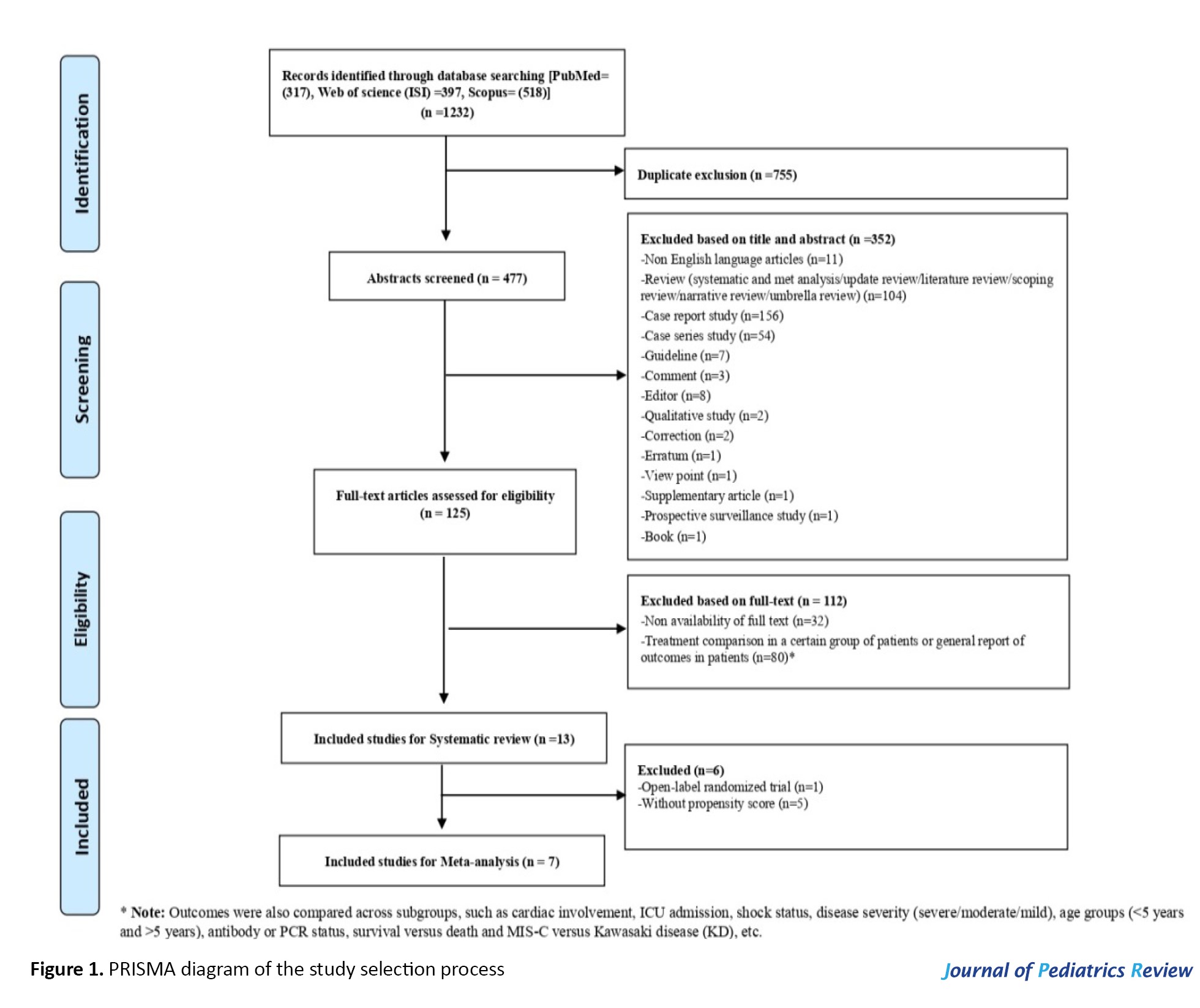
Inclusion criteria were based on the PICOS framework were as follows: Participants (P): Children and adolescents aged 0–21 years diagnosed with MIS-C according to the World Health Organization (WHO) or the Center for Disease Control (CDC) criteria; Interventions (I): Treatment with IVIG and/or CS; Comparison (C): Patients treated with CS alone, IVIG alone, or the combined IVIG-CS; Outcomes (O): reporting at least one of the following outcomes: death, ICU admission, need for ventilator support, or length of hospital stay; Study (S): Original research (cross-sectional, cohort, randomized and non-randomized clinical trials, or quasi-experimental studies). The studies focusing on treatments other than CS and IVIG, studies not reporting one of the mentioned outcomes, review studies, meta-analyses, protocols, case reports, case series, qualitative studies, conference abstracts, notes, editorials, and descriptive reports focused solely on the intervention process, studies that did not apply the propensity score method (a robust statistical technique that helps minimize bias in observational studies by adjusting for measured confounding variables) were excluded. The study selection process is detailed in Figure 1.
A disagreement rate of 33% was observed between the two authors (Fereshteh Rostami-Maskopaee and Mehran Asadi-Aliabadi) during the screening process, but it was resolved by a third author (Mohammad Sadegh Rezai). Distinguishing between MIS-C and Kawasaki disease was challenging due to overlapping symptoms and evolving diagnostic criteria during the early COVID-19 pandemic. This complexity, along with the rapid publication of related studies, contributed to the disagreement between the authors.
Assessment of risk of bias is a key step in conducting systematic reviews that informs many other steps and decisions made within the review. It also plays an important role in the final assessment of the strength of the evidence [13]. The Newcastle-Ottawa scale (NOS) was used in this study to assess the quality of observational studies, categorizing quality as very good (9 points), good (7–8), satisfactory (5–6), or unsatisfactory (<5) [14]. The Jadad scale was used for randomized clinical trials (RCTs), evaluating randomization (2 points), blinding (2 points), and dropout (1 point). The certainty of the body of evidence for each outcome was assessed using the GRADE (grading of recommendations assessment, development and evaluation) framework. This method systematically considers several domains, including risk of bias, inconsistency, indirectness, and potential publication bias, to rate the certainty of evidence. The overall certainty is then categorized into one of four levels: high, moderate, low, or very low.
From each included study, the following data were extracted: Author’s name, country of study, year of publication, study design, diagnostic criteria (WHO/CDC), sample size, participants’ age and sex, treatments IVIG or CS (dexamethasone, methylprednisolone, hydrocortisone), study outcomes (death, ICU admission, need for ventilator support, hospital stay), comorbidities, clinical features, and laboratory/radiology findings.
Pooled proportions, odds ratios (OR), standardized mean differences (SMD), and 95% confidence intervals (CI) were calculated for outcomes of interest using forest plots. Heterogeneity was assessed using the I² statistic. A random-effects model was applied if I²>50%. Statistical significance was set at P<0.05. Analyses were performed in STATA software, version 14.
Results
Characteristics of studies included in systematic review
A total of 1232 records were identified through searching in electronic databases (317 from PubMed/Medline, 397 from WOS, and 518 from Scopus). After removing 755 duplicates, 477 remained for title and abstract screening. Of these, 352 were excluded based on the inclusion and exclusion criteria, leaving 125 articles for full-text review. Finally, 13 studies were included in the systematic review.
In 13 studies included in the systematic review, the number of participants was 4,822, of whom 4,228 were ultimately analyzed. Patients were distributed across three treatment groups: IVIG (1,348 patients), IVIG + CS (1,920 patients), and CS (960 patients). Of these, 6 studies included all three treatment groups, while 6 studies compared only two groups. Regarding outcomes, MIS-C–related deaths were reported in 10 studies, PICU admission in 6 studies, and both length of hospital stay and need for ventilator support in 8 studies (Table 1).
Among the studies that reported fever, all patients had a fever before hospitalization or at the time of admission. Cardiac manifestations were reported in 7 studies; gastrointestinal and respiratory symptoms in 6 studies; and dermatologic and neurologic symptoms in 4 studies. Obesity was the most frequently reported comorbidity. In the studies that reported laboratory markers (since not all eligible studies provided these data), inflammatory markers such as C-reactive protein (CRP), erythrocyte sedimentation rate (ESR), proBNP/NT-proBNP, lymphocytes, troponin, D-dimer, and ferritin were generally high, while albumin, hemoglobin, and platelet counts were low. These changes reflect systemic inflammation and multisystem involvement of MIS-C. In other conditions, no significant association was observed (Figures 2B, 2D, and 2E).
Meta-analysis for comparison of outcomes
Of the 13 included studies, one was excluded because it was an open-label randomized trial, and 5 were excluded because they did not report propensity scores. Ultimately, 7 studies with propensity scores [6, 10-12, 15-17] were included in the meta-analysis to compare outcomes among the three treatment groups.
All included studies in the meta-analysis were observational and used propensity scores to minimize confounding. The certainty of evidence for ventilator support and mortality was rated as moderate. However, the certainty for ICU admission and length of hospital stay was rated as low. These findings suggest cautious interpretation of results, especially for outcomes with lower certainty.
Need for ventilator support
The requirement for mechanical ventilation was significantly higher in the CS group compared to the IVIG group (OR=1.67; 95% CI, 1.27%, 2.21%; I²=0%; P<0.001) (Figure 2F) and vice versa (Figure 2A). Although the IVIG group showed a lower need for ventilator support compared to the combined IVIG-CS group (OR=0.7; 95% CI, 0.35%, 1.38%) (Figure 2C), but this difference was not statistically significant (I²=55.52%, P=0.30). In other conditions, no significant association was observed (Figures 2B, 2D, and 2E). Considering high heterogeneity, a random-effect model was used.
Death rate
Among the 7 studies included in the meta-analysis, a total of 75 deaths were reported. The odds of death were significantly higher in the CS alone group compared to the IVIG alone group (OR 2.71; 95% CI, 1.26%, 5.84%; I²=0%; P=0.01) (Figure 3F).
The comparison between CS alone and IVIG plus CS groups indicated a higher mortality in the CS group, but this was not statistically significant (OR 1.39; 95% CI, 0.81%, 2.39%; I²=0%; P=0.24) (Figure 3D). Similarly, mortality was lower in the IVIG alone group compared to the IVIG plus CS group, though this difference also was not statistically significant (OR 0.66; 95% CI, 0.32%, 1.37%; I²=0%; P=0.26) (Figure 3C). In other conditions, no significant association was observed (Figures 3B and 3E).
Need for ICU admission
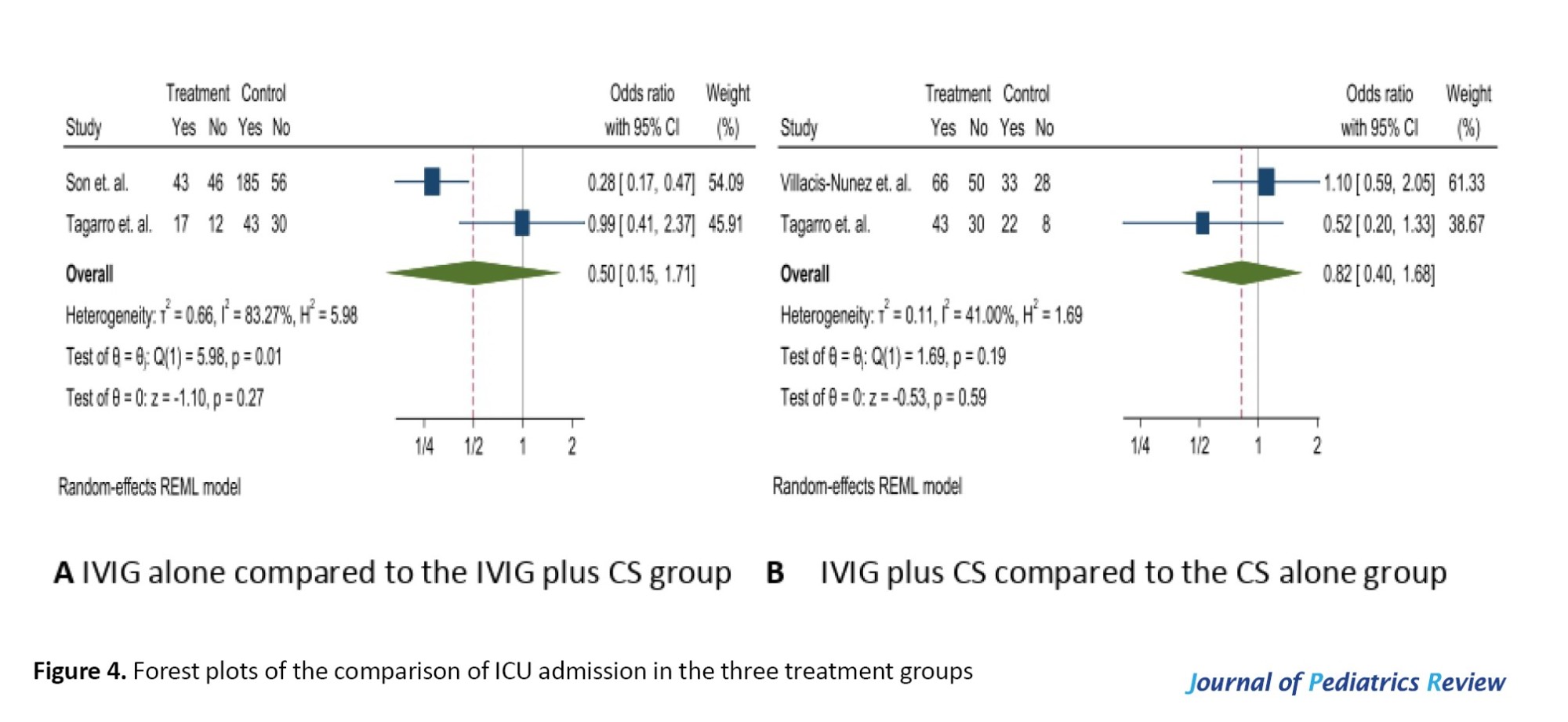
Among the seven studies under meta-analysis with propensity scores, three reported ICU admission outcomes. The need for ICU admission was lower in the IVIG group compared to the IVIG + CS group (OR=0.5, 95% CI, 0.15%, 1.71%), though this difference was not statistically significant (I²=83.27%, P=0.27) (Figure 4A).
Similarly, the IVIG + CS group had a lower ICU admission rate compared to the CS group (OR=0.82, 95% CI, 0.4%, 1.68%), but this difference was also not statistically significant (I²=41%, P=0.59) (Figure 4B).
Length of hospital stay
The SMD of the length of hospital stay among the three treatment groups was low (ranging 0.2-0.5) and was not statistically significant. This suggests that none of the treatments, including IVIG alone, CS alone, or their combination, had a clear impact on hospitalization duration in the analyzed studies.
Discussion
This systematic review and meta-analysis aimed to compare main clinical outcomes including mortality, ICU admission, need for ventilator support, and length of hospital stay among MIS-C patients treated with three different methods: IVIG alone, CS alone, and IVIG + CS. Pooled data from seven studies with propensity scores demonstrated the use of IVIG as the initial treatment for MIS-C patients. CS monotherapy was generally not advised as the primary treatment for most patients, while IVIG monotherapy showed clear benefits. Although the combination of IVIG with CS was not statistically superior in this meta-analysis, it has demonstrated advantages in other studies, including faster fever resolution and reduced treatment failure rates, cardiovascular dysfunction, and shorter ICU stays [10, 12, 17]. The combination of IVIG with methylprednisolone has been recommended in other studies for high-risk patients, particularly infants and those presenting with coronary abnormalities [10]. In this study, due to the diverse reporting of symptoms and signs of the disease, the severity of the disease could not be assessed.
The decision to prescribe IVIG or CS in MIS-C patients depends on several factors, such as disease severity and hospital or medical center protocols and guidelines [3, 24, 25]. In the study by Channon-Wells et al., initial treatment with glucocorticoids (GCs) was identified as a safe and potentially cost-effective alternative to IVIG or combined therapy, particularly given the limited availability of IVIG in many countries [17]. This perspective is supported by an RCT conducted by Welzel et al., who concluded that methylprednisolone can be effectively used as a first-line treatment for pediatric inflammatory multisystem syndrome temporally associated with SARS-CoV-2 [23]. Similarly, a randomized, controlled, open-label, platform trial indicated that GC monotherapy is a safe treatment alternative for mild MIS-C cases without cardiac involvement [26]. Also, Shobhavat et al. noted that in resource-limited settings, steroids have been used as first-line immunomodulatory therapy in children [27]. Conversely, some studies, such as Nayak et al., found no significant differences in outcomes between the users of steroids, IVIG, or both [22]. The discrepancies between studies can be explained by variations in sample size and study design, alongside differences in treatment approaches that depended on hospital protocols, patient clinical features, and MIS-C severity.
The meta-analysis showed that the need for ICU admission was lower in the IVIG alone group compared to the IVIG + CS group, and similarly, the IVIG + CS group had a lower ICU admission rate than the CS group; however, neither of these differences was statistically significant. In the studies by Welzel et al. and Belhadjer et al., combined therapy was associated with a shorter length of PICU stay [23, 28]. Conversely, in the study by Son et al., the median length of ICU stay did not differ significantly between the IVIG + GC group and other treatment groups [12]. MIS-C is a severe condition that may need treatment in the ICU. Since it is a critical multisystem disorder, rapid treatment options should be considered [29].
Based on our meta-analysis, the risk of odds was significantly higher in the CS group than in the IVIG and IVIG + CS groups. Although cardiovascular dysfunction is an important factor related to mortality, the evidence on the effects of treatment on cardiac outcomes remains inconsistent. A study by Sütçü et al. provided evidence that GC monotherapy is a safe treatment alternative for mild MIS-C cases without cardiac involvement [30]. Ouldali et al. and Son et al. demonstrated that initial treatment with IVIG + GC was associated with improved cardiovascular dysfunction compared to IVIG alone, suggesting a potential benefit of adding GCs in improving cardiac function [3, 12]. However, Channon-Wells et al. found no significant differences in the incidence or recovery of coronary artery aneurysms among patients treated with IVIG alone, GC alone, or IVIG + GC [17]. Additionally, Ishihara et al. reported no significant difference in mortality between patients receiving interventions for COVID-19 and those receiving symptomatic treatment, indicating that factors beyond treatment type may influence outcomes [31]. Together, these findings highlight the complex relationship between treatment modalities, cardiac severity, and mortality in these patients.
In our meta-analysis, it was found that the group treated with IVIG alone demonstrated a lower requirement for ventilator support compared to the other two treatment groups. However, in the meta-analysis conducted by Ouldali et al., there was no significant difference in the need for ventilator support between the IVIG + GC and IVIG groups [6].
The results of our meta-analysis demonstrated no significant differences in hospital stay among the three treatment groups, as indicated by a low SMD. These findings are consistent with those reported in a multicenter cohort study by Ishihara et al. [31] and in an open-label, multicenter, RCT by Welzel et al. [23]; both found no significant differences in hospital stay between treatment groups. However, in contrast to some previous findings, a shorter hospital stay was observed among children with PIMS-TS who received intravenous methylprednisolone compared with those who received usual care [26]. This suggests that while most studies, including our study, found no significant difference in hospital stay between treatment groups, certain interventions such as intravenous methylprednisolone may have the potential to shorten hospitalization in specific patients. Overall, this evidence suggests that the type of treatment alone may not substantially influence the duration of hospitalization. Other factors, such as disease severity, clinical characteristics, comorbidities, care protocols, and resource availability, may play more prominent roles in determining hospital stay. Additionally, limitations related to sample size and statistical power may have hindered the detection of smaller, yet clinically meaningful, differences between groups. Given the importance of reducing hospital stay to improve patient outcomes and optimize healthcare resources, further research is essential.
Most included studies lacked detailed information on variables such as drug dose, duration of treatment, disease severity, and time of ICU admission, which poses challenges in interpreting the comparative effectiveness of the three treatment methods. Moreover, some studies reported IVIG shortages and the absence of standardized treatment guidelines, leading to treatment allocation based on physician decision and hospital policies [17, 27]. Also, individual factors such as age, sex, body mass index (BMI), immune status, and ethnicity can contribute to variability in treatment response and should be considered in future research.
A key strength of this study was its comprehensive approach. Compared to previous meta-analyses on MIS-C treatment, this review study included a larger number of studies and specifically incorporated studies utilizing propensity scores. This approach allows for a more reliable comparison of treatment outcomes, particularly in the absence of RCTs. This method is a robust statistical technique that helps minimize selection bias and confounding effects in observational studies, thereby increasing the validity of the findings. However, some limitations should be acknowledged. The absence of RCTs limits the strength of causal inferences. Additionally, the included studies lacked detailed reporting of drug dosages, treatment durations, and disease severity, which complicates the interpretation of comparative effectiveness. Because of heterogeneity in reported variables in included studies, such as age (months vs years) and diagnostic criteria (WHO vs CDC), homogeneity sources were not found for meta-regression. Due to limited sample sizes for some outcomes, subgroup analyses were not feasible, restricting the ability to draw conclusions for specific patient subgroups. Patient-specific factors such as age, sex, BMI, immune status, and ethnicity may also affect therapeutic responses and warrant further investigation. Also, treatment decisions influenced by hospital policies and physician preferences introduce potential selection bias that was not fully taken into account. Given these limitations, there is a critical need for well-designed RCTs to establish optimal treatment protocols for MIS-C. Future research should ensure comprehensive reporting of clinical and therapeutic variables to facilitate more robust analyses.
Conclusion
The evidence presented in this study suggests that IVIG may be effective as an initial treatment for children diagnosed with MIS-C. CS alone is generally not recommended as the primary treatment for most patients. However, in critically ill patients, combination therapy with IVIG and CS could potentially provide additional benefits. However, these findings should be interpreted cautiously due to the inherent limitations of observational design, including challenges in establishing causality despite propensity score adjustment. Further, definitive conclusions regarding the most effective treatment strategies for MIS-C require well-designed RCTs.
Ethical Considerations
Compliance with ethical guidelines
This study was approved by the research Ethics Committees of the Mazandaran University of Medical Sciences, Sari, Iran (Code: IR.MAZUMS.REC.1402.023).
Funding
The Vice-Chancellor of Research in Mazandaran University of Medical Sciences provided partial funding (Code: 17386).
Authors contributions
Conceptualization and supervision: Mohammad Sadegh Rezai; Data curation and writing the original draft: Fereshteh Rostami-Maskopaee, and Mehran Asadi-Aliabadi, Azin Hajialibeig, and Raha Rezai; Formal analysis: Mohammad Sadegh Rezai, Mahmood Moosazadeh, and Mehran Asadi-Aliabadi; Review, and editing: Mohammad Sadegh Rezai, Fereshteh Rostami-Maskopaee, Mehran Asadi-Aliabadi, and Mahmood Moosazadeh; Final approval: All authors.
Conflicts of interest
The authors declared no conflict of interest.
Acknowledgements
The authors express their gratitude to the Student Research Committee at Mazandaran University of Medical Sciences, Sari, Iran.
References
- Feldstein LR, Rose EB, Horwitz SM, Collins JP, Newhams MM, Son MBF, et al. Multisystem inflammatory syndrome in US children and adolescents. N Engl J Med. 2020; 383(4):334-46. [DOI:10.1056/nejmoa2021680] [PMID]
- Whittaker E, Bamford A, Kenny J, Kaforou M, Jones CE, Shah P, et al. Clinical characteristics of 58 children with a pediatric inflammatory multisystem syndrome temporally associated with SARS-CoV-2. JAMA. 2020; 324(3):259-69.[DOI:10.1001/jama.2020.10369] [PMID]
- Ouldali N, Son MBF, McArdle AJ, Vito O, Vaugon E, Belot A, et al. Immunomodulatory therapy for MIS-C. Pediatrics. 2023; 152(1):e2022061173. [DOI:10.1542/peds.2022-061173] [PMID]
- Godfred-Cato S, Bryant B, Leung J, Oster ME, Conklin L, Abrams J, et al. COVID-19-associated multisystem inflammatory syndrome in children-United States, March-July 2020. MMWR Morb Mortal Wkly Rep. 2020; 69(32):1074-80. [DOI:10.15585/mmwr.mm6932e2] [PMID]
- Kaushik S, Aydin SI, Derespina KR, Bansal PB, Kowalsky S, Trachtman R, et al. Multisystem inflammatory syndrome in children associated with severe acute respiratory syndrome coronavirus 2 infection (MIS-C): A multi-institutional study from New York City. J Pediatr. 2020; 224:24-9. [DOI:10.1016/j.jpeds.2020.06.045] [PMID]
- Ouldali N, Toubiana J, Antona D, Javouhey E, Madhi F, Lorrot M, et al. Association of intravenous immunoglobulins plus methylprednisolone vs immunoglobulins alone with course of fever in multisystem inflammatory syndrome in children. JAMA. 2021; 325(9):855-64. [DOI:10.1001/jama.2021.0694] [PMID]
- Mahmoud S, El-Kalliny M, Kotby A, El-Ganzoury M, Fouda E, Ibrahim H. Treatment of MIS-C in children and adolescents. Curr Pediatr Rep. 2022; 10(1):1-10. [DOI:10.1007/s40124-021-00259-4] [PMID]
- Rezai MS, Rostami-Maskopaee F, Navaeifar MR, Hajialibeig A, Gooran M, Haghighi Aski B, et al. Multisystem Inflammatory Syndrome Mortality Following COVID-19 in Iranian Children: A Case Series and Literature Review. J Pediatr Rev. 2023; 11 (3):231-44. [DOI:10.32598/jpr.11.3.1109.1]
- Chen CJ, Kao HY, Huang CH, Li CJ, Hung CH, Yong SB. New insight into the intravenous immunoglobulin treatment in Multisystem Inflammatory Syndrome in children and adults. Ital J Pediatr. 2024; 50(1):18. [DOI:10.1186/s13052-024-01585-1] [PMID]
- Tagarro A, Domínguez-Rodríguez S, Mesa JM, Epalza C, Grasa C, Iglesias-Bouzas MI, et al. Treatments for multi-system inflammatory syndrome in children-discharge, fever, and second-line therapies. Eur J Pediatr. 2023; 182(1):461-6. [DOI:10.1007/s00431-022-04649-8] [PMID]
- McArdle AJ, Vito O, Patel H, Seaby EG, Shah P, Wilson C, et al. Treatment of Multisystem Inflammatory Syndrome in Children. N Engl J Med. 2021; 385(1):11-22. [DOI:10.1056/nejmoa2102968] [PMID]
- Son MBF, Murray N, Friedman K, Young CC, Newhams MM, Feldstein LR, et al. Multisystem inflammatory syndrome in children-initial therapy and outcomes. N Engl J Med. 2021; 385(1):23-34. [DOI:10.1056/nejmoa2102605] [PMID]
- Viswanathan M, Patnode CD, Berkman ND, Bass EB, Chang S, Hartling L, et al. Assessing the risk of bias in systematic reviews of health care interventions. J Clin Epidemiol. 2018; 97:26-34. [DOI:10.1016/j.jclinepi.2017.12.004] [PMID]
- Gualdi-Russo E, Zaccagni L. The Newcastle–Ottawa Scale for assessing the quality of studies in systematic reviews. Publications. 2026; 14(1):4. [DOI:10.3390/publications14010004]
- Bagri NK, Khan M, Pandey RM, Lodha R, Kabra SK; MIS-C study group. Initial immunomodulation and outcome of children with multisystem inflammatory syndrome related to COVID-19: A multisite study from India. Indian J Pediatr. 2022; 89(12):1236-42. [DOI:10.1007/s12098-022-04254-5] [PMID]
- Villacis-Nunez DS, Jones K, Jabbar A, Fan L, Moore W, Peter AS, et al. Short-term outcomes of corticosteroid monotherapy in multisystem inflammatory syndrome in children. JAMA Pediatr. 2022; 176(6):576-84. [DOI:10.1001/jamapediatrics.2022.0292] [PMID]
- Channon-Wells S, Vito O, McArdle AJ, Seaby EG, Patel H, Shah P, et al. Immunoglobulin, glucocorticoid, or combination therapy for multisystem inflammatory syndrome in children: A propensity-weighted cohort study. Lancet Rheumatol. 2023; 5(4):e184-99. [DOI:10.1016/s2665-9913(23)00029-2] [PMID]
- Sugunan S, Bindusha S, Geetha S, Niyas HR, Kumar AS. Clinical profile and short-term outcome of children with SARS-CoV-2 related multisystem inflammatory syndrome (MIS-C) treated with pulse methylprednisolone. Indian Pediatr. 2021; 58(8):718-22. [DOI:10.1007/s13312-021-2277-4] [PMID]
- Devrim İ, Böncüoğlu E, Kıymet E, Şahinkaya Ş, Çelebi MY, Cem E, et al. A retrospective comparative analysis of factors affecting the decision and outcome of initial intravenous immunoglobulin alone or intravenous immunoglobulin plus methylprednisolone use in children with the multisystem inflammatory syndrome. Pediatr Rheumatol Online J. 2022; 20(1):69. [DOI:10.1186/s12969-022-00726-2] [PMID]
- Gowin E, Toczyłowski K, Sulik A, Wysocki J, Januszkiewicz-Lewandowska D. The role of glucocorticoids in the treatment of multisystem inflammatory syndrome (Mis-C)-data from Polish MIS-C registry. Children. 2022; 9(2):178. [DOI:10.3390/children9020178] [PMID]
- Harthan AA, Nadiger M, McGarvey JS, Hanson K, Gharpure VP, Bjornstad EC, et al. Early combination therapy with immunoglobulin and steroids is associated with shorter ICU length of stay in multisystem inflammatory syndrome in children (MIS-C) associated with COVID-19: A retrospective cohort analysis from 28 US hospitals. Pharmacotherapy. 2022; 42(7):529-39. [DOI:10.1002/phar.2709] [PMID]
- Nayak S, Panda PC, Biswal B, Agarwalla SK, Satapathy AK, Jena PK, et al. Eastern India collaboration on multisystem inflammatory syndrome in children (EICOMISC): A multicenter observational study of 134 cases. Front Pediatr. 2022; 10:834039. [DOI:10.3389/fped.2022.834039] [PMID]
- Welzel T, Atkinson A, Schöbi N, Andre MC, Bailey DG, Blanchard-Rohner G, et al. Methylprednisolone versus intravenous immunoglobulins in children with paediatric inflammatory multisystem syndrome temporally associated with SARS-CoV-2 (PIMS-TS): An open-label, multicentre, randomised trial. Lancet Child Adolesc Health. 2023; 7(4):238-48. [DOI:10.1016/s2352-4642(23)00020-2] [PMID]
- Shah AB, Abrams JY, Godfred-Cato S, Kunkel A, Hammett TA, Perez MA, et al. Treatments and severe outcomes for patients diagnosed with MIS-C at four children’s hospitals in the United States, March 16, 2020-March 10, 2021. Pediatr Infect Dis J. 2023; 42(11):990-8. [DOI:10.1097/inf.0000000000004065] [PMID]
- Rauniyar R, Mishra A, Kharel S, Giri S, Rauniyar R, Yadav S, et al. IVIG plus glucocorticoids versus IVIG alone in multisystem inflammatory syndrome in children (MIS-C) associated with COVID-19: A systematic review and meta-analysis. Can J Infect Dis Med Microbiol. 2022; 2022:9458653. [DOI:10.1155/2022/9458653] [PMID]
- RECOVERY Collaborative Group. Immunomodulatory therapy in children with paediatric inflammatory multisystem syndrome temporally associated with SARS-CoV-2 (PIMS-TS, MIS-C; RECOVERY): A randomised, controlled, open-label, platform trial. Lancet Child Adolesc Health. 2024; 8(3):190-200. [DOI:10.1016/s2352-4642(23)00316-4] [PMID]
- Shobhavat L, Solomon R, Rao S, Bhagat I, Prabhu S, Prabhu S, et al. Multisystem inflammatory syndrome in children: Clinical features and management-Intensive care experience from a pediatric public hospital in Western India. Indian J Crit Care Med. 2020; 24(11):1089-94. [DOI:10.5005/jp-journals-10071-23658] [PMID]
- Belhadjer Z, Auriau J, Méot M, Oualha M, Renolleau S, Houyel L, et al. Addition of corticosteroids to immunoglobulins is associated with recovery of cardiac function in multi-inflammatory syndrome in children. Circulation. 2020; 142(23):2282-4. [DOI:10.1161/circulationaha.120.050147] [PMID]
- Basaran O, Batu ED, Kaya Akca U, Atalay E, Kasap Cuceoglu M, Sener S, et al. The effect of biologics in the treatment of multisystem inflammatory syndrome in children (Mis-C): A single-center propensity-score-matched study. Children. 2023; 10(6):1045. [DOI:10.3390/children10061045] [PMID]
- Sütçü M, Kara EM, Yıldız F, Gül D, Yıldız R, Yılmaz D, et al. MIS-C Treatment: Is glucocorticoid monotherapy enough for mild cases? Am J Emerg Med. 2024; 83:95-100. [DOI:10.1016/j.ajem.2024.06.030] [PMID]
- Ishihara T, Tagami T, Hirayama A, Nakamura Y, Sueyoshi K, Okamoto K, et al. Therapeutic interventions and the length of hospital stay for pediatric patients with COVID-19: A multicenter cohort study. Sci Rep. 2023; 13(1):21450. [DOI:10.1038/s41598-023-48904-w] [PMID]
Type of Study: Meta-analysis Review |
Subject:
Pediatric Infectious Diseases
Received: 2025/09/27 | Accepted: 2026/05/10 | Published: 2026/09/19
Received: 2025/09/27 | Accepted: 2026/05/10 | Published: 2026/09/19
Send email to the article author
| Rights and permissions | |
 |
This work is licensed under a Creative Commons Attribution-NonCommercial 4.0 International License. |

Copyright © The Author(s);
This is an open access article distributed under the terms of the Creative Commons Attribution License (CC-By-NC),
which permits use, distribution, and reproduction in any medium, provided the original work is properly cited and is not used for commercial purposes.
Contact Information