Tue, Oct 20, 2026


Volume 14, Issue 3 (9-2026)
J. Pediatr. Rev 2026, 14(3): 243-250 |
Back to browse issues page



Download citation:
BibTeX | RIS | EndNote | Medlars | ProCite | Reference Manager | RefWorks
Send citation to:


BibTeX | RIS | EndNote | Medlars | ProCite | Reference Manager | RefWorks
Send citation to:
Karimi M, Falahpour Golmaei F, Golmaei Z F, Zamanfar D. Somatic Consequences of Childhood Grief: A Narrative Review. J. Pediatr. Rev 2026; 14 (3) :243-250
URL: http://jpr.mazums.ac.ir/article-1-882-en.html
URL: http://jpr.mazums.ac.ir/article-1-882-en.html


1- Department of Psychology, Sar.C., Islamic Azad University, Sari, Iran.
2- Department of Psychology, Cha.C., Islamic Azad University, Chalus, Iran.
3- Qaemshahr Department of Education, Qaemshahr, Iran.
4- Diabetes Research Center of Mazandaran, Mazandaran University of Medical Sciences, Sari, Iran. ,daniel.zamanfar2024@gmail.com
2- Department of Psychology, Cha.C., Islamic Azad University, Chalus, Iran.
3- Qaemshahr Department of Education, Qaemshahr, Iran.
4- Diabetes Research Center of Mazandaran, Mazandaran University of Medical Sciences, Sari, Iran. ,
Keywords: Grief, Children, Somatic symptoms, biopsychosocial model, Hypothalamic–pituitary–adrenal (HPA) axis
Full-Text [PDF 386 kb]
(114 Downloads)
| Abstract (HTML) (309 Views)
Full-Text: (73 Views)
Introduction
The loss of a beloved person is one of the most stressful and challenging life events. This loss is not limited to death and may also encompass a wide range of separations and non-death-related losses [1]. Grief is a natural, dynamic, and multidimensional response to this loss, involving emotional, cognitive, behavioral, social, and somatic components that evolve over time with varying intensity and patterns [2]. Children, similar to adults, can be substantially affected by grief. Such experiences may have long-term consequences for their psychological, emotional, social, and physical health, and may influence their school performance and future [3]. Global estimates suggest that a considerable proportion of children experience a loss of a loved one in their lives [4].
Experience of loss in childhood is inherently multifaceted. The most common form is death-related loss, including the death of parents, siblings, grandparents, other significant family members, close friends, or even pets. In addition to death-related loss, children may encounter various non-death-related losses, such as parental divorce or separation, migration, and relocation to a new home, neighborhood, or school. Furthermore, the loss of a beloved person due to incarceration, substance abuse, or homelessness may also elicit grief responses. Other types of loss include the disappearance of meaningful objects, the death of a public figure, and disruption of relationships with peers. Moreover, children living with chronic, disabling, or life-threatening conditions may experience repeated functional and developmental losses. These include reduced or interrupted participation in school and social activities, decreased engagement in educational, artistic, and sports-related activities, and disruption of academic, social, and family functioning. The loss of physical abilities, changes in body image, and compromised bodily integrity can also cause grief in children [5].
Understanding how grief is processed across developmental stages is essential for clinical practice with children [6]. Unlike adults, children do not typically express grief verbally. Instead, their responses are often manifested through behavior, play, emotional fluctuations, body language, and somatic complaints, all of which are shaped by their cognitive and emotional developmental level [7]. Evidence indicates that grief in children is associated with physiological changes and somatic outcomes [8] and may exert significant effects on both psychological and physical development [9]. These somatic responses may appear in the form of both internalizing and externalizing symptoms, including changes in appetite, weight fluctuations, nightmares, fatigue, recurrent illnesses, abdominal pain, headaches, nausea, vomiting, and sleep disturbances such as insomnia or hypersomnia [10]. From a biological perspective, research has shown dysregulation of the hypothalamic–pituitary–adrenal (HPA) axis in bereaved children, which may be associated with long-term alterations in cortisol secretion patterns [11]. These findings suggest a potential role of grief in inducing sustained changes within stress-response systems.
Despite the substantial growth of literature on childhood grief, the majority of studies have primarily focused on its psychological, emotional, and behavioral outcomes, while somatic and biological aspects have not been systematically and comprehensively examined. Most of the existing studies are either cross-sectional or derived from theoretical frameworks based on adult populations, whereas developmental, neurological, and physiological differences in children may result in distinct response patterns to loss. Accordingly, the lack of an integrated synthesis of the somatic consequences of grief in children, particularly in relation to underlying biological mechanisms, represents a significant gap in the literature and highlights the need for comprehensive reviews in this area. Therefore, the present study aims to review the existing evidence on the somatic consequences of grief in children. Specifically, it focuses on identifying physiological and somatic outcomes and examining underlying biological mechanisms in order to provide a more comprehensive view of the relationship between childhood grief and physical health. To the best of our knowledge, this is the first review study to integrate and critically analyze the somatic consequences of grief in children, focusing on physical health indicators and biological mechanisms.
Materials and Methods
This is an integrative narrative review using a thematic analysis approach, which allows the integration of evidence from quantitative, qualitative, longitudinal, epidemiological studies, and systematic reviews, and helps to identify key patterns and underlying mechanisms related to physical health outcomes of childhood grief. The review was conducted based on the (Preferred reporting items for systematic reviews and meta-analyses (PRISMA) guidelines for systematic reviews.
To identify relevant studies, a systematic search was conducted in major international databases, including PubMed/MEDLINE, Scopus, Web of Science, PsycINFO, Embase, ScienceDirect, SpringerLink, Taylor & Francis Online, and Google Scholar. In addition, the reference lists of key articles and systematic reviews were manually searched to identify additional studies. The search strategy used a combination of MeSH terms and keywords. The main keywords included “bereavement,” “childhood bereavement,” “grief,” “loss,” “parental death,” “childhood grief,” “somatic symptoms,” “physical health,” “physiological outcomes,” “biological responses,” “HPA axis,” “stress response,” “inflammation,” “cardiovascular outcomes,” “Sleep disturbance,” and “immune function,” as well as their Persian equivalents. Boolean operators (AND, OR) were used to combine the terms. Studies published from January 2000 to May 2026 were selected.
The study selection process was carried out in three steps: screening of titles, screening of abstracts, and full-text review based on predefined inclusion and exclusion criteria. We included the studies that examined physical, physiological, or biological outcomes of grief in children, studies with different designs (quantitative, qualitative, longitudinal, case-control, cohort, clinical trials, and systematic reviews), studies published in peer-reviewed journals, studies with full-text accessibility, studies written in English, and studies reporting physical or biological health outcomes related to grief. We excluded studies not directly related to physical or biological outcomes of grief (e.g. purely psychological studies without physical measures), editorials, letters to the editor, short reports, case reports with low methodological quality or without usable data, duplicate studies, studies without full-text availability, and animal or non-human studies not relevant to the study purpose.
From each study, key information was extracted, including authors’ name, study year, study country, study design, participant characteristics, type of loss, assessment tools, physical or biological measures, and main findings. The data were then analyzed using qualitative content analysis and thematic analysis. In the analysis phase, findings were grouped into three main areas: (a) physiological and neuroendocrine outcomes, including changes in the HPA axis, cortisol levels, and stress response; (b) physical health outcomes, including sleep problems, psychosomatic symptoms, cardiovascular conditions, and immune changes; and (c) mediating mechanisms such as emotion regulation, chronic stress, inflammation, and biological vulnerability. Finally, an integrated conceptual framework was developed to explain how childhood grief is linked to short-term and long-term physical health outcomes.
Results
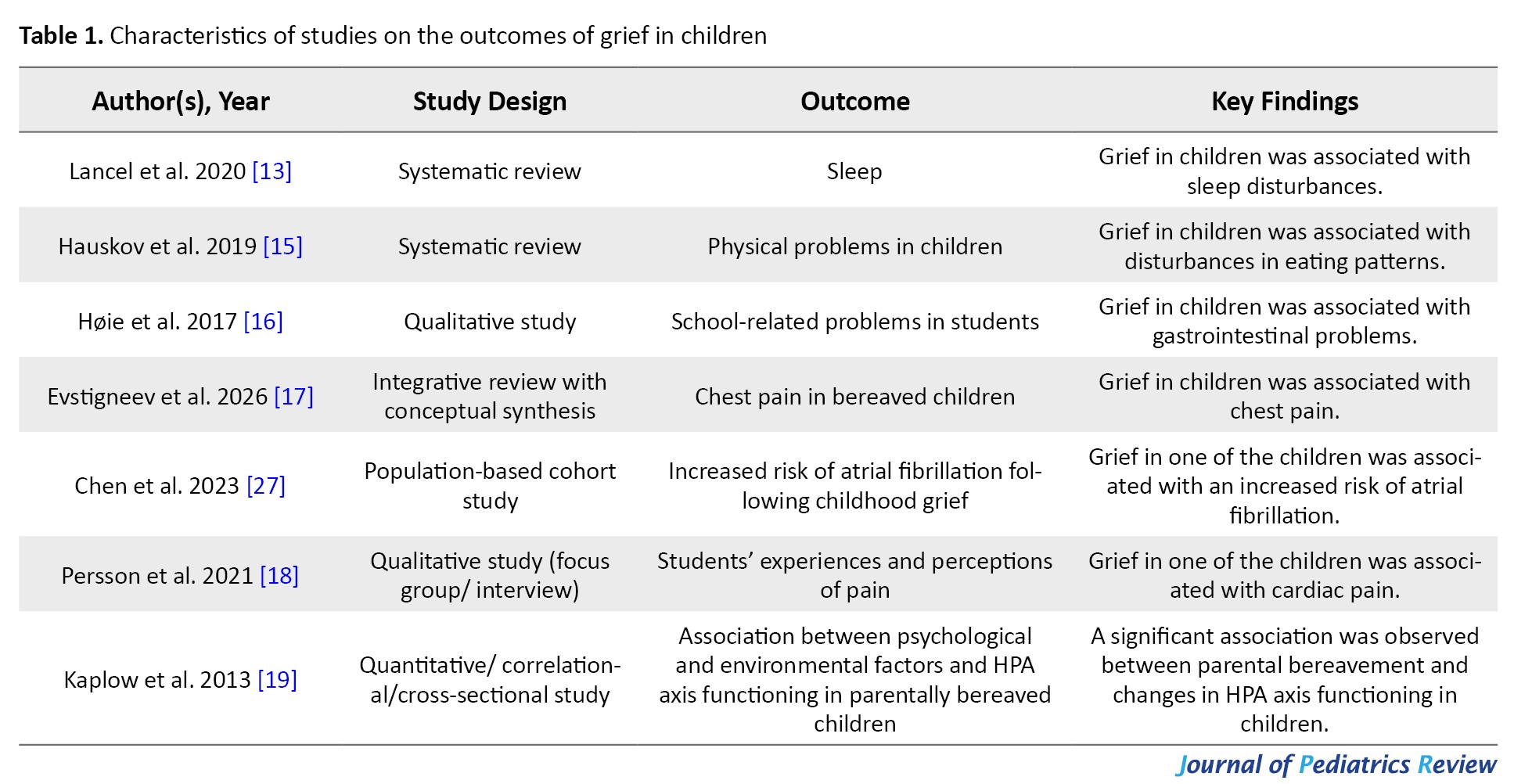
Review of the selected studies indicated that the experience of grief in children may be associated with significant changes in physical and biological functioning. A wide range of somatic symptoms, physiological disturbances, and neuroendocrine alterations has been reported in the literature. Accordingly, these outcomes can be categorized into several main domains, including sleep disturbances, gastrointestinal and nutritional problems, cardiovascular disorders, and neuroendocrine dysregulation. A summary of the main findings is presented in Table 1.
Sleep disturbances
Recent evidence indicated that sleep disturbances were one of the most prominent and persistent outcomes of grief in children. These problems typically manifest as insomnia, difficulty falling asleep, frequent night awakenings, and reduced overall sleep quality. In some cases, these problems may develop into chronic, long-term patterns. Findings also suggested a bidirectional relationship between grief and sleep, meaning that not only can grief disrupt sleep, but sleep problems may also intensify grief and emotional distress. This pattern highlights sleep as an important indicator for understanding and monitoring the severity and persistence of grief [12]. Some studies showed that sleep processes were disrupted in bereaved children, and that sleep problems played a significant role in intensifying grief symptoms and prolonging the grieving process [13]. Sleep disturbances in children were among the common psychophysiological developmental problems and might include reduced or excessive sleep relative to age, abnormal sleep patterns, unusual behaviors during sleep, sleep-related pathophysiological events, and ultimately reduced sleep quality [14].
Gastrointestinal and nutritional disturbances
Grief in children was associated with symptoms such as abdominal pain, nausea, vomiting, changes in appetite (increase or decrease), weight loss, and disturbances in eating patterns [15]. One study reported a case of a schoolgirl who experienced persistent stomach pain for three years despite multiple hospital evaluations, with no identified medical cause. No one initially linked her pain to the loss of a close family member. However, when she eventually joined a bereavement support group, her stomach pain disappeared [16].
Cardiovascular disturbances
Children may also experience chest pain as part of their emotional response to loss. Persson et al. [17] reported that children aged 10-12 described chest pain in response to sadness and grief. In one study, a child described after the loss of her grandmother: “I kind of got a heartache then. That someone important in my life was gone.” [18].
Neuroendocrine outcomes
Childhood grief was associated with significant changes and dysregulation in the HPA axis, as well as persistent alterations in cortisol patterns, indicating a direct impact of loss on biological stress-regulation systems. This mechanism may also contribute to changes in immune system functioning [19].
Discussion
The findings of this study indicated that grief or bereavement in children acts beyond an emotional response to loss and can be a powerful biological stressor that influences a wide range of physiological processes. Existing evidence suggests that experience of loss in childhood is not only associated with psychological and social consequences; it may also affect physical health through alterations in neuroendocrine, immune, and stress-regulation systems. The results of this review study showed that bereaved children were exposed to a range of physical outcomes, including sleep disturbances, changes in appetite and weight, fatigue, recurrent somatic complaints, and biological changes related to stress responses. These findings support the view of grief as a psychobiological phenomenon and highlight the need to consider both psychological and physical dimensions when understanding its consequences.
One of the main explanations for the link between grief and physical outcomes is the role of neurobiological and neuroendocrine mechanisms. The reviewed studies indicated that childhood loss can be associated with alterations in the HPA axis and cortisol secretion patterns. For example, Luecken et al. [20] showed that the effects of parental loss on cortisol regulation can still be observed up to six years after loss. These results suggest that childhood grief can extend beyond subjective emotional experience and influence stress-regulation systems.
Attachment theory of Bowlby provides an important framework for understanding bereavement in children, as grief responses are directly linked to disruption of attachment bonds [21]. According to this theory, grief is activated when an attached individual experiences loss, leading to activation of the attachment system as a biological and emotional regulatory system. This activation involves simultaneous engagement of neural, hormonal (including stress-related hormones), and immune systems, which may increase the motivation to search for the lost person and restore physical proximity. When these attempts are unsuccessful, individuals may repeatedly oscillate between mental representations of the deceased person and the reality of loss. Within this framework, adaptation occurs when the internal representation of the attachment figure becomes integrated with external reality, allowing the physical presence to be replaced by an internal memory. When this integration does not occur, attachment-seeking and biological-behavioral activation may persist, and emotional and physiological regulation remains disrupted [22]. Children with grief often suppress or deny their emotions, and their emotional processing may be limited. In such cases, grief is characterized by behavioral inhibition, reduced verbal expression, and internal emotional changes, which may contribute to the persistence of grief responses [23]. As a result, grief in children may manifest through somatic symptoms [24].
In addition to short-term physical outcomes and stress-related physiological changes in childhood, longitudinal evidence suggested that childhood grief may be associated with an increased risk of physical diseases in adulthood. Childhood loss was linked to a higher risk of metabolic disorders [25], cardiovascular diseases [26], increased risk of atrial fibrillation [27], accelerated epigenetic aging [28], and increased mortality risk in adulthood [29, 30]. Overall, these findings indicate that childhood grief can act as an early-life stressor that influences the biological development trajectory and long-term health outcomes, thereby increasing physical vulnerability later in life. Understanding the underlying neural and environmental mechanisms, including neuroendocrine, immune, and psychological processes related to grief and bereavement, is essential for developing effective interventions to support individuals and improve both physical and mental health outcomes [31].
Conclusion
Grief in childhood is not merely an emotional experience, but is associated with a range of physical outcomes and biological changes, including dysregulation of the HPA axis, increased somatic symptoms, and long-term consequences for physical health. Existing evidence highlights the interaction between chronic stress, psychological factors, and neurobiological responses in explaining these outcomes. Despite growing research attention to the psychological consequences of grief or bereavement, its biological and physical dimensions have still been examined in a non-integrated manner. Accordingly, there is a need for longitudinal studies based on biological markers, as well as the development of integrated biopsychosocial models to better understand the physical consequences of childhood grief. Such approaches may open new paths for predicting vulnerability, identifying protective factors, and designing targeted interventions for children. From a clinical perspective, it is essential that the assessment of bereaved children includes physical outcomes such as sleep disturbances, somatic symptoms, and physiological changes alongside psychological evaluations. and multidimensional interventions may also be effective in reducing physical consequences and improving psychosomatic adjustment in bereaved children. Clinicians should not interpret children’s somatic symptoms solely from a medical file; there is a need for simultaneous physical and psychological assessment. In addition, integrating physical and physiological evaluations into child mental health protocols, particularly for bereaved children, seems necessary, as many somatic manifestations of grief may be overlooked in the absence of specialized assessment.
The development of multi-level trauma-informed interventions focusing simultaneously on emotional regulation, reduction of physiological stress, and enhancement of resilience may play an important role in reducing the long-term consequences of grief in children. Ultimately, greater attention from health systems, schools, and policymakers to the physical aspects of childhood grief can facilitate early identification of at-risk children and help prevent the chronicity of psychosomatic difficulties later in life. Given the evidence, future studies are recommended to focus on biological mechanisms, and longitudinal research may help improve understanding of the long-term physical consequences of childhood grief. In addition, integrating screening for grief-related physical problems into child mental health services, as well as training parents, teachers, coaches, child psychologists, pediatricians, child psychiatrists, and nurses on the physical manifestations of grief, may contribute to early identification of at-risk children and prevention of chronic problems.
Ethical Considerations
Compliance with ethical guidelines
This study is a narrative review with no human or animal sample.
Funding
This research did not receive any specific grant from funding agencies in the public, commercial, or not-for profit sectors.
Authors contributions
The authors equally contributed to study design, literature search, data analysis and synthesis, and preparation of the article. All authors read and approved the final version of the manuscript.
Conflicts of interest
The authors declared no conflict of interest.
Acknowledgements
The authors would like to express their gratitude to all individuals who contributed to the development of this manuscript, including academic advisors and colleagues who provided intellectual support and scientific guidance throughout the preparation of this review
The loss of a beloved person is one of the most stressful and challenging life events. This loss is not limited to death and may also encompass a wide range of separations and non-death-related losses [1]. Grief is a natural, dynamic, and multidimensional response to this loss, involving emotional, cognitive, behavioral, social, and somatic components that evolve over time with varying intensity and patterns [2]. Children, similar to adults, can be substantially affected by grief. Such experiences may have long-term consequences for their psychological, emotional, social, and physical health, and may influence their school performance and future [3]. Global estimates suggest that a considerable proportion of children experience a loss of a loved one in their lives [4].
Experience of loss in childhood is inherently multifaceted. The most common form is death-related loss, including the death of parents, siblings, grandparents, other significant family members, close friends, or even pets. In addition to death-related loss, children may encounter various non-death-related losses, such as parental divorce or separation, migration, and relocation to a new home, neighborhood, or school. Furthermore, the loss of a beloved person due to incarceration, substance abuse, or homelessness may also elicit grief responses. Other types of loss include the disappearance of meaningful objects, the death of a public figure, and disruption of relationships with peers. Moreover, children living with chronic, disabling, or life-threatening conditions may experience repeated functional and developmental losses. These include reduced or interrupted participation in school and social activities, decreased engagement in educational, artistic, and sports-related activities, and disruption of academic, social, and family functioning. The loss of physical abilities, changes in body image, and compromised bodily integrity can also cause grief in children [5].
Understanding how grief is processed across developmental stages is essential for clinical practice with children [6]. Unlike adults, children do not typically express grief verbally. Instead, their responses are often manifested through behavior, play, emotional fluctuations, body language, and somatic complaints, all of which are shaped by their cognitive and emotional developmental level [7]. Evidence indicates that grief in children is associated with physiological changes and somatic outcomes [8] and may exert significant effects on both psychological and physical development [9]. These somatic responses may appear in the form of both internalizing and externalizing symptoms, including changes in appetite, weight fluctuations, nightmares, fatigue, recurrent illnesses, abdominal pain, headaches, nausea, vomiting, and sleep disturbances such as insomnia or hypersomnia [10]. From a biological perspective, research has shown dysregulation of the hypothalamic–pituitary–adrenal (HPA) axis in bereaved children, which may be associated with long-term alterations in cortisol secretion patterns [11]. These findings suggest a potential role of grief in inducing sustained changes within stress-response systems.
Despite the substantial growth of literature on childhood grief, the majority of studies have primarily focused on its psychological, emotional, and behavioral outcomes, while somatic and biological aspects have not been systematically and comprehensively examined. Most of the existing studies are either cross-sectional or derived from theoretical frameworks based on adult populations, whereas developmental, neurological, and physiological differences in children may result in distinct response patterns to loss. Accordingly, the lack of an integrated synthesis of the somatic consequences of grief in children, particularly in relation to underlying biological mechanisms, represents a significant gap in the literature and highlights the need for comprehensive reviews in this area. Therefore, the present study aims to review the existing evidence on the somatic consequences of grief in children. Specifically, it focuses on identifying physiological and somatic outcomes and examining underlying biological mechanisms in order to provide a more comprehensive view of the relationship between childhood grief and physical health. To the best of our knowledge, this is the first review study to integrate and critically analyze the somatic consequences of grief in children, focusing on physical health indicators and biological mechanisms.
Materials and Methods
This is an integrative narrative review using a thematic analysis approach, which allows the integration of evidence from quantitative, qualitative, longitudinal, epidemiological studies, and systematic reviews, and helps to identify key patterns and underlying mechanisms related to physical health outcomes of childhood grief. The review was conducted based on the (Preferred reporting items for systematic reviews and meta-analyses (PRISMA) guidelines for systematic reviews.
To identify relevant studies, a systematic search was conducted in major international databases, including PubMed/MEDLINE, Scopus, Web of Science, PsycINFO, Embase, ScienceDirect, SpringerLink, Taylor & Francis Online, and Google Scholar. In addition, the reference lists of key articles and systematic reviews were manually searched to identify additional studies. The search strategy used a combination of MeSH terms and keywords. The main keywords included “bereavement,” “childhood bereavement,” “grief,” “loss,” “parental death,” “childhood grief,” “somatic symptoms,” “physical health,” “physiological outcomes,” “biological responses,” “HPA axis,” “stress response,” “inflammation,” “cardiovascular outcomes,” “Sleep disturbance,” and “immune function,” as well as their Persian equivalents. Boolean operators (AND, OR) were used to combine the terms. Studies published from January 2000 to May 2026 were selected.
The study selection process was carried out in three steps: screening of titles, screening of abstracts, and full-text review based on predefined inclusion and exclusion criteria. We included the studies that examined physical, physiological, or biological outcomes of grief in children, studies with different designs (quantitative, qualitative, longitudinal, case-control, cohort, clinical trials, and systematic reviews), studies published in peer-reviewed journals, studies with full-text accessibility, studies written in English, and studies reporting physical or biological health outcomes related to grief. We excluded studies not directly related to physical or biological outcomes of grief (e.g. purely psychological studies without physical measures), editorials, letters to the editor, short reports, case reports with low methodological quality or without usable data, duplicate studies, studies without full-text availability, and animal or non-human studies not relevant to the study purpose.
From each study, key information was extracted, including authors’ name, study year, study country, study design, participant characteristics, type of loss, assessment tools, physical or biological measures, and main findings. The data were then analyzed using qualitative content analysis and thematic analysis. In the analysis phase, findings were grouped into three main areas: (a) physiological and neuroendocrine outcomes, including changes in the HPA axis, cortisol levels, and stress response; (b) physical health outcomes, including sleep problems, psychosomatic symptoms, cardiovascular conditions, and immune changes; and (c) mediating mechanisms such as emotion regulation, chronic stress, inflammation, and biological vulnerability. Finally, an integrated conceptual framework was developed to explain how childhood grief is linked to short-term and long-term physical health outcomes.
Results
Review of the selected studies indicated that the experience of grief in children may be associated with significant changes in physical and biological functioning. A wide range of somatic symptoms, physiological disturbances, and neuroendocrine alterations has been reported in the literature. Accordingly, these outcomes can be categorized into several main domains, including sleep disturbances, gastrointestinal and nutritional problems, cardiovascular disorders, and neuroendocrine dysregulation. A summary of the main findings is presented in Table 1.
Sleep disturbances
Recent evidence indicated that sleep disturbances were one of the most prominent and persistent outcomes of grief in children. These problems typically manifest as insomnia, difficulty falling asleep, frequent night awakenings, and reduced overall sleep quality. In some cases, these problems may develop into chronic, long-term patterns. Findings also suggested a bidirectional relationship between grief and sleep, meaning that not only can grief disrupt sleep, but sleep problems may also intensify grief and emotional distress. This pattern highlights sleep as an important indicator for understanding and monitoring the severity and persistence of grief [12]. Some studies showed that sleep processes were disrupted in bereaved children, and that sleep problems played a significant role in intensifying grief symptoms and prolonging the grieving process [13]. Sleep disturbances in children were among the common psychophysiological developmental problems and might include reduced or excessive sleep relative to age, abnormal sleep patterns, unusual behaviors during sleep, sleep-related pathophysiological events, and ultimately reduced sleep quality [14].
Gastrointestinal and nutritional disturbances
Grief in children was associated with symptoms such as abdominal pain, nausea, vomiting, changes in appetite (increase or decrease), weight loss, and disturbances in eating patterns [15]. One study reported a case of a schoolgirl who experienced persistent stomach pain for three years despite multiple hospital evaluations, with no identified medical cause. No one initially linked her pain to the loss of a close family member. However, when she eventually joined a bereavement support group, her stomach pain disappeared [16].
Cardiovascular disturbances
Children may also experience chest pain as part of their emotional response to loss. Persson et al. [17] reported that children aged 10-12 described chest pain in response to sadness and grief. In one study, a child described after the loss of her grandmother: “I kind of got a heartache then. That someone important in my life was gone.” [18].
Neuroendocrine outcomes
Childhood grief was associated with significant changes and dysregulation in the HPA axis, as well as persistent alterations in cortisol patterns, indicating a direct impact of loss on biological stress-regulation systems. This mechanism may also contribute to changes in immune system functioning [19].
Discussion
The findings of this study indicated that grief or bereavement in children acts beyond an emotional response to loss and can be a powerful biological stressor that influences a wide range of physiological processes. Existing evidence suggests that experience of loss in childhood is not only associated with psychological and social consequences; it may also affect physical health through alterations in neuroendocrine, immune, and stress-regulation systems. The results of this review study showed that bereaved children were exposed to a range of physical outcomes, including sleep disturbances, changes in appetite and weight, fatigue, recurrent somatic complaints, and biological changes related to stress responses. These findings support the view of grief as a psychobiological phenomenon and highlight the need to consider both psychological and physical dimensions when understanding its consequences.
One of the main explanations for the link between grief and physical outcomes is the role of neurobiological and neuroendocrine mechanisms. The reviewed studies indicated that childhood loss can be associated with alterations in the HPA axis and cortisol secretion patterns. For example, Luecken et al. [20] showed that the effects of parental loss on cortisol regulation can still be observed up to six years after loss. These results suggest that childhood grief can extend beyond subjective emotional experience and influence stress-regulation systems.
Attachment theory of Bowlby provides an important framework for understanding bereavement in children, as grief responses are directly linked to disruption of attachment bonds [21]. According to this theory, grief is activated when an attached individual experiences loss, leading to activation of the attachment system as a biological and emotional regulatory system. This activation involves simultaneous engagement of neural, hormonal (including stress-related hormones), and immune systems, which may increase the motivation to search for the lost person and restore physical proximity. When these attempts are unsuccessful, individuals may repeatedly oscillate between mental representations of the deceased person and the reality of loss. Within this framework, adaptation occurs when the internal representation of the attachment figure becomes integrated with external reality, allowing the physical presence to be replaced by an internal memory. When this integration does not occur, attachment-seeking and biological-behavioral activation may persist, and emotional and physiological regulation remains disrupted [22]. Children with grief often suppress or deny their emotions, and their emotional processing may be limited. In such cases, grief is characterized by behavioral inhibition, reduced verbal expression, and internal emotional changes, which may contribute to the persistence of grief responses [23]. As a result, grief in children may manifest through somatic symptoms [24].
In addition to short-term physical outcomes and stress-related physiological changes in childhood, longitudinal evidence suggested that childhood grief may be associated with an increased risk of physical diseases in adulthood. Childhood loss was linked to a higher risk of metabolic disorders [25], cardiovascular diseases [26], increased risk of atrial fibrillation [27], accelerated epigenetic aging [28], and increased mortality risk in adulthood [29, 30]. Overall, these findings indicate that childhood grief can act as an early-life stressor that influences the biological development trajectory and long-term health outcomes, thereby increasing physical vulnerability later in life. Understanding the underlying neural and environmental mechanisms, including neuroendocrine, immune, and psychological processes related to grief and bereavement, is essential for developing effective interventions to support individuals and improve both physical and mental health outcomes [31].
Conclusion
Grief in childhood is not merely an emotional experience, but is associated with a range of physical outcomes and biological changes, including dysregulation of the HPA axis, increased somatic symptoms, and long-term consequences for physical health. Existing evidence highlights the interaction between chronic stress, psychological factors, and neurobiological responses in explaining these outcomes. Despite growing research attention to the psychological consequences of grief or bereavement, its biological and physical dimensions have still been examined in a non-integrated manner. Accordingly, there is a need for longitudinal studies based on biological markers, as well as the development of integrated biopsychosocial models to better understand the physical consequences of childhood grief. Such approaches may open new paths for predicting vulnerability, identifying protective factors, and designing targeted interventions for children. From a clinical perspective, it is essential that the assessment of bereaved children includes physical outcomes such as sleep disturbances, somatic symptoms, and physiological changes alongside psychological evaluations. and multidimensional interventions may also be effective in reducing physical consequences and improving psychosomatic adjustment in bereaved children. Clinicians should not interpret children’s somatic symptoms solely from a medical file; there is a need for simultaneous physical and psychological assessment. In addition, integrating physical and physiological evaluations into child mental health protocols, particularly for bereaved children, seems necessary, as many somatic manifestations of grief may be overlooked in the absence of specialized assessment.
The development of multi-level trauma-informed interventions focusing simultaneously on emotional regulation, reduction of physiological stress, and enhancement of resilience may play an important role in reducing the long-term consequences of grief in children. Ultimately, greater attention from health systems, schools, and policymakers to the physical aspects of childhood grief can facilitate early identification of at-risk children and help prevent the chronicity of psychosomatic difficulties later in life. Given the evidence, future studies are recommended to focus on biological mechanisms, and longitudinal research may help improve understanding of the long-term physical consequences of childhood grief. In addition, integrating screening for grief-related physical problems into child mental health services, as well as training parents, teachers, coaches, child psychologists, pediatricians, child psychiatrists, and nurses on the physical manifestations of grief, may contribute to early identification of at-risk children and prevention of chronic problems.
Ethical Considerations
Compliance with ethical guidelines
This study is a narrative review with no human or animal sample.
Funding
This research did not receive any specific grant from funding agencies in the public, commercial, or not-for profit sectors.
Authors contributions
The authors equally contributed to study design, literature search, data analysis and synthesis, and preparation of the article. All authors read and approved the final version of the manuscript.
Conflicts of interest
The authors declared no conflict of interest.
Acknowledgements
The authors would like to express their gratitude to all individuals who contributed to the development of this manuscript, including academic advisors and colleagues who provided intellectual support and scientific guidance throughout the preparation of this review
References:
- Russell CE, Chin M, Bollig G, Cait CA, Carnevale FA, Chrastek J, et al. Re-Imagining childhood grief: Children as active agents in a transactional process. Omega (Westport). 2024. [DOI:10.1177/00302228241310]
- Ratcliffe M, Velasco PF. The nature of grief: Implications for the neurobiology of emotion. Neurosci Conscious. 2024; 2024(1):niae041. [DOI:10.1093/nc/niae041] [PMID]
- Rowland A, Boulanger C, Dalton L. Supporting the bereaved child in the adult ICU: A narrative review. IIntensive Care Med. 2025; 51(3):570-581. [DOI:10.1007/s00134-025-07813-4] [PMID]
- Falala A, Lannes A, Bui E, Revet A. Prevalence of prolonged grief disorder in bereaved children and adolescents: A systematic review. Encephale. 2024; 50(5):557-65.[DOI:10.1016/j.encep.2023.11.016] [PMID]
- Chandran S, Raman V, Shiva L. Understanding grief in children: A narrative review. J Indian Assoc Child Adolesc Ment Health. 2025; 21(2). [DOI:10.1177/09731342251328150]
- Alvis L, Zhang N, Sandler IN, Kaplow JB. Developmental manifestations of grief in children and adolescents: Caregivers as key grief facilitators. J Child Adolesc Trauma. 2022; 16(2):447-57. [DOI:10.1007/s40653-021-00435-0] [PMID]
- Soetioso VB, Fithriyah I. Grief in Children and Adolescents: A Developmentally Informed Clinical Review With Illustrative Cases. J Korean Acad Child Adolesc Psychiatry. 2026; 37(1):44-50. [DOI:10.5765/jkacap.250036] [PMID]
- Hoppe R, Winter MA, Williams CD, Sandler I. When a parent dies: A scoping review of protective and risk processes for childhood bereavement. Death Stud. 2025; 49(5):546-56. [DOI:10.1080/07481187.2024.2340729] [PMID]
- Fung AL, Browne WV. Post-traumatic growth following bereavement among children and adolescents: A systematic review. J Loss Trauma. 2025; 30(5):614-41. [DOI:10.1080/15325024.2024.2430238]
- D’Alton SV, Ridings L, Williams C, Phillips S. The bereavement experiences of children following sibling death: An integrative review. J Pediatr Nurs. 2022; 66:e82-e99. [DOI:10.1016/j.pedn.2022.05.006] [PMID]
- Dietz LJ, Stoyak S, Melhem N, Porta G, Matthews KA, Payne MW, et al. Cortisol response to social stress in parentally bereaved youth. Biol Psychiatry. 2013; 73(4):379-87.[DOI:10.1016/j.biopsych.2012.08.016] [PMID]
- Kivelä LMM, Pociūnaitė-Ott J, Lenferink LIM. Sleepless Longing: Bidirectional Associations Between Sleep Quality and Prolonged Grief in Daily Life After Traumatic Loss. Clin Psychol Psychother. 2026; 33(1):e70238. [DOI:10.1002/cpp.70238] [PMID]
- Lancel M, Stroebe M, Eisma MC. Sleep disturbances in bereavement: A systematic review. Sleep Med Rev. 2020; 53:101331. [DOI:10.1016/j.smrv.2020.101331] [PMID]
- Martins G, Dellalibera-Joviliano R. Impacts of sleep disorders on the quality of life of children and adolescents. Braz J Sci. 2026; 5(2):47-56. [DOI:10.14295/bjs.v5i2.834]
- Hauskov Graungaard A, Roested Bendixen C, Haavet OR, Smith-Sivertsen T, Mäkelä M. Somatic symptoms in children who have a parent with cancer: A systematic review. Child Care Health Dev. 2019; 45(2):147-58. DOI:10.1111/cch.12647] [PMID]
- Høie M, Haraldstad K, Rohde G, Fegran L, Westergren T, Helseth S, et al. How school nurses experience and understand everyday pain among adolescents. BMC Nurs. 2017; 16:53. [DOI:10.1186/s12912-017-0247-x] [PMID]
- Evstigneev SR, Wilhelm FH, Slavich GM, Blum D, Seiler A. Grief-Related Chest Pain: A Review, Conceptual Analysis, and Integrative Model. Psychophysiology. 2026; 63(2):e70248. [DOI:10.1111/psyp.70248] [PMID]
- Persson S, Warghoff A, Einberg EL, Garmy P. Schoolchildren’s experience of pain-A focus group interview study. Acta Paediatr. 2021; 110(3):909-13. [DOI:10.1111/apa.15493] [PMID]
- Kaplow JB, Shapiro DN, Wardecker BM, Howell KH, Abelson JL, Worthman CM, et al. Psychological and environmental correlates of HPA axis functioning in parentally bereaved children: Preliminary findings. J Trauma Stress. 2013; 26(2):233-40. [DOI:10.1002/jts.21788] [PMID]
- Luecken LJ, Hagan MJ, Sandler IN, Tein JY, Ayers TS, Wolchik SA. Cortisol levels six-years after participation in the Family Bereavement Program. Psychoneuroendocrinology. 2010; 35(5):785-9. [DOI:10.1016/j.psyneuen.2009.11.002] [PMID]
- Aleem S. How a child understands death: Attachment theory perspective. Indian J Psychol Med. 2024; 47(6):599-604. [DOI:10.1177/02537176241257657] [PMID]
- Mısırlı GN, Karakuş Ö. Grief in children within the framework of attachment theory. Psikiyatr Güncel Yaklaşımlar. 2024; 16(1):126-37. [DOI:10.18863/pgy.1243304]
- Fujita A, Ueki S, Moriguchi H, Hamada Y, Sasazuki M. A systematic review of grief experiences of children who have lost a sibling. J Palliat Med. 2025; 28(12):1669-85. [DOI:10.1089/jpm.2024.0418] [PMID]
- Boelen PA, Spuij M. Individual and systemic variables associated with prolonged grief and other emotional distress in bereaved children. Plos One. 2024; 19(4):e0302725. [DOI:10.1371/journal.pone.0302725] [PMID]
- Alciati A, Gesuele F, Casazza G, Foschi D. The relationship between childhood parental loss and metabolic syndrome in obese subjects. Stress Health. 2013; 29(1):5-13.[DOI:10.1002/smi.1435] [PMID]
- Chen H, Hemmingsson T, Forsell Y, Rostila M, Janszky I, László KD. Death of a parent during childhood and the risk of ischemic heart disease and stroke in adult men. Psychosom Med. 2020; 82(9):810-6. [DOI:10.1097/psy.0000000000000861] [PMID]
- Chen H, Janszky I, Rostila M, Wei D, Yang F, Li J, et al. Bereavement in childhood and young adulthood and the risk of atrial fibrillation: A population-based cohort study from Denmark and Sweden. BMC Med. 2023; 21(1):8.[DOI:10.1186/s12916-022-02707-4] [PMID]
- Farina MP, Klopack ET, Umberson D, Crimmins EM. The embodiment of parental death in early life through accelerated epigenetic aging: Implications for understanding how parental death before 18 shapes age-related health risk among older adults. SSM Popul Health. 2024; 26:101648. [DOI:10.1016/j.ssmph.2024.101648] [PMID]
- Li J, Vestergaard M, Cnattingius S, Gissler M, Bech BH, Obel C, et al. Mortality after parental death in childhood: A nationwide cohort study from three Nordic countries. PLoS Med. 2014; 11(7):e1001679. [DOI:10.1371/journal.pmed.1001679] [PMID]
- Hiyoshi A, Berg L, Grotta A, Almquist Y, Rostila M. Parental death in childhood and pathways to increased mortality across the life course in Stockholm, Sweden: A cohort study. PLoS Med. 2021; 18(3:e1003549. [DOI:10.1371/journal.pmed.1003549] [PMID]
- Evstigneev SR, O’Connor MF, Wilhelm FH, Blum D, Slavich GM, Seiler A. Grief and bereavement: A pre-registered systematic review of neuroimaging studies. Neurosci Biobehav Rev. 2026; 182:106535. [DOI:10.1016/j.neubiorev.2025.106535] [PMID]
Type of Study: Narrative Review |
Subject:
Pediatric Psychology
Received: 2026/06/2 | Accepted: 2026/09/19 | Published: 2026/09/19
Received: 2026/06/2 | Accepted: 2026/09/19 | Published: 2026/09/19
Send email to the article author
| Rights and permissions | |
 |
This work is licensed under a Creative Commons Attribution-NonCommercial 4.0 International License. |

Copyright © The Author(s);
This is an open access article distributed under the terms of the Creative Commons Attribution License (CC-By-NC),
which permits use, distribution, and reproduction in any medium, provided the original work is properly cited and is not used for commercial purposes.
Contact Information